成人慢性失眠共病常见神经精神疾病治疗指南(2025版)
一、指南制定方法学
依据2013年《世界卫生组织指南制定手册》[1], 以及《中华医学杂志》发表的《中国制订/修订临床诊疗指南的指导原则(2022版)》[2], 中华医学会神经病学分会睡眠障碍学组和中国医师协会神经内科医师分会睡眠学组共同组织国内部分睡眠领域专家对相关性较高的指南、共识和文献进行评价, 并使用GRADE方法进行证据质量评价和推荐意见分级(表1和表2)[3-4], 检索时间更新截至2025年6月,形成《成人慢性失眠共病常见神经精神疾病治疗指南》。指南中涉及的一些重要领域如不能在既往文献中找到理想依据,则基于临床经验判断的专家共识。
本指南涉及慢性失眠人群证据的纳入标准符合慢性失眠障碍和失眠症诊断标准的患者,也包括
匹兹堡睡眠质量指数(Pittsburgh sleep quality index, PSQI)、阿森纳失眠量表(Athens Insomnia Scale, AIS)、失眠严重程度指数(Insomnia Severity Index, ISI)、睡眠状态指标(Sleep Condition Indicator, SCI)等睡眠量表和包含睡眠条目的其他量表定义的失眠和睡眠障碍。在慢性失眠共病AD中,由于AD患者认知功能障碍,不能准确地提供病史,失眠的判断来自护理人员报告、神经精神量表睡眠/夜间行为评分>2和体动记录仪评估等。在既往研究中,关于躯体痛苦障碍、PTSD和AUD等精神疾病中的失眠仅被当成这些疾病需要重点关注的临床症状。
二、概述
(一)慢性失眠与常见神经精神疾病的定义及其关系
1. 失眠及其相关定义[5]: 失眠症状通常指对夜间睡眠不满意如人睡困难、睡眠维持障碍(反复觉醒和再入睡困难)、早醒、睡眠质量下降和总睡眠时间减少。失眠障碍不仅包括上述夜间失眠症状,还包括对日间功能的影响如疲劳、情绪低落或易激惹、躯体不适、认知障碍、焦虑情绪、对于睡眠和不良后果的担心等。躯体疾病、精神障碍或其他睡眠障碍通常伴随失眠症状,当失眠症状持续导致了痛苦和日间功能受损就需要做独立的失眠障碍的诊断。慢性失眠障碍指以上夜间失眠症状和日间症状均出现,每周至少3次,持续至少3个月,本指南简称慢性失眠。
2. 常见神经精神病的定义及其与慢性失眠之间的关系
表1 GRADE推荐强度分级与定义
|推荐强度|说明|本指南表达方法|推荐强度表示方法| |---|---|---|---| |强推荐使用|干预措施明显利大于弊|推荐|1| |弱推荐使用|干预措施可能利大于弊|建议|2| |弱推荐反对使用|干预措施可能弊大于利或利弊关系不明确|不建议|2| |强推荐反对使用|干预措施明显弊大于利|不推荐|1|
表2 GRADE证据质量分级与定义
|质量等级|定义| |---|---| |高(A)|非常确信真实效应值接近效应估计值| |中(B)|对效应估计值有中等程度信心:真实效应值有可能接近效应估计值,但仍存在两者大不相同的可能性| |低(C)|对效应估计值的确信程度有限:真实效应值可能与效应估计值大不相同| |极低(D)|对效应估计值几乎没有信心:真实效应值很可能与效应估计值大不相同|
中华内科杂志2026年1月第65卷第1期 Chin J Intern Med, January 2026, Vol. 65, No. 1
· 20 ·
(1)偏头痛:一种原发性头痛,特征为发作性、多为偏侧、中重度、搏动样头痛[6]。失眠与偏头痛存在双向恶性循环,失眠增加偏头痛的慢性化[7],降低疼痛阈值,减少5-羟色胺分泌,并升高促炎因子,加剧偏头痛发作频率和强度[8-9];偏头痛通过激活下丘脑-垂体-肾上腺轴和交感神经系统,导致皮质水平升高,诱发或加重失眠[10-11]。
(2)卒中:卒中分为出血性卒中与缺血性卒中,其中缺血性卒中占所有新发卒中的80%[12]。缺血性卒中是指由于脑局部血液循环障碍所导致的神经功能缺损综合征。失眠会使卒中风险增加,睡眠质量差、睡眠时间更容易发生缺血性卒中[13]。失眠发生率在卒中后增加[14],卒中急性期更容易诱发失眠,其患病率随着患者年龄和随访时间的增加而增加[15]。女性、重症更容易出现卒中后失眠[16]。
(3)AD:是一种慢性认知能力下降和行为改变并最终严重影响患者的日常生活能力的神经系统退行性疾病。失眠与AD之间存在双向关系。失眠可能通过诱导β-淀粉样蛋白累积、tau蛋白细胞外释放和聚集、破坏血脑屏障完整性等途径,促进AD的发展[17]。另一方面,当AD病理改变影响下丘脑睡眠觉醒调节区域或出现胆碱能神经元网络受损时,睡眠破碎化会引发或加重失眠和睡眠-觉醒周期紊乱[18]。此外,临床中持续使用镇静催眠类药物可能增加AD风险[19]。
(4)PD:是一种神经系统退行性疾病,主要表现为静止性震颤、肌强直和动作迟缓等运动症状,还有睡眠障碍、嗅觉障碍、便秘、认知和精神障碍等非运动症状。其中失眠是PD患者最常见的睡眠障碍之一[20]。PD患者的失眠涉及多巴胺等神经递质异常、睡眠调控网络受损、运动症状干扰、情绪障碍和治疗药物影响等多重机制[21]。PD相关失眠不仅降低生活质量,还可能加速疾病进展,加重运动症状和认知障碍,增加痴呆风险[22]。
(5)癫痫:是多种原因导致的脑部神经元高度同步化异常放电的临床综合征[23]。失眠能引起癫痫发作频率[24]和癫痫释放电频率增加[25],也会增加癫痫患者的情绪障碍,引起日间功能障碍[26]。此外,癫痫也会影响睡眠结构,癫痫发作次数增加会加重患者失眠的严重程度[27],总睡眠时间减少,睡眠维持困难[28],睡眠效率降低,睡眠潜伏期延长[29]。
(6) GAD:是一种长期的、过度的、难以控制的担忧和焦虑的精神疾病[30]。失眠常会加剧患者的焦虑及负面情绪,反之焦虑及负面情绪也会引发失
眠,进而形成恶性循环[31-32]。
(7)抑郁障碍:是一种表现为显著的持续的情绪低落和兴趣丧失的心境障碍。抑郁障碍患者常共患失眠障碍,失眠也是新发抑郁障碍的危险因素之一。失眠作为最常见的抑郁障碍残留症状之一,可增加抑郁障碍复发的风险。失眠使患抑郁障碍的相对风险增加[33]。中枢神经递质5-羟色胺水平下降,会同时导致情绪低落和睡眠结构紊乱,抑郁情绪加重睡眠结构紊乱;慢性失眠可能通过神经免疫的异常增加未来抑郁障碍的发病风险,某些抗抑郁药可能引起失眠,苯二氮草类药物(Benzodiazepines,BZDs)长期使用可能加重抑郁[34]。
(8)躯体痛苦障碍:是一种以持续存在的使个体痛苦的躯体症状为特征,且不能用其他躯体疾病和精神障碍更好地解释的精神障碍。该疾病既往名称众多,为统一名称,本指南最后采用《国际疾病分类第十一次修订本(ICD-11)》提出的新疾病名称“躯体痛苦障碍”一词[35]。失眠可能加重躯体痛苦障碍各种躯体症状,躯体痛苦障碍的各种躯体症状也可能加重失眠[36]。
(9) PTSD:由强烈的精神应激引起,可引发创伤再体验、警觉性增高以及回避或麻木等症状的一种严重的应激障碍。一方面,PTSD患者的创伤性记忆和高警觉状态会直接引发睡眠维持困难和频繁觉醒等问题;另一方面,慢性失眠可成为PTSD的诱因,降低个体对创伤事件的心理应对能力,并通过增强负性情绪反应促进PTSD症状的持续[37]。
(10) AUD:是一种因长期或过量饮酒导致的慢性疾病,表现为对酒精的强烈渴求、饮酒失控、耐受性增加及戒断症状。慢性失眠患者可能会饮酒助眠,睡前饮酒可以诱导睡眠,但酒精会导致夜间睡眠中断,长期和过量的酒精摄入会导致耐受性增加,从而导致AUD的发展[38]。酗酒者,无论是在饮酒期间还是在戒酒期间,都会出现明显的睡眠中断,表现为严重的失眠、白天过度思睡、睡眠结构改变[38]。
(二)慢性失眠共病常见神经精神疾病的流行病学
根据PSQI或者AIS量表评估,我国成人慢性失眠的患病率约为15%[39],常见神经精神疾病及其与慢性失眠共患病的流行病学见表3。
三、诊断相关临床问题
(一)诊断标准
慢性失眠障碍符合《国际睡眠疾病分类第三版
中华内科杂志 2026年1月第65卷第1期 Chin J Intern Med, January 2026, Vol. 65, No. 1
· 21 ·
|疾病|一般成人患病率|慢性失眠中常见神经精神病疾病的患病率|常见神经精神病中慢性失眠的患病率| |---|---|---|---| |偏头痛|14.7%$^{[40]}$|16.0%$^{[41]}$|25.9%~58%$^{[42-43]}$| |卒中|2.64%$^{[44]}$|调整后风险比1.58$^{[45]}$|47.2% (95%CI 34.26%~60.36%)$^{[15]}$| |阿尔茨海默病|1.19%$^{[46]}$|4.94%$^{[47]}$|24% (95%CI 16%~33%)$^{[48]}$| |帕金森病|1.02%~1.73%$^{[49]}$|-|27%~80%$^{[50]}$| |癫痫|0.4%~1.0%$^{[23]}$|-|36%~74%$^{[51]}$| |广泛性焦虑障碍|3.7%$^{[52]}$|20%~30%$^{[53]}$|50%~70%$^{[54]}$| |抑郁障碍|6.8%$^{[55]}$|30%~50%$^{[56]}$|90%$^{[57]}$| |躯体痛苦障碍|5%~35%$^{[58]}$|6.25%~41%$^{[59]}$|20.4%~48.0%$^{[36]}$| |创伤后应激障碍|4.0%$^{[60]}$|-|63%$^{[61]}$| |酒精使用障碍$^{b}$|4.4%$^{[62]}$|9.7%$^{[63]}$|60%~70%$^{[64]}$|
注:≥60岁以上;b酒精依赖是酒精使用障碍中较为严重的阶段,酒精使用障碍是更宽泛概念,涵盖从轻度到重度的饮酒问题,而在DSM-5发行之前部分研究使用的是“酒精依赖”一词;-表示未查到相关数据
修订版》(International classification of sleep disorders-third edition text revision, ICSD-3 TR)[5]中对慢性失眠障碍的诊断标准,具体见表4。上述10种常见神经精神病疾病的诊断符合ICD-11诊断标准[65]。慢性失眠障碍共病常见神经精神病疾病的诊断标准,需要同时符合慢性失眠障碍及相关病神经精神病的诊断标准。
(二)慢性失眠共病常见神经精神疾病需要进行哪些临床评估?
按照相关指南对本文中所指慢性失眠和常见神经精神疾病进行评估[6, 66-80]。临床评估需要分别针对失眠和共病的常见神经精神疾病进行详细的病史采集、体格检查、主观评估和客观评估,以帮助明确诊断,分别进行鉴别,评估病情严重程度和疾病的危害。
四、治疗相关临床问题
(一)慢性失眠共病常见神经精神疾病治疗的总体原则是什么?
1. 改善神经精神疾病的症状,同时不加重失眠和常见神经精神疾病的症状,避免治疗相关副作用,延缓疾病进展,提高患者生活质量,恢复社会功能。
2. 在当前慢性失眠共病常见神经精神疾病研究证据不足提供临床建议的情况下,可以参照各个疾病诊治指南推荐治疗进行选择[6, 30, 66-80],并动态评估治疗效果和副作用。
3. 慢性失眠的治疗原则:在睡眠卫生教育、体育运动和生活方式改善的基础上,根据患者的实际情况,合理选择单独或结合药物、心理和物理治疗,选择镇静催眠药物治疗时,注意按照最低剂量、短期应用,改善症状,减少药物副作用和依赖,具体可以结合慢性失眠相关指南治疗的一般原则[56]。
(二) 慢性失眠共病偏头痛的治疗相关临床问题
1. 失理认知行为治疗(cognitive behavioral therapy for insomnia, CBTI)是否适合用于慢性失眠共病偏头痛治疗?
推荐意见:建议用CBTI改善失眠症状和预防偏头痛发作,其中睡眠限制疗法中规定的卧床时间最低不少于8(c级证据,1级推荐)。
证据概述:1项随机对照试验(randomized controlled trial, RCT)(n=31)[81]、2项系统回顾(2项RCT,n=169,2项单臂研究,n=147)[82-83]及2项队列研究(n=84)[84-85]表明CBTI可以改善偏头痛的发作
A. 患者主诉,或由照护者发现,以下一项或多项症状:
①入睡困难;②睡眠维持困难;③比期望的时间早醒;④在适当的作息时间拒绝就寝;⑤无照护者干预时,入睡困难。
B. 患者主诉,或由照护者发现,存在以下一项或多项与夜间睡眠困难相关的症状:
①疲劳或萎靡不振;②注意力、专注力或记忆力受损;③社会、家庭、职业功能受损,或学业表现下降;④情绪不稳/易激惹;⑤白天思睡;⑥行为问题(如多动、冲动或攻击性行为);⑦积极性、精力或动力不足;⑧增加发生错误/事故的倾向;⑨对睡眠关注或不满意。
C. 睡眠/觉醒困难主诉不能单纯以睡眠机会不足(如充足的睡眠时间)或睡眠环境(如环境安全、黑暗、安静、舒适)不佳解释。
D. 睡眠紊乱和相关日间症状出现每周至少3次。
E. 睡眠紊乱和相关日间症状持续至少3个月。
F. 睡眠紊乱和相关的日间症状并不仅仅是由于当前另一种的睡眠障碍、内科疾病、精神障碍或药物/物质使用所致。
· 22 ·
中华内科杂志 2026年1月第65卷第1期 Chin J Intern Med, January 2026, Vol. 65, No. 1
频率和程度及失眠严重程度,研究中睡眠限制为8h的卧床时间。
2. 如何合理地选择治疗失眠的药物治疗慢性失眠共病偏头痛?
推荐意见:目前尚缺乏治疗失眠药物治疗慢性失眠共病偏头痛的循证医学证据,建议选择合适的失眠药物改善失眠症状,同时关注药物引发和加重头痛的副作用。
证据概述:1项RCT[86]及2项系统回顾[87-88]表明阿戈美拉汀(2项RCT,n=550)能够改善和预防偏头痛发作,褪黑素(7项RCT,n=744)对偏头痛的改善存在争议,可能引起思睡。1项RCT(n=79)表明右佐匹克隆改善失眠,但不能改善偏头痛[89]。1项RCT(n=235)表明食欲素受体拮抗剂Filorexant对失眠和偏头痛改善均不明显[90]。治疗失眠药物的头痛副作用发生率见表5,目前缺乏因头痛所致停药率的记录及针对慢性失眠共病偏头痛的直接药物研究。
|药品名|头痛发生率| |---|---| |右佐匹克隆$^{[91]}$|23.1%~29.4%| |唑吡坦$^{[92]}$|9.40%| |扎来普隆$^{[93]}$|同安慰剂| |食欲素受体拮抗剂$^{[94]}$|4.9%~14.8%| |雷美替胺$^{[95]}$|5.80%| |阿戈美拉汀$^{[96]}$|14.7%(50 mg组)、17.9%(25 mg组)|
3. 治疗偏头痛的药物是否会影响慢性失眠共病偏头痛的失眠症状?
推荐意见:建议选择合适药物改善头痛症状,同时需参考药物引发失眠的发生率合理选择药物及服用时间。建议降钙素基因相关肽单克隆抗体依瑞奈尤单抗(erenumab)用于预防偏头痛发作时,需要注意对睡眠的影响(D级证据,2级推荐)。
证据概述:1项队列研究(n=88)表明依瑞奈尤单抗能预防偏头痛发作,但降低了睡眠效率,对PSQI评分无明显影响,对SCI评分在3个月增加(睡眠改善)[97]。1项队列研究(n=104)[98]、1项上市后美国FDA副作用系统的研究报告(n=23 321)提示依瑞奈尤单抗失眠发生率分别为2.9%和23%[99]。佐米曲普坦在治疗失眠共病偏头痛中效果和安全性与是否出现失眠共病无关系[100]。布洛芬[101]的失眠发生率为3.33%。对乙酰氨基酚[102]思睡发生率为
11.00%,萘普生[103-104]为2.7%~3.5%,麦角胺咖啡因[105-106]为0.5%~3.8%,扎曲普坦0.207%,佐米曲普坦0.05%[107],RR=2.82,95%CI 2.18~3.66[108],瑞美吉泮[109]风险为OR=1.643(1.160~2.328)。
4.其他治疗慢性失眠共病偏头痛的措施疗效如何?
推荐意见:建议采用星状神经节及枕大神经节阻滞术、穴位按摩改善偏头痛及失眠(D级证据,2级推荐)。
证据概述:1项RCT(n=36)表明星状神经节阻滞[110]、1项队列研究(n=36)表明枕大神经节阻滞[111]、1项RCT(n=76)表明穴位按摩[112]可以改善偏头痛及失眠。星状神经节阻滞主要的副作用为头痛和头晕,无严重不良副作用[113],而枕大神经阻滞与对照组对比无明显副作用[114]。
(三)慢性失眠共病卒中治疗相关临床问题
1. 认知行为治疗(cognitive behavioral therapy, CBT)或CBTI是否适合用于慢性失眠共病缺血性卒中治疗?
推荐意见:建议CBT或CBTI用于治疗慢性失眠共病卒中,改善失眠症状(B级证据,1级推荐)。
证据概述:2项RCT研究(n=159)提示CBT(115-116)和1项系统综述(1项RCT,n=21,1项单臂试验,n=5)提示CBT1[117]可以改善卒中后睡眠,但未对神经功能恢复进行评价。
2. 如何合理选择治疗失眠的药物治疗慢性失眠共病卒中?
推荐意见:不推荐BZDs用于治疗慢性失眠共病卒中,BZDs可能会增加卒中复发、认知障碍、运动障碍和睡眠呼吸障碍的风险(A级证据,1级推荐)。建议短期使用苏沃雷生、褪黑素、右佐匹克隆、酒石酸唑吡治疗慢性失眠共病卒中,改善失眠症状(D级证据,2级推荐)。建议短期使用右佐匹克隆联用阿戈美汀或氟哌噻吨美利曲辛或米氮平等药物改善卒中患者的失眠症状,同时注意监测药物副作用(C级证据,2级推荐)。
证据概述:4项回顾性研究(使用BZDs, n=40 381;未使用BZDs, n=90 017)[118-121]表明BZD可能会增加卒中复发(使用BZD, n=38 671,未使用BZD, n=38 663)[118]、跌倒和跌倒相关损伤的风险(使用BZD, n=495;未使用BZD, n=2 564)[119]及死亡风险(使用BZD, n=1 215;未使用BZD, n=48 790)[120-121]。1项荟萃分析(18项RCT, n=1 432)发现BZDs单独使用比中药改善PSQI差,副作用
中华内科杂志2026年1月第65卷第1期 Chin J Intern Med, January 2026, Vol. 65, No. 1
· 23 ·
多[122]。1项回顾性研究(n=128)表明雷美替安联合苏沃雷生对比联合GABAR激动剂可改善急性卒中患者睡眠质量[123]。1项RCT(n=60)发现褪黑素可减少卒中患者ESS评分、缩短入睡潜伏期并减少觉醒次数,促进共病失眠的卒中患者康复[124]。2项RCT(n=260)发现右佐匹克隆[125-126]、1项RCT(n=120)发现酒石酸唑吡坦片可改善卒中后失眠患者的睡眠状况[127]。1项荟萃分析表明与短期单独使用右佐匹克隆对比,短期联合使用阿戈美拉汀(1项RCT,n=96)、氟哌噻吨美利曲辛(3项RCT,n=190)和米氮平(1项RCT,n=86)等药物可进一步改善卒中患者PSQI评分,且联合阿戈美拉汀(1项RCT,n=96)可改善患者神经功能缺损严重程度,副作用的数目相当[128]。
3.治疗卒中的药物是否影响慢性失眠共病卒中患者的失眠症状?
推荐意见:推荐卒中患者使用他汀类药物时,如果出现严重失眠副作用,需避免睡前服用(A级证据,1级推荐)。
证据概述:1项上市后研究(n=128 192)发现失眠是他汀类药物最常见的副作用,发生率为19.3%,其中阿托伐他汀为12.88%,辛伐他汀为14.12%,瑞舒伐他汀为10.75%,其中没有恢复和伴随不良预后的比例分别为22.96%,18.95%、22.2%[129]。失眠并非抗血小板药物和抗凝的常见副作用,目前缺乏相关的研究。
4. 如何使用中药治疗慢性失眠共病卒中的失眠症状?
推荐意见:建议在辨证论治基础上,单独使用中药或者中药联合nBZDs、CBTI或抗抑郁药治疗慢性失眠共病卒中,可以改善失眠症状(D级证据,2级推荐)。
证据概述:1项荟萃分析(35项RCT, n=2811)[122]发现中药治疗优于安慰剂(1项RCT,n=45)、无治疗(1项RCT酸枣仁汤,n=86)、BZDs(汤剂15项RCT,n=1128;中成药3项RCT,n=204)改善卒中患者PSQI评分,但不优于nBZDs(汤剂3项RCT,n=153);BZDs(汤剂4项RCT,n=313)、nBZDs(汤剂项1RCT,n=66,中成药4项,n=383)、抗抑郁药(汤剂1项RCT,n=78;中成药2项,n=220)、CBTI(百乐眠1项RCT,n=90)联合中药可更好地改善卒中患者PSQI得分。该研究涉及23种中药汤剂和6种中成药,使用时间为2-12周,使用最广泛的中成药是百乐眠胶囊和养血清脑颗粒,使用频率最高
的中药汤剂是酸枣仁汤和天王补心汤,单味药使用频率前3位为酸枣仁、黄芪和丹参。1项荟萃分析表明与单独使用右佐匹克隆对比,联合使用甜梦口服液(2项RCT,n=164)、舒肝解郁胶囊(4项RCT,n=340)、养血清脑颗粒(4项RCT,n=448)、血府逐瘀胶囊(1项RCT,n=102)等药物可进一步改善卒中患者PSQI评分和/或临床总有效率,且联合使用甜梦口服液(1项RCT,n=68)可改善患者神经功能缺损严重程度,副作用相当[128]。总之,研究涉及的RCT多数选择了BZDs而非慢性失眠治疗的一线用药作为对照,研究质量不高。
5.如何选择中医技法治疗慢性失眠共病卒中?
推荐意见:建议采用单独中医技法或药物联合针灸(B级证据,2级推荐)、药物联合艾灸、耳穴贴或推拿(C级证据,2级推荐)可改善慢性失眠共病卒中患者的睡眠质量。
证据概述:共有5项荟萃分析(102项RCT,n=8149)[122, 130-131]和1项RCT(n=36,假刺激对照)[132]研究了针灸治疗慢性失眠共病卒中的疗效,最常涉及针灸的穴位为百会、神门、三阴交和四神聪穴。对比了安慰剂、BZDs、nBZDs或抗抑郁药物,发现针灸单独或者联用药物能进一步改善各种睡眠量表评分和临床有效率。其中的网络荟萃分析在联合西药(包括BZDs和抗抑郁药)下,针灸优于艾灸、推拿和耳穴。1项荟萃分析发现联用艾灸(1项RCT,n=70)、耳穴贴(2项RCT,n=212)或推拿(2项RCT,n=160)较单独使用nBZDs或BZDs,更能改善卒中后患者的睡眠质量[133]。
6. 哪些物理治疗方法适用于治疗慢性失眠共病卒中?
推荐意见:建议选用重复经颅磁刺激(B级证据,2级推荐)、光照疗法(D级证据,2级推荐)改善缺血性卒中患者的失眠症状。
证据概述:2项荟萃分析(26项RCT, n=2104)[134-135]表明重复经颅磁刺激(repetitive transcranial magnetic stimulation, rTMS)可有效改善缺血性卒中后失眠患者的睡眠质量。1项RCT[136](n=56)表明光照疗法改善轻至中度卒中患者的失眠、日间思睡、疲劳、情绪和生活质量。
(四)慢性失眠共病AD的治疗相关临床问题
1. 哪些非药物治疗方法适用于治疗慢性失眠共病AD治疗?
推荐意见:建议使用光照疗法(D级证据,2级推荐)、运动疗法包括快步健走联合安眠药物治疗
· 24 ·
中华内科杂志2026年1月第65卷第1期 Chin J Intern Med, January 2026, Vol. 65, No. 1
或常规步行(D级证据,2级推荐)、光照联合运动疗法(D级证据,2级推荐)、感官刺激联合CBTI(D级证据,2级推荐)、穴位按压(D级证据,2级推荐)改善慢性失眠共病AD患者的睡眠质量。
证据概述:1项四臂RCT的亚组分析(n=33)[137]表明,光照疗法(n=67)或常规步行(n=65)可短期改善慢性失眠共病AD的睡眠质量,减少夜间清醒时间。1项RCT(n=72)[138]表明快步有氧联合安眠药物治疗或常规步行可改善慢性失眠共病AD的总体睡眠质量,且减少夜间清醒时间。2项RCT(n=102)[137, 139]表明光照联合步行锻炼可显著减少夜间觉醒次数和夜间总清醒时间。1项RCT(n=70)[140]表明多感官刺激联合CBT可改善慢性失眠共病AD患者的睡眠和激越行为。1项纵向前瞻性单臂研究(n=129)[141]表明,按压双侧神门穴改善睡眠质量,减少镇静安眠类药物使用剂量。
2. 针对慢性失眠共病AD患者如何合理选择改善睡眠的药物?
推荐意见:建议使用苏沃雷生(B级证据,2级推荐)、曲唑酮(C级证据,2级推荐)改善慢性失眠共病AD患者的睡眠质量。建议慎重使用佐匹克隆和唑吡坦(C级证据,2级推荐)改善睡眠质量。褪黑素缓释剂、褪黑素和米氮平改善慢性失眠共病AD睡眠质量证据不足,注意米氮平有增加思睡风险。不推荐首选BZDs和nBZDs用于治疗慢性失眠共病AD患者的失眠,如有使用需定期评估并防范可能发生的不良反应(A级证据,1级推荐)。
证据概述:BZDs和nBZDs药物认知障碍发生率分别为3.97%[142],3.41%[142],其中唑吡坦为1.2%[143]。1项RCT(n=274)表明苏沃雷生可延长夜间总睡眠时间、减少夜间清醒时间、提高睡眠效率,常见不良事件为轻中度日间思睡(4.2%)和跌倒(2.1%)[144]。目前FDA已批准苏沃雷生用于治疗AD患者的失眠。1项三臂RCT(n=62)表明佐匹克隆和唑吡坦治疗慢性失眠共病AD时均可减少夜间清醒时间和觉醒次数,佐匹克隆可显著增加夜间总睡眠时间,但恶化认知功能,并且存在中断治疗的严重不良反应(2例严重的镇静,1例激越情绪加重并徘徊行为)[145]。1项三臂RCT中的亚组分析(n=101)和1项RCT研究(n=60)表明褪黑素缓释剂[146-147]和1项三臂RCT中的亚组分析(n=97)表明褪黑素[147]治疗慢性失眠共病AD时,对夜间睡眠无显著疗效。1项RCT(n=30)表明50 mg曲唑酮连续2周,可增加慢性失眠共病AD患者夜间睡眠时间,
且对认知功能、日间思睡无影响[148]。1项RCT(n=24)表明米氮平对慢性失眠共病AD患者的睡眠质量改善不大,且存在日间思睡风险[149]。目前仅关于褪黑素及其缓释剂[146]和雷美替胺[144]研究涉及轻中度AD,其他研究缺乏根据AD严重程度评估分层评估药物治疗对AD的影响。由于BZDs和nBZDs在老年人中有增加跌倒、加重认知损害、谵妄和依赖的风险,应避免在老年人中使用BZDs和nBZDs药物[150]。
3.治疗AD的药物是否会影响慢性失眠共病AD的失眠症状?
推荐意见:建议根据AD治疗药物对睡眠的影响不同,对于失眠共病AD患者选择合适的药物及服药时间(专家共识)。使用美金刚出现日间思睡时,建议晚上服用(B级证据,2级推荐)。使用多奈哌齐和加兰他敏出现失眠时,不建议晚上或睡前服用(B级证据,2级推荐)。
证据概述: 多奈哌齐[151]、加兰他敏[151]、卡巴拉汀[151]、美金刚[152]失眠的发生率分别为5.31%、4.23%、3.42%和4.0%,思睡的发生率分别为1.50%、3.19%、2.96%和5.5%[153]。2项荟萃分析(47项RCT,n=7674)表明美金刚无显著失眠副作用[152, 154]。2项荟萃分析(16项RCT,n=5397)表明美金刚增加思睡风险[154-155]。1项荟萃分析(19项RCT,n=6708)表明,乙酰胆碱酯酶抑制剂发生失眠的风险为5.13%显著高于安慰剂3.11%,但无剂量效应关系,且多奈哌齐5.31%高于加兰他敏4.22%,发生思睡的风险未见明显增高[151]。
(五)慢性失眠共病PD的治疗相关临床问题
1.CBTI是否适合用于慢性失眠共病PD治疗?
推荐意见:建议CBTI治疗无痴呆和精神症状的慢性失眠共病PD,改善睡眠质量(C级证据,2级推荐)。
证据概述:2项RCT(n=40)[156-157]表明数字和常规CBTI改善了病情稳定无精神症状和痴呆PD患者的失眠。
2. 哪些治疗失眠的药物更适合慢性失眠共PD?
推荐意见:建议选用褪黑素(B级证据,2级推荐)、右佐匹克隆(C级证据,2级推荐)、阿戈美拉汀(D级证据,2级推荐)改善慢性失眠共病PD患者的睡眠质量,其他药物目前证据不足。
证据概述:1项RCT(n=30)表明右佐匹克隆改善PD患者睡眠质量和夜间转醒次数[158],2项荟萃
中华内科杂志2026年1月第65卷第1期 Chin J Intern Med, January 2026, Vol. 65, No. 1
· 25 ·
分析(4项RCT,n=143)[159-160]表明褪黑素改善主观睡眠质量、1项病例对照试验(n=24)表明阿戈美拉汀可改善PD患者的睡眠、抑郁和运动症状[161]。
3. 哪些抗PD药物更合适治疗慢性失眠共病PD?
推荐意见:推荐选用罗替戈汀透皮贴剂(A级证据,1级推荐)、普拉克索(C级证据,1级推荐),建议选用罗匹尼罗(B级证据,2级推荐)、雷沙吉兰或左旋多巴和阿朴吗啡(C级证据,2级推荐),不建议睡前选用高培利特和金刚烷胺(C级证据,2级推荐)治疗慢性失眠共病PD患者。建议结合PD治疗药物的失眠和思睡的发生率及临床实际情况,对慢性失眠共病PD患者合理选择药物,并评估疗效与副作用(专家共识)。
证据概述:2项荟萃分析(6项RCT,n=1408)表明罗替戈汀透皮贴剂[162-163]以及1项RCT(n=119)表明普拉克索[164-165]改善PD患者睡眠。3项RCT(n=1006)[166-168]表明罗匹尼罗改善PD患者的失眠,但1项荟萃分析(7项RCT,n=1830)显示差异无统计学意义[169]。1项荟萃分析(3项RCT,n=212)研究[170],1项RCT(n=23)[171]表明左旋多巴有助于改善PD患者的睡眠结构,但是1项RCT(n=112)表明其对睡眠或有副作用[172]。1项RCT(n=30)[173]表明雷沙吉兰可以改善PD患者的客观睡眠质量,但未能改善主观睡眠质量,1项开放标签研究(n=110)[174]以及1项初步对照研究(n=17)[175]表明雷沙吉兰改善了主观睡眠,但是另1项荟萃分析(2项RCT,n=272)表明雷沙吉兰会引起失眠症状[176]。1项RCT(n=46)[177]和1项开放标签研究(n=87)[178]表明阿朴吗啡改善PD患者主观失眠,对客观睡眠无效。1项荟萃分析(2项RCT,n=147)表明金刚烷胺[179]、1项RCT(n=22)表明培高利特[180]会加重失眠的风险。
4. 哪些神经调控适合治疗慢性失眠共病PD?
推荐意见:推荐使用rTMS改善慢性失眠共病PD患者失眠症状(B级证据,1级推荐),建议PD患者需用DBS改善运动症状时,可以同时改善失眠症状(D级证据,2级推荐)。
证据概述:4项RCT(n=253)[181-184]和1项网络荟萃分析(3项RCT,n=195)[185]表明低频(1 Hz)和高频(5 Hz)rTMS均可以显著改善慢性失眠共病PD患者的入睡困难、运动症状和认知功能。2项荟萃分析(1个RCT,n=63;8个NRTC,n=172)结果表明丘脑底核深部脑刺激(STN-DBS)可改善PD的运动
症状、减少药物使用,可以改善睡眠质量,但是睡眠存在异质性[186-187]。
5. 是否还有其他适合慢性失眠共病PD的治疗?
推荐意见:建议康复放松训练及音乐疗法用于辅助改善慢性失眠共病PD患者的睡眠质量(C级证据,2级推荐)。
证据概述:2项网络荟萃分析(16项RCT,n=671,2项NRCT,n=185)[185,188],结果表明康复放松训练及音乐等有效提高了慢性失眠共病PD患者的睡眠质量。
(六)慢性失眠共病癫痫的治疗相关临床问题
1.CBTI是否适合用于慢性失眠共病癫痫治疗?
推荐意见:推荐CBTI用于治疗慢性失眠共病癫痫,能够提高睡眠质量,改善失眠症状(A级证据,1级推荐)。
证据概述:3项RCT(n=400)[189-191]都表明CBTI可以提高睡眠质量,改善失眠症状,研究中涉及睡眠限制的卧床时间不少于6h。
2. 哪些慢性失眠的药物适合用于治疗慢性失眠共病眠病癫痫?
推荐意见:建议对于慢性失眠共病癫痫患者,短期使用nBZDs(如酒石酸唑吡坦、佐匹克隆等)改善失眠症状(D级证据,2级推荐)。建议短期使用阿艾美拉汀和右佐匹克隆联合改善失眠严重程度,降低癫痫发作频率(D级证据,2级推荐)。
证据概述:2项系统综述(1项病例对照研究,n=33,及1项个案报道,n=1)[25, 192]提示短期应用nBZDs如酒石酸唑吡坦、佐匹克隆等可以改善患者失眠症状。1项RCT(n=69)[193]发现,对比单独使用右佐匹克隆,联合应用阿戈美拉汀可以改善癫痫患者的失眠严重程度,同时能够降低患者癫痫发作频率。联合应用抗抑郁药物时需注意部分药物,如西酞普兰、艾司西酞普兰、氟西汀、氟伏沙明、文拉法辛可能会增加癫痫发作的风险,但总体癫痫发生率均低于2%[194-195]。
3. 哪些治疗癫痫的药物适合用于治疗慢性失眠共病癫痫?
推荐意见:建议普瑞巴林单药治疗或在原有抗癫痫药物基础上添加治疗(C级证据,2级推荐),可以改善慢性失眠共病癫痫患者的失眠症状,减少癫痫发作次数。建议结合癫痫治疗指南,权衡抗癫痫药物对睡眠的影响、日间思睡的发生率,合理选择服药时间,以控制癫痫发作并提高睡眠质量。
证据概述:2项RCT(n=24)[196-197]发现普瑞巴林
· 26 ·
中华内科杂志 2026年1月第65卷第1期 Chin J Intern Med, January 2026, Vol. 65, No. 1
单药治疗或在原有抗癫痫药物基础上添加治疗,可改善失眠症状,且不会导致日间思睡。抗癫痫药物增加思睡的风险常见,发生率为10%~29%,部分可能出现失眠如左乙拉西坦、氯巴占、托吡酯和拉莫三嗪等,失眠发生率为5%~6.4%[198](表5)。
(七)慢性失眠共病GAD的治疗相关临床问题
1.哪些心理治疗合适慢性失眠共病GAD?
推荐意见:推荐正念减压(B级证据,1级推荐)、CBT、数字CBT、CBTI和瑜伽(C级证据,1级推荐)用于治疗慢性失眠共病GAD。对于慢性失眠共病GAD患者,建议首选CBTI(C级证据,1级推荐)。
证据概述:1项RCT(n=256)[199]发现数字CBT和1篇单臂试验(n=10)[200]发现CBT、2项单臂试验(n=96)发现CBT[201-202]、1项RCT(n=120)[203]发现数字认知行为治疗焦虑(Cognitive behavior treatment for anxiety, CBTA)与数字CBTI治疗改善失眠共病GAD患者的失眠和焦虑症状。在治疗结束时,数字CBTI与数字CBTA减轻焦虑症状效果相同,而数字CBTI在减轻失眠症状方面比数字CBTA更有效,但在3个月的随访中差异无统计学意义[203]。1项RCT(n=226)研究表明CBT、昆达理尼瑜伽和压力控制教育均可改善GAD的PSQI、ISI量表得分,对于因焦虑所引起的失眠的改善,CBT效果最佳[204]。基于1项荟萃分析(7项RCT,n=497)表明正念减压疗法可显著改善失眠患者的睡眠质量及焦虑[205]。1项荟萃分析(14项RCT,n=1489),正念减压疗法显著减轻了伴有焦虑的年轻人的焦虑程度[206]
2. 如何更好地选择药物治疗失眠共病GAD?
推荐意见:推荐抗抑郁药单药(艾司西酞普兰、帕罗西汀、文拉法辛)治疗慢性失眠共病GAD,推荐优先选艾司西酞普兰(A级证据,1级推荐)。建议在抗抑郁药基础上短期加用右佐匹克隆(C级证据,2级推荐)、雷美替胺(D级证据,2级推荐)或唑吡坦缓释剂(C级证据,2级推荐)可改善失眠共病GAD患者的失眠和焦虑症状;建议应用莱博雷生改善共病失眠的GAD患者的失眠症状和对BZDs依赖(D级证据,2级推荐);建议普瑞巴林(A级证据,1级推荐)、洋甘菊提取物(D级证据,2级推荐)用于治疗失眠共病GAD患者的焦虑与失眠;推荐短期(≤4周)低至中等剂量使用BDZs可改善老年人失眠及焦虑症状(A级证据,1级推荐)。
证据概述:1项荟萃分析(6项RCT,n=2052)表明艾司西酞普兰、文拉法辛和帕罗西汀可改善
GAD患者焦虑程度及失眠情况,但艾司西酞普兰不良反应较文拉法辛及帕罗西汀[207];1项RCT(n=595)发现与草酸艾司西酞普兰单用对比,联合右佐匹克隆更能改善失眠共病GAD患者的失眠、焦虑症状[208],1项RCT(n=383)发现相较于单纯草酸艾司西酞普兰,联合唑吡坦缓释剂[209]治疗失眠共病GAD患者可进一步缓解失眠症状。1项单臂研究(n=27)发现雷美替胺联用抗抑郁药物可治疗失眠共病GAD失眠及焦虑程度[210]。2项单臂研究(n=119)发现莱博雷生治疗失眠共病焦虑障碍患者,可以改善失眠症状和对BZDs的依赖[211-212]。1项荟萃分析(6项RCT,n=1854)表明普瑞巴林(300~600 mg)和BZDs均可同时改善具有高失眠水平的焦虑患者的焦虑及失眠[213]。1项荟萃分析证明甘菊提取物改善GAD患者的焦虑(2项RCT,n=236),可减少睡眠质量差患者PSQI得分(6项RCT,n=491)[214]。1项荟萃分析(16项RCT,n=2224)发现老年人短期(通常≤4周)逐渐减量使用低中剂量的地西泮、阿普唑仑、替马西泮和劳拉西泮可改善失眠和焦虑,且不良反应率较低[215]。
3. 哪些物理治疗合适同时改善慢性失眠共病 GAD?
推荐意见:建议采用rTMS、rTMS联合tDCS改善失眠共病GAD患者的失眠及焦虑程度(C级证据,2级推荐)。
证据概述:各1项RCT发现10d1HzrTMS 刺激右顶叶(n=36)[216],或刺激右背外侧前额皮质和右侧顶叶皮质上配对联合刺激(1500脉冲/次)(n=50)[217]显著改善失眠共病GAD的焦虑和失眠症状。1项RCT(n=157)发现tDCS联合rTMS较单一治疗失眠改善更显著,焦虑改善程度相当[218]。1项RCT(n=70)发现4周rTMS治疗改善难治性失眠患者失眠及焦虑程度优于2周,可维持至少3个月的显著疗效[219]。1项RCT(n=56)发现10d的2mA、10HztACS刺激内侧顶叶皮质可显著改善慢性失眠患者的失眠及焦虑程度[220]。而另1项RCT(n=120)发现4周内接受20次tACS治疗(40 min, 77.5 Hz, 15mA,前额与双乳突),tACS组改善了睡眠质量和效率,增加了总睡眠时间,减少了日常干扰,但对焦虑评分没有显著影响[22]。
(八)慢性失眠共病抑郁障碍的治疗相关临床问题
1. 如何使用心理治疗慢性失眠共病抑郁障碍?
推荐意见:推荐CBTI和数字CBTI而非单独
中华内科杂志2026年1月第65卷第1期 Chin J Intern Med, January 2026, Vol. 65, No. 1
· 27 ·
使用睡眠卫生教育,或在抗抑郁药物治疗基础上联合CBTI而非单独联合睡眠卫生教育治疗慢性失眠共病抑郁障碍(A级证据,1级推荐)。
证据概述:16项RCT(n=1221)[222-233]及4项荟萃分析(94项RCT,n=10082)[57,234-236]表明CBTI,7项RCT(n=5199)[237-242]及3项荟萃分析(44项RCT,n=11406)[243-245]表明数字CBTI较等待治疗/常规治疗/睡眠卫生教育/心理健康教育可以显著改善抑郁情绪及失眠严重程度,预防抑郁复发。
各1项RCT发现艾司西酞普兰联合CBTI(n=30)[246]和艾司西酞普兰、舍曲林或地文拉法辛等抗抑郁药联用CBTI(n=150)[236],对比联用含睡眠卫生教育,可以更好地改善失眠和抑郁症状。1项三臂RCT(n=107)发现1个月的CBTI联合艾司西酞普兰或安慰剂,艾司西酞普兰联合睡眠卫生,所有组治疗后主观睡眠和抑郁均有改善,CBTI无论是否联合艾司西酞普兰,比较抗抑郁药联合睡眠卫生客观睡眠改善好,单独抗抑郁药恶化客观睡眠,可以认为单独CBTI比单独选择抗抑郁药艾司西酞普兰治疗效果好[247]。
2. 如何应用治疗失眠的药物更好地治疗慢性失眠共病抑郁障碍?
推荐意见:推荐抗抑郁药短期联合右佐匹克隆治疗慢性失眠共病抑郁障碍,可改善失眠和抑郁症状(B级证据,1级推荐)。建议抗抑郁药短期联合唑吡坦治疗慢性失眠共病抑郁障碍,可改善失眠症状(C级证据,2级推荐)。推荐对抗抑郁药治疗效欠佳的失眠共病抑郁障碍联合赛托雷生(20 mg)改善失眠和抑郁症状(C级证据,1级推荐)。建议莱博雷生治疗慢性失眠共病抑郁障碍,改善失眠和抑郁症状,减少对BZDs依赖及减少药量(D级证据,2级推荐)。
证据概述:1项系统回顾和荟萃分析(右佐匹克隆、唑吡坦、三唑仑和雷美替胺分别为4、2、1和1项RCT,n=1945)对比单独抗抑郁药物,短期联合nBZDs(右匹克隆/唑吡坦等)更能改善睡眠和抑郁症状[248]。其中1项RCT(n=385)发现与艾司西酞普兰单用对比,联合唑吡唑释放释片可以更好地改善患者的睡眠和日间功能,但不能改善抑郁症状,同时会增加副作用[249]。1项RCT(n=434)[250]和1项荟萃分析(6项RCT,n=642)[251]显示与单用抗抑郁药对比,联合右佐匹克隆能进一步显著改善睡眠和抑郁症状。1项RCT发现唑吡坦联合SSRI类抗抑郁药(艾司西酞普兰、氟西汀、舍曲林或帕罗西汀)(n=1929)。
190)能更好地改善失眠症状,未明显增加副作用,但停药人数增加(7人比2人)[252],唑吡坦联合帕罗西汀(n=229)能够更好改善失眠症状和焦虑抑郁症状[253]。1项荟萃分析显示抗抑郁药物治疗疗效欠佳的患者联合使用赛托雷生20mg(3项RCT,n=352)能显著改善抑郁和睡眠,但40mg剂量组无效;苏沃雷生和右佐匹克隆(1项RCT,n=18)改善了对BZDs无反应的失眠共病抑郁障碍患者,而非洛雷生(1项RCT,n=123)则未显示显著抗抑郁效果[254]。1项回顾性观察研究(n=161)显示双重食欲素受体拮抗剂莱博雷生不仅改善抑郁和失眠症状,且能减少地西洋当量剂量[211]。
3. 如何合理选择抗抑郁障碍药物治疗慢性失眠共病抑郁障碍?
推荐意见:推荐选用SSRI/SNRI类单药治疗慢性失眠共病抑郁障碍(A级证据,1级推荐)。推荐结合抗抑郁药物失眠和思睡的发生风险以及具体的抑郁表现,合理选择抗抑郁药物。如果失眠症状突出时,推荐优先选用失眠风险低、思睡风险高的抗抑郁药物,需要注意使用时间(A级证据,1级推荐)。推荐优先选用艾司西酞普兰、在老年人中优先先选用由曲林治疗慢性失眠共病抑郁障碍(A级证据,1级推荐)。推荐阿戈美拉汀优先于文拉法辛用于治疗慢性失眠共病抑郁障碍(B级证据,1级推荐)。
证据概述:1项荟萃分析(7项RCT,n=2803)发现抗抑郁药安非他酮、度洛西汀、艾司西酞普兰、米氮平、帕罗西汀、文拉法辛对比安慰剂能够更好地改善抑郁症状和失眠[255]。1项RCT(n=284)显示在抑郁障碍患者的急性期治疗中,氟西汀、舍曲林和帕罗西汀均可以改善抑郁症状和失眠症状[256]。1项荟萃分析(22项RCT,n=5133)发现与安慰剂、其他SSRI和SNRI类对比,艾司西酞普兰更能改善抑郁和睡眠[207]。1项荟萃分析(12项RCT,n=3070)显示在老年抑郁伴睡眠障碍患者中,舍曲林相比艾司西酞普兰、祖拉诺酮和赛托雷生改善失眠和抑郁效果最优[257]。2项RCT(n=346)显示舍曲林与氟西汀在改善抑郁症状方面疗效相当,但舍曲林耐受性更优,表现为不良事件严重度更低、因治疗失败停药率更低,且氟西汀组更易出现激越、焦虑和失眠等不良反应[258-259]。1项荟萃分析(11项RCT,n=2919)显示与安慰剂对比,度洛西汀既能改善睡眠症状,也会出现更高失眠和思睡的副作用[260]。1项RCT(n=345)发现对比文拉法辛,阿戈
· 28 ·
中华内科杂志 2026年1月第65卷第1期 Chin J Intern Med, January 2026, Vol. 65, No. 1
美拉汀抗抑郁疗效相当,且能更快、更显著改善患者主观睡眠质量、耐受性更佳和停药风险更低[261]。1项RCT(n=19)显示米氮平和氟西汀治疗后对比基线情绪和主观睡眠质量均改善,米氮平更显著改善客观睡眠质量[262]。
抗抑郁药物常见失眠和思睡副作用,将影响慢性失眠共病抑郁障碍的治疗。2项荟萃分析分别涉及216项RCT(21种抗抑郁药,n=64 696)[263]和276项研究(14种第2代抗抑郁药,n=34 902)[264]发现失眠发生风险低或者相当于安慰剂(5.4%)的药物包括阿米替林、阿戈美拉汀、米氮平、米那普仑、曲唑酮、氟伏沙明、奈法唑酮、沃替西汀、左米那普仑和氯米帕明,失眠风险高的包括艾司西酞普兰、帕罗西汀、氟西汀、西酞普兰、舍曲林、文拉法辛、安非他酮、度洛西汀、去甲文拉法辛、维拉佐酮和瑞波西汀。思睡风险低于安慰剂(4.5%)为安非他酮,相当的为伏西硫汀、维拉佐酮、瑞波西汀、托鲁地文拉法辛、(左)米那普仑、氯米帕明、阿戈美拉汀,思睡风险高的包括去甲文拉法辛、文拉法辛、氟西汀、舍曲林、奈法唑酮、帕罗西汀、艾司西酞普兰、度洛西汀、阿米替林、米氮平、曲唑酮、氟伏沙明、瑞波西汀。
4. 物理治疗对慢性失眠共病抑郁障碍的疗效如何?
推荐意见:推荐rTMS联合抗抑郁药物(A级证据,1级推荐)、建议tDCS联合抗抑郁药(C级证据,2级推荐)治疗慢性失眠共病抑郁障碍。建议针刺联合rTMS治疗慢性失眠共病轻中度抑郁(C级证据,2级推荐)。
证据概述:1项荟萃分析(17项RCT,n=1667)发现对比单独抗抑郁药物,联合rTMS能够有效改善失眠和抑郁症状,亚组分析显示,改善睡眠质量的最佳参数组合为:高频rTMS作用于左侧背外侧前额叶皮质、高强度刺激、低总脉冲数(<1200次)、单次治疗时长≤20 min、持续5~8周。而针对抑郁症状,在相似参数条件下,每日21~30 min的治疗时长效果更佳。rTMS能有效改善抑郁障碍患者睡眠质量并缓解抑郁症状,其疗效与刺激参数呈剂量依赖性[265]。1项RCT(n=301)[266]发现rTMS治疗既没有改善也没有恶化失眠共病药物抵抗的难治性抑郁障碍患者睡眠和抑郁症状。1项3臂RCT(n=185)显示,与安慰剂对比,tDCS对失眠症状更有效,艾司西酞普兰对核心抑郁及内疚/焦症症状更优[267]。1项RCT(n=60)发现对比rTMS单独,联合
针刺可以进一步改善轻中度抑郁障碍共病失眠患者的失眠和抑郁症状[268]。
(九)慢性失眠共病躯体痛苦障碍的治疗相关临床问题
1. 如何选择心理治疗方法干预慢性失眠共病躯体痛苦障碍?
推荐意见:推荐CBTI及其衍生技术(A级证据,1级推荐),建议正念冥想(B级证据,2级推荐)治疗慢性失眠共病躯体痛苦障碍。
证据概述:5项荟萃分析(41项RCT, n=3614)[269-273]表明CBTI、1项荟萃分析(3项RCT, n=296)[274]表明正念冥想、各有1项RCT[275]表明CBTI和失眠的接纳行为改变疗法(n=93),混合CBT(n=25)[276],数字CBTI和数字放松疗法(n=85)[277],数字CBTI对比应用放松疗法(n=54)[278],数字CBTI(n=45)[279]、数字暴露疗法(n=140)[280]、数字接纳承诺疗法(n=113)[281]、数字情绪和表达疗法(n=74)[282]显著改善躯体症状、睡眠质量、疼痛、生活质量等。但各有1项RCT表明远程CBTI(n=35)[283]、CBT(n=23)[284]和CBT团体治疗(n=49)[285]及其随访(n=32)[286]、对比单用最佳证据疼痛管理,联合CBTI(n=123)[287]仅能改善失眠或躯体症状之一。2项RCT(n=284)[288-289]表明数字CBT和放松疗法能改善耳鸣、焦虑、抑郁和失眠症状。
2. 治疗慢性失眠共病躯体痛苦障碍的药物有哪些,疗效如何?
推荐意见:推荐抗抑郁药(A级证据,1级推荐)治疗慢性疼痛共病失眠。建议在心理治疗、抗抑郁药、物理治疗基础上可以联合加巴喷丁、右佐匹克隆、小剂量奥氮平、中药治疗改善睡眠质量和躯体痛苦(D级证据,2级推荐)。建议抗抑郁药、钙通道调节剂(普瑞巴林、加巴喷丁)和其他药物(羟丁酸钠、环苯扎林)等可用于治疗慢性失眠共病纤维肌痛,考虑到疗效不确定、滥用和副作用,应权衡利弊谨慎使用(A级证据,2级推荐)。
证据概述:1项网络荟萃分析(18项RCT,n=6031)表明抗抑郁药(度洛西汀、米那普仑)[290-291]和1项前瞻性研究(n=331)表明普瑞巴林[292]可用于改善慢性疼痛患者的睡眠情况。各1项RCT表明对比安慰剂右佐匹克隆联合萘普生和兰索拉唑(n=52)[293]、对比单用认知疗法联用药物治疗(氟西汀、阿普唑仑和普萘洛尔)(n=52)[294]、对比简短CBT联合加巴喷丁或帕罗西汀(n=76)[295]、对比单用帕罗西汀联合加巴喷丁(n=82)[296]、对比心理及认知疗法和
中华内科杂志2026年1月第65卷第1期 Chin J Intern Med, January 2026, Vol. 65, No. 1
· 29 ·
度洛西汀联合加巴喷丁(n=90)[297]、对比单用舍曲林联合小剂量奥氮平(n=75)[298]、对比CBT和艾司西酞普兰再联合小剂量奥氮平(n=86)[299]、对比西酞普兰联合乌灵胶囊(n=64)[300]、对比单独浮针联合小柴胡汤[301]可以更好地改善失眠和躯体不适。1项网络荟萃分析(16项RCT,n=4452)[290-291]、4项荟萃分析(44项RCT,n=11451)[269,302-304],3项综述(23项RCT,n=12632)[305-307]和2项RCT(n=93)[308-309]表明抗抑郁药(米氮平、度洛西汀、阿米替林、米那普仑、环苯扎林、氟西汀、氟西汀用阿米替林)、钙通道调节剂(普瑞巴林、加巴喷丁)和其他药物(羟丁酸钠和环苯扎林)可改善纤维肌痛患者的睡眠和疼痛等,但由于大部分证据的疗效不确定性及药物滥用,药物不应作为治疗纤维肌痛睡眠障碍的一线方法。
3. 如何选择中医技法和运动疗法治疗慢性失眠共病躯体痛苦障碍?
推荐意见:推荐选用针灸(B级证据,1级推荐),建议选用足部反射疗法、体育锻炼、中国传统运动(D级证据,2级推荐)、推拿、穴位按摩或浴疗(D级证据,2级推荐)治疗失眠、疼痛、疲劳等躯体痛苦。
证据概述:1项荟萃分析(9项RCT,n=944)[310]表明针灸,1项荟萃分析(44项RCT,n=1860)[311]表明足部反射疗法,1项荟萃分析(4项RCT,n=385)[312]表明气功、太极拳,2项RCT表明专业推拿对比放松疗法(n=48)[313-314]、各1项RCT表明自我管理的穴位按摩(n=201)对比等待治疗[315]、耳针(n=45)对比常规护理[316]、度洛西汀联用浮针对比联用常规针灸(n=100)[317]、棍针和推拿(n=60)[318]、体育锻炼(n=299)对比基于接纳承诺疗法的压力管理/积极控制治疗[319]、太极拳对比有氧运动(n=226)[320]、太极拳对比拉伸运动(n=81)[321]、有氧运动或肌肉强化训练(n=26)[322]、泳池锻炼或治疗(n=46)[323]、在海水或泳池中进行有氧运动(n=46)[324]显著改善疼痛、疲劳和失眠等症状。各有1项RCT表明有氧运动、压力管理疗法对比常规治疗(n=60)[325]、基于自我管理的游泳池练习和教育治疗方案对比等待治疗(n=164)[326]仅改善疼痛,提高生活质量,未影响睡眠。
(十)慢性失眠共病创伤后应激障碍的治疗临床相关问题
1. 心理治疗中有哪些方法适合慢性失眠共病 PTSD 治疗?
推荐意见:推荐CBTI单独(C级证据,1级推荐)或联合意象预演疗法 Imagery Rehearsal
Therapy, IRT)(B级证据,1级推荐)用于慢性失眠共病PTSD的治疗;建议单用IRT治疗慢性失眠共病PTSD(C级证据,2级推荐)。
证据概述:1项荟萃[327]分析分别涉及2项RCT(n=74)、6项RCT(n=657)和2项RCT(n=44)分别表明单用CBTI、CBTI联合IRT及单用IRT可以改善PTSD患者的失眠症状。
2. 可以选择哪些药物治疗慢性失眠共病PTSD?
推荐意见:推荐帕罗西汀或舍曲林作为慢性失眠共病PTSD的基础用药(C级证据,1级推荐)。建议在联合SSRIs药物的基础上,加用哌唑嗪(A级证据,2级推荐)、利培酮(C级证据,2级推荐)、曲唑酮(D级证据,2级推荐)或奥氮平(D级证据,2级推荐)治疗慢性失眠共病PTSD的失眠症状。建议短期服用右佐匹克隆治疗慢性失眠共病PTSD患者(D级证据,2级推荐)。建议在SSRIs药物治疗失败时,使用阿米替林治疗慢性失眠共病PTSD(B级证据,2级推荐)。不推荐BZDs用于慢性失眠合并PTSD的治疗(A级证据,1级推荐)。
证据概述:一份基于3项RCT的汇总分析报告(n=180)提示帕罗西汀[328]和1项荟萃分析(4项RCT,n=452)提示舍曲林[329]可以改善PTSD患者的睡眠症状。1项荟萃分析中12项RCT(n=1589)提示舍曲林安全性高且不良反应少,5项RCT(n=1240)发现帕罗西汀可能增加思睡风险(发生率约为16%)[329]。2项荟萃分析(7项RCT,n=520)表明哌唑嗪[327,330]、1项队列研究(n=74)表明曲唑酮[331]能显著改善PTSD患者的失眠和噩梦。1项RCT(n=276)[332]和1项开放标签研究(n=17)[333]发现利培酮、1项病例系列(n=5)[334]和1项RCT(n=19)[335]表明奥氮平联用抗抑郁药能显著改善PTSD患者的睡眠障碍。1项RCT(n=55)[336]发现阿米替林显著改善了PTSD受试者的睡眠症状。1项RCT(n=24)发现佐匹克隆改善PTSD患者的睡眠症状[337],而另1项RCT(n=24)没有改善PTSD的睡眠症状[338]。1项荟萃分析(18项临床试验和观察性研究,n=5236)发现BZDs对PTSD的治疗和预防无效,与其他使用的相关的风险往往超过潜在的短期益处[339]。
(十一)慢性失眠共病AUD的治疗相关临床问题
1. CBTI 是否适合用于慢性失眠共病 AUD 治疗?
推荐意见:推荐CBTI用于治疗失眠共病AUD
·30·
中华内科杂志 2026年1月第65卷第1期 Chin J Intern Med, January 2026, Vol. 65, No. 1
的失眠症状,但对于减少复饮率无改善(B级证据, 1级推荐)。
证据概述:2项系统评价(8项RCT,n=426)表明CBT1尽管对于减少复饮率无改善,但是可以改善失眠共病AUD患者的睡眠质量[340-341]。
2.治疗AUD的药物是否适合治疗慢性失眠共病AUD?
推荐意见:推荐在急性戒断期短期应用BZDs,可改善患者睡眠质量及戒断症状,有效预防和治疗戒断后癫痫发作(B级证据,1级推荐)。建议加巴喷丁用于慢性失眠共病酒精依赖患者治疗,可改善睡眠质量及减少复饮及酒精使用(C级证据,2级推荐)。
证据概述:2项荟萃分析(3项RCT,n=324)表明[342-343]在急性戒断期短期应用BZDs,可改善患者睡眠质量及戒断症状,并能减少癫痫发作。3项RCT(n=261)[344-346]及1项队列研究(n=55)[347]表示加巴喷丁用于失眠共病酒精依赖患者治疗,可改善睡眠质量及减少复饮及酒精使用。
一项RCT(n=90)发现加巴喷丁可改善AUD患者睡眠[345]。1项队列研究(n=50)发现加巴喷丁和曲唑酮两种药物都能改善酒精依赖共病失眠患者的睡眠,但加巴喷丁效果更显著[347]。1项RCT(n=150)发现加巴喷丁显著提高酒精依赖患者的戒酒和无重度饮酒率,降低每周重度饮酒天数和饮酒量,还能减轻渴望、改善情绪和睡眠[346]。一项RCT(n=21)发现对比安慰剂加巴喷丁能显著延迟酒精依赖患者饮酒复发,两组睡眠问题在6周时均显著改善,组间无差异,但加巴喷丁组停药后睡眠有相对恶化趋势[344]。
3. 如何合理选择药物改善慢性失眠共病AUD的睡眠?
推荐意见:建议曲唑酮用于慢性失眠共病AUD患者(非急性酒精戒断期)的睡眠管理(C级证据,2级推荐)。建议喹硫平用于慢性失眠共病AUD患者的睡眠管理(B级证据,2级推荐)。
证据概述:2项RCT(n=189)[348-349]及1项回顾性研究(n=85)[350]表明曲唑酮可短期改善酒精依赖患者的睡眠质量及伴随情绪症状,但可能阻碍戒酒效果(如降低戒断天数比例、停药后增加饮酒量)。1项RCT(n=20)表明喹硫平可改善酒精依赖患者客观睡眠连续性和主观失眠症状,但未改善睡眠效率和睡眠质量[351-352]。1项RCT(n=224)[351-352]及1项队列研究(n=115)[353]表明喹硫平可改善慢性失眠
共病酒精依赖患者睡眠质量,但不能缓解酒精相关渴求,应用时要注意食欲增加、口干、头晕、思睡等不良反应。
4. 其他治疗慢性失眠共病AUD的疗效如何?
推荐意见:建议选用高频rTMS治疗慢性失眠共病AUD,可改善患者睡眠质量(D级证据,2级推荐)。
证据概述:1项RCT(n=80)[354]表明高频rTMS(左侧背外侧前额叶皮质,10 Hz,20 min,100%运动阈值)治疗慢性失眠共病AUD,可改善患者睡眠质量。
五、总结
目前专注于慢性失眠共病常见神经精神疾病的研究比较少,临床治疗抉择比较困难,本指南根据现有文献提供了初步的临床指南建议,尚不能回答的治疗策略可进一步参考慢性失眠和常见神经精神病各自的指南进行临床决策。未来针对慢性失眠共病常见神经精神疾病可以开展进一步研究,明确各种单一或者联合治疗的作用。
执笔专家(整体按照文中写作疾病内容顺序排序,程金湘和马芹颖按组织写作工作贡献排前):桂金湘(空军军医大学第二附属医院神经内科);马芹颖(河北医科大学第一医院睡眠医学);田佳(河北医科大学第一医院神经内科);付聪(复旦大学附属华山医院神经内科复旦大学睡眠障碍诊治中心);刘江红(首都医科大学宣武医院神经内科);王彦水(河北医科大学第一医院心身医学);鞠海燕(河北医科大学第一医院神经治疗中心精神卫生康复科);金主星(河北医科大学第一医院心身医学);蔡敏(空军军医大学第一附属医院心身科);朱颀峰(河北医科大学第一医院成瘾医学中心)
专家委员会成员以及推广专家名单(按姓氏拼音排列):蔡敏(空军军医大学第一附属医院心身科);陈贵海(安徽医科大学附属巢湖医院睡眠障碍科);陈珏(上海市精神卫生中心临床心理科);陈燕(上海嘉会国际医院神经内科);程金湘(空军军医大学第二附属医院神经内科);邓佳慧(北京大学第六医院医科);范玉兰(吉林市人民医院神经内科);付聪(复旦大学附属华山医院神经内科复旦大学睡眠障碍诊治中心);高东(重庆大学附属仁济医院/重庆市第五人民医院睡眠心理科);桂雅星(上海交通大学医学院附属第一人民医院神经内科);郭春妮(上海交通大学附属第一人民医院神经内科);顾平(河北医科大学第一医院神经内科);胡以达(重庆医科大学附属第一医院神经内科);黄朝(北京协和医院神经科);蒋晓江(重庆西区医院神经疾病及睡眠医学
中华内科杂志2026年1月第65卷第1期 Chin J Intern Med, January 2026, Vol. 65, No. 1
· 31 ·
中心);金圭星(河北医科大学第一医院心身医学);鞠海燕(河北医科大学第一医院神经治疗中心精神卫生康复科);李秀娥(包头市中心医院神经内科);李震中(河北医科大学第二医院神经内科);林海(西安市中医医院脑病科);林永忠(大连医科大学附属第二医院神经内科);刘春风(苏州大学附属第二医院神经内科);刘春岭(郑州大学第二附属医院神经内科);刘昊(南昌大学第二附属医院神经内科);刘红卫(首都医科大学宣武医院神经内科);刘若卓(解放军总医院第一医学中心神经内科医学部);刘卫平(中南大学湘雅医院神经内科);龙小艳(中南大学湘雅医院神经内科);卢强(中国医学科学院北京协和医院神经内科);马建芳(上海瑞金医院神经内科);马芹颖(河北医科大学第一医院睡眠医学二科);缪薇(昆明医科大学第二附属医院神经内科);潘集阳(暨南大学附属第一医院睡眠医学中心);彭颜晖(新疆医科大学第六附属医院神经内科);曲悠扬(哈尔滨医科大学附属第二医院神经内科);生晓娜(河北医科大学第二医院心身医学科);宿长军(空军军医大学第二附属医院神经内科;西安市人民医院(西安市第四医院)脑科病院);汤永红(南华大学附属南华医院睡眠医学中心);唐吉友(山东第一医科大学第一附属医院神经内科);唐诗(山东第一医科大学附属省立医院神经内科);田佳(河北医科大学第一医院神经内科);脱厚珍(首都医科大学附属北京友谊医院神经内科);王春雪(北京天坛医院神经精神医学与睡眠医学中心);王红星(首都医科大学宣武医院神经内科);王金成(河北医科大学第一医院精神卫生中心临床二科);王康(浙江大学医学院附属第一医院神经内科);王荔(山西医科大学第二医院神经内科);王荣(新疆军区总医院神经内科);王晓云(南京大学附属鼓楼医院神经内科);王彦永(河北医科大学第一医院心身医学科);王育梅(山东第一医科大学附属省立医院临床心理科);王玉平(首都医科大学宣武医院神经内科);王赞(吉林大学第一医院神经内科);吴华(福建医科大学附属第一医院神经内科);吴惠消(海军军医大学第二附属医院神经内科);吴云成(上海交通大学医学院附属第一人民医院神经内科);夏峰(空军军医大学西京医院神经内科);谢成娟(安徽医科大学第一附属医院神经内科);谢亮(南昌大学第二附属医院神经内科);谢兆宏(山东大学齐鲁第二医院神经内科);熊念(华中科技大学同济医学院附属协和医院神经内科/睡眠门诊);徐江涛(新疆军区总医院神经内科);薛蓉(天津医科大学总医院神经内科);鄢波(四川大学华西医院/华西上锦南府医院神经内科);于逢春(清华大学附属北京清华长庚医院睡眠中心);于欢(复旦大学附属华山区医院神经内科复旦大学睡眠障碍诊治中心);袁勇贵(东南大学附属中大医院心身医学科);詹淑琴(首都医科大学宣武医院神经内科);张斌(南方医科大学南方医院精神心理科/睡眠医学中心);张红菊(河南省人民医院神经内科);张力三(浙江大学医学院附属邵逸夫医院神经内科);张钱林(河南省人民医院神经内科);张燕(北京大学第三医院神经内科);张卓(西安市人民
医院神经内科);赵忠新(上海长征医院神经内科);周俊英(四川大学华西医院睡眠医学中心);朱春燕(安徽医科大学精神卫生与心理科学学院);朱颀峰(河北医科大学第一医院成瘾医学中心)
利益冲突 所有作者声明无利益冲突
参考文献
[1] 杨克虎. 世界卫生组织指南制定手册[M]. 兰州: 兰州大学出版社, 2013.
[2] 陈耀龙,杨克虎,王小钦,等.中国制订/修订临床诊疗指南的指导原则(2022版)[J].中华医学杂志,2022,102(10):697-703. DOI: 10.3760/cm.cja.cn112137-20211228-02911.
[3] Atkins D, Best D, Briss PA, et al. Grading quality of evidence and strength of recommendations[J]. BMJ, 2004, 328(7454): 1490. DOI: 10.1136/bmj.328.7454.1490.
[4] Guyatt GH, Oxman AD, Vist GE, et al. GRADE: an emerging consensus on rating quality of evidence and strength of recommendations[J]. BM], 2008, 336(7650): 924-926. DOI: 10.1136/bmj.39489.470347.AD.
[5] American Academy of Sleep Medicine. The AASM International Classification of Sleep Disorders-Third Edition, Text Revision (ICSD-3-TR) [R/OL] [2025-09-11]. https://aasm.org/clical-resources/international-classification-sleep-disorders.
[6] 中国医师协会神经内科医师分会,中国研究型医院学会头痛与感觉障碍专业委员会,中国偏头痛诊治指南(2022版)[J].中国疼痛医学杂志,2022,28(12):881-898. DOI: 10.3969/j.issn.1006-9852.2022.12.001.
[7] Rains JC. Sleep and migraine: assessment and treatment of comorbid sleep disorders[J]. Headache, 2018, 58(7): 1074-1091. DOI:10.1111/head.13357.
[8] Wan Y, Gao W, Zhou K, et al. Role of IGF-1 in neuroinflammation and cognition deficits induced by sleep deprivation[J]. Neurosci Lett, 2022, 776: 136575. DOI: 10.1016/j.neulet.2022.136575.
[9] Guo M, Wu Y, Zheng D, et al. Preoperative acute sleep deprivation causes postoperative pain hypersensitivity and abnormal cerebral function[J]. Neurosci Bull, 2022, 38(12): 1491-1507. DOI: 10.1007/s12264-022-00955-1.
[10] Lippi G, Mattuzzi C. Cortisol and migraine: A systematic literature review[J]. Agri, 2017, 29(3): 95-99. DOI: 10.5505/agri.2017.25348.
[11] Pelzer N, de Boer I, van den Maagdenberg A, et al. Neurological and psychiatric comorbidities of migraine: Concepts and future perspectives[J]. Cephalalgia, 2023, 43(6): 3331024231180564.
[12] 中国卒中学会,《中国卒中学会急性缺血性卒中再灌注治疗指南2024》编写组,王拥军,中国卒中学会急性缺血性卒中再灌注治疗指南2024].中国卒中杂志,2024,19(12):1460-1478.DOI: 10.3969/j.issn.1673-5765.2024.12.014.
[13] Zhou L, Yu K, Yang L, et al. Sleep duration, midday napping, and sleep quality and incident stroke: The Dongfeng-Tongji cohort[J]. Neurology, 2020, 94(4): e345-e356. DOI: 10.1212/WNL.0000000000008739.
[14] Gottlieb E, Landau E, Baxter H, et al. The bidirectional impact of sleep and circadian rhythm dysfunction in human ischaemic stroke: A systematic review[J]. Sleep Med Rev, 2019, 45: 54-69. DOI: 10.1016/j. smrv.
中华内科杂志 2026年1月第65卷第1期 Chin J Intern Med, January 2026, Vol. 65, No. 1
· 32 ·
[15] 2019.03.003. [16] Yang J, Lin A, Tan Q, et al. Development of insomnia in patients with stroke: A systematic review and meta-analysis[J]. PLoS One, 2024, 19(4): e0297941. DOI: 10.1371/journal.pone.0297941. [16] Mohandas P, Alomari Z, Arti F, et al. A systematic review and meta-analysis on the identification of predictors associated with insomnia or sleep disturbance in post-stroke patients[J]. Cureus, 2024, 16(3): e557857. DOI: 10.7759/cureus.56578. [17] Sadeghousavi S, Eskian M, Rahmani F, et al. The effect of insomnia on development of Alzheimer's disease[J]. J Neuroinflammation, 2020, 17(1): 289. DOI: 10.1186/s12974-020-01960-9. [18] Minakawa EN, Wada K, Nagai Y. Sleep disturbance as a potential modifiable risk factor for Alzheimer's disease[J]. Int J Mol Sci, 2019, 20(4): 803. DOI: 10.3390/jms20040803. [19] Ettcheto M, Olloquequi J, Sánchez-López E, et al. Benzodiazepines and related drugs as a risk factor in Alzheimer's disease dementia[J]. Front Aging Neurosci, 2019, 11: 344. DOI: 10.3389/fnagi.2019.00344. [20] Loddo G, Calandra-Buonaura G, Sambati L, et al. The treatment of sleep disorders in Parkinson's disease: From Research to Clinical Practice[J]. Front Neurol, 2017, 8: 42. DOI: 10.3389/fneur.2017.00042. [21] Adams JW, Kirsch D, Calderazzo SM, et al. Substantia Nigra Pathology, Contact Sports Play, and Parkinsonism in Chronic Traumatic Encephalopathy[J]. JAMA Neurol, 2024, 81(9): 916-924. DOI: 10.1001/jamanerol.2024.2166. [22] Duan X, Liu H, Hu X, et al. Insomnia in Parkinson's disease: causes, consequences, and therapeutic approaches[J]. Mol Neurobiol, 2025, 62(2): 2292-2313. DOI: 10.1007/s12035-024-04400-4. [23] Thijs RD, Surges R, O'Brien TJ, et al. Epilepsy in adults[J]. Lancet, 2019, 393(10172): 689-701. DOI: 10.1016/s0140-6736(18)32596-0. [24] Ismayilova V, Demir AU, Tezer FI. Subjective sleep disturbance in epilepsy patients at an outpatient clinic: A questionnaire-based study on prevalence[J]. Epilepsy Res, 2015, 119: 125. DOI: 10.1016/j.eplepyres.2015.06.009. [25] Nobili L, de Weerd A, Rubboli G, et al. Standard procedures for the diagnostic pathway of sleep-related epilepsies and comorbid sleep disorders: an EAN, ERS and ILAE-Europe consensus review[J]. Eur J Neurol, 2021, 28(1): 15-32. DOI: 10.1111/ene.14468. [26] Piperidou C, Karlovasitou A, Triantafyllou N, et al. Influence of sleep disturbance on quality of life of patients with epilepsy[J]. Seizure, 2008, 17(7): 588-594. DOI: 10.1016/j.seizure.2008.02.005. [27] Rahmawati, Audry Devisanty Wuysang, Andi Kurnia Bintang, et al. The relationship between sleep quality and the severity of insomnia with the frequency of seizures in epileptic patients[J]. Medicina Clínica Práctica, 2021, 4 Supplement 1: 100215. DOI: 10.1016/j.mcsps.2021.100215. [28] Khatami R, Zutter D, Siegel A, et al. Sleep-wake habits and disorders in a series of 100 adult epilepsy patients-a prospective study[J]. Seizure, 2006, 15(5): 299-306. DOI: 10.1016/j.seizure.2006.02.018. [29] Tork MA, Rashed HR, Elnabil L, et al. Sleep pattern in epilepsy patients: a polysomnographic study[J]. Egypt J
Neurol Psych Neurosurg, 2020, 56(1): 5. DOI: 10.1186/s41983-019-0141-4. [30] 中华医学会,中华医学会杂志社,中华医学会全科医学分会,等.广泛性焦虑障碍基层诊疗指南(2021年)[J].中华全科医师杂志,2021,20(12): 1232-1241. DOI: 10.3760/cma.j.cn114798-20211025-00790. [31] Liu Y, Zhu Z, Yan I, et al. The relationship between anxiety and depression symptoms in insomnia patients: a network analysis[J]. Sci Rep, 2025, 15(1): 25030. DOI: 10.1038/s41598-025-09746-w. [32] Neckelmann D, Mykletun A, Dahl AA. Chronic insomnia as a risk factor for developing anxiety and depression[J]. Sleep, 2007, 30(7): 873-880. DOI: 10.1093/sleep/30.7.873. [33] 张斌,黄志力.睡眠医学[M].北京:科学出版社,2025. [34] Riemann D, Krone LB, Wulff K, et al. Sleep, insomnia, and depression[J]. Neuropsychopharmacology, 2020, 45(1): 74-89. DOI: 10.1038/s41386-019-0411-y. [35] World Health Organization. International Statistical Classification of Diseases and Related Health Problems (ICD-11) [R/OL]. [2025-09-11]. https://www. who.int/standards/classifications/classification-of-diseases. [36] Ionescu CG, Popa-Velea O, Mihäilescu AI, et al. Somatic symptoms and sleep disorders: a literature review of their relationship, comorbidities and treatment[J]. Healthcare (Basel), 2021, 9(9): 1128. DOI: 10.3390/healthcare9091128. [37] Roberge EM, Bryan CJ. An integrated model of chronic trauma-induced insomnia[J]. Clin Psychol Psychother, 2021,28(1): 79-92. DOI: 10.1002/cpp.2495. [38] Sharma R, Parikh M, Mishra V, et al. Sleep, sleep homeostasis and arousal disturbances in alcoholism[J]. Brain Res Bull, 2022, 182: 30-43. DOI: 10.1016/j.brainresbull.2022.01.022. [39] Thakkar MM, Sharma R, Sahota P. Alcohol disrupts sleep homeostasis[J]. Alcohol, 2015, 49(4): 299-310. DOI: 10.1016/j.alcohol.2014.07.019. [40] Agosti R. Migraine Burden of Disease: From the Patient's Experience to a Socio-Economic View[J]. Headache, 2018, 58 Suppl 1: 17-32. DOI: 10.1111/head.13301. [41] Yeung WF, Chung KF, Wong CY. Relationship between insomnia and headache in community-based middle-aged Hong Kong Chinese women[J]. J Headache Pain, 2010, 11(3): 187-195. DOI: 10.1007/s10194-010-0199-y. [42] Kim J, Cho SJ, Kin WJ, et al. Impact of migraine on the clinical presentation of insomnia: a population-based study[J]. Headache Pain, 2018, 19(1): 86. DOI: 10.1186/s10194-018-0916-5. [43] Gori S, Lucchesi C, Morelli N, et al. Sleep-related migraine occurrence increases with aging[J]. Acta Neurol Belg, 2012, 112(2): 183-187. DOI: 10.1007/s13760-012-0049-6. [44] 《中国卒中中心报告2022》编写组,王陇德.《中国卒中中心报告2022》概要[J].中国脑血管病杂志,2024, 21(8): 565-576.DOI: 10.3969/j.issn.1672-5921.2024.08.009. [45] Wu MP, Lin HJ, Weng SF, et al. Insomnia subtypes and the subsequent risks of stroke: report from a nationally representative cohort[J]. Stroke, 2014, 45(5): 1349-1354. DOI: 10.1161/STROKEAHA.113.003675. [46] 王刚,齐金蕾,刘馨雅,等.中国阿尔茨海默病报告2024[J]. 诊断学理论与实践,2024, 23(3): 219-256. DOI: 10.16150/j.1671-2870.2024.03.001.
中华内科杂志2026年1月第65卷第1期 Chin J Intern Med, January 2026, Vol. 65, No. 1
33
[47] Baek MS, Han K, Kwon HS, et al. Risks and prognoses of Alzheimer's disease and vascular dementia in patients with insomnia: A Nationwide Population-Based Study[J]. Front Neurol, 2021, 12: 611446. DOI: 10.3389/fneur.2021.611446. [48] Koren T, Fisher E, Webster L, et al. Prevalence of sleep disturbances in people with dementia living in the community: A systematic review and meta-analysis[J]. Ageing Res Rev, 2023, 83: 101782. DOI: 10.1016/j. arr.2022.101782. [49] Qi S, Yin P, Wang L, et al. Prevalence of Parkinson's Disease: A Community-Based Study in China[J]. Mov Disord, 2021, 36(12): 2940-2944. DOI: 10.1002/mds.28762. [50] Maski K, Trotti LM, Kotagal S, et al. Treatment of central disorders of hypersomnolence: an American Academy of Sleep Medicine clinical practice guideline[J]. J Clin Sleep Med, 2021, 17(9): 1881-1893. DOI: 10.5664/csm.9328. [51] Liu WK, Kothare S, Jain S. Sleep and Epilepsy[J]. Semin Pediatr Neurol, 2023, 48: 101087. DOI: 10.1016/j.spen.2023.101087. [52] Ruscio AM, Hallion LS, Lim C, et al. Cross-sectional comparison of the epidemiology of DSM-5 generalized anxiety disorder across the globe[J]. JAMA Psychiatry, 2017, 74(5): 465-475. DOI: 10.1001/jamapsychiatry.2017.0056. [53] Ohayon MM. Observation of the natural evolution of insomnia in the American General Population Cohort[J]. Sleep Med Clin, 2009, 4(1): 87-92. DOI: 10.1016/j.jsmc.2008.12.002. [54] Silk KR. Caught in an unconscious split: commentary on "the ironic fate of the personality disorders in DSM-5" []. Personal Disord, 2013, 4(4): 350-351. DOI: 10.1037/per0000047. [55] Lu J, Xu X, Huang Y, et al. Prevalence of depressive disorders and treatment in China: a cross-sectional epidemiological study[J]. Lancet Psychiatry, 2021, 8(11): 981-990. DOI: 10.1016/S2215-0366(21)00251-0. [56] 中华医学会神经病学分会睡眠障碍学组.中国成人失眠诊断与治疗指南(2023版)[J].中华神经科杂志,2024,57(6): 560-584. DOI: 10.3760/cma.j.cn113694-20240406-00209. [57] De Crescenzo F, D'A·GL, Ostinelli EG, et al. Comparative effects of pharmacological interventions for the acute and long-term management of insomnia disorder in adults: a systematic review and network meta-analysis[J]. Lancet, 2022, 400(10347): 170-184. DOI: 10.1016/S0140-6736(22)00878-9. [58] 中国医师协会精神科医师分会躯体症状障碍研究组,胡建,马现仓.躯体痛苦障碍临床诊疗专家共识[J].中国神经精神疾病杂志,2024,50(2): 65-75. DOI: 10.3969/j.issn.1002-0152.2024.02.001. [59] Saletu-Zyhlarz GM, Arnold O, Saletu B, et al. The key-lock principle in the diagnosis and treatment of nonorganic insomnia related to psychiatric disorders: sleep laboratory investigations[J]. Methods Find Exp Clin Pharmacol, 2002, 24 Suppl D: 37-49. [60] Kessler RC, Rose S, Koenen KC, et al. How well can post-traumatic stress disorder be predicted from pre-trauma risk factors? An exploratory study in the WHO World Mental Health Surveys[J]. World Psychiatry, 2014, 13(3): 265-274. DOI: 10.1002/wps.20150. [61] Ahmadi R, Rahimi-Jafari S, Olfati M, et al. Insomnia and
post-traumatic stress disorder: A meta-analysis on interrelated association (n=57 618) and prevalence (n=573 665) [J]. Neurosci Biobehav Rev, 2022, 141: 104850. DOI: 10.1016/j.neubiorev.2022.104850. [62] Peacock A, Leung J, Larney S, et al. Global statistics on alcohol, tobacco and illicit drug use: 2017 status report[J]. Addiction, 2018, 113(10): 1905-1926. DOI: 10.1111/add.14234. [63] Morin CM, Vézina-Im LA, Chen SJ, et al. Prevalence of insomnia and use of sleep aids among adults in Canada[J]. Sleep Med, 2024, 124: 338-345. DOI: 10.1016/j.sleep.2024.09.044. [64] Geoffroy PA, Lejoyeux M, Rolland B. Management of insomnia in alcohol use disorder[J]. Expert Opin Pharmacother, 2020, 21(3): 297-306. DOI: 10.1080/14656566.2019.1705279. [65] 世界卫生组织.国际疾病分类第十一次修订本(ICD-11)[DB/OL].[2025-11-16].https://icd11.pumch.cn/. [66] Jack CR, Andrews JS, Beach TG, et al. Revised criteria for diagnosis and staging of Alzheimer's disease: Alzheimer's Association Workgroup[J]. Alzheimers Dement, 2024, 20(8): 5143-5169. DOI: 10.1002/alz.13859. [67] Schnurr PP, Hamblen JL, Wolf J, et al. The management of posttraumatic stress disorder and acute stress disorder: Synopsis of the 2023 U.S. Department of Veterans Affairs and U.S. Department of Defense Clinical Practice Guideline [J]. Ann Intern Med, 2024, 177(3): 363-374. DOI: 10.1326/M23-2757. [68] Bandelow B, Allgulander C, Baldwin DS, et al. World Federation of Societies of Biological Psychiatry (WFSBF) guidelines for treatment of anxiety, obsessive-compulsive and posttraumatic stress disorders-Version 3. Part II: OCD and PTSD[J]. World J Biol Psychiatry, 2023, 24(2): 118-134. DOI: 10.1080/15622975.2022.086296. [69] Bahji A, Danilewitz M, Sloan M, et al. Concerns regarding the recommendation against prescribing selective serotonin reuptake inhibitors in the Canadian guideline for the clinical management of high-risk drinking and alcohol use disorder[J]. CMAJ, 2024, 196(10): E346-E347. DOI: 10.1503/cma.j.149917-1. [70] 脑卒中防治工程委员会.中国脑卒中防治指导规范(2021年版)[R/OL].[2021-08-31].https://www.nhc.gov.cn/yygg/c100068/202108/682b5a958a7443b2b8269ab9303cfbeb.shtml. [71] 中华医学会心身医学分会躯体症状及相关障碍学组,上海市医学会身心医学专科分会.躯体症状障碍多学科诊疗专家共识[J].中华精神科杂志,2024,57(2): 65-77. DOI: 10.3760/cma.j.cn113661-20230803-00020. [72] 中华医学会神经病学分会,中华医学会神经病学分会脑血管病学组.中国急性缺血性卒中诊治指南2023[J].中华神经科杂志,2024,57(6): 523-559. DOI: 10.3760/cma.j.cn113694-20240410-00221. [73] 中华医学会神经病学分会帕金森病及运动障碍学组,中国医师协会神经内科医师分会帕金森病及运动障碍专业.中国帕金森病的诊断标准(2016版)[J].中华神经科杂志,2016, 49(4): 268-271. DOI: 10.3760/cma.j.8676.2016.04.002. [74] 李凌江,马辛.中国抑郁障碍防治指南(第二版)[M].北京:中华医学电子音像出版社,2015. [75] 施慎逊,吴文源.中国焦虑障碍防治指南(第二版)[M].北京:中华医学电子音像出版社,2023. [76] 国家卫生健康委.精神障碍诊疗规范(2020年版)[R/OL].
中华内科杂志2026年1月第65卷第1期 Chin J Intern Med, January 2026, Vol. 65, No. 1
· 34 ·
[2020-12-07]. https://www.nhc.gov.cn/yzygj/c100068/ 202012/b4305ace9e14440792eb76d29602c88a.shtml.
[77] 马现仑,王学义,李卫辉.中国创伤后应激障碍防治指南(2024版)[M].北京:人民卫生出版社,2024.
[78] 国家重点研发计划《酒精、吗啡依赖关键诊疗技术的推广应用研究》项目专家组,中国医师协会神经内科分会.慢性酒精相关性脑损害的中国诊疗指南[2024][J].中华医学杂志,2024, 104(19): 1663-1679. DOI: 10.3760/cma. j.cn112137-20230923-00534.
[79] 郝伟.酒精相关障碍的诊断与治疗指南[M].北京:人民卫生出版社,2014.
[80] 中国抗癫痫协会.临床诊疗指南—癫痫病分册(2023修订版)[M].北京:人民卫生出版社,2023.
[81] Golovacheva VA, Golovacheva AA, Fateeva TG, et al. Cognitive behavioral therapy in the treatment of patients with chronic migraine and concomitant chronic insomnia: a prospective, randomized trial[J]. Zh Nevrol Psikihat Im S S Korsakova, 2024, 124(5). Vyp. 2): 110-1177. DOI: 10.17116/j.nevro2024124052110.
[82] Smitherman TA, Kuka AJ, Calhoun AH, et al. Cognitive-behavioral therapy for insomnia to reduce chronic migraine: A Sequential Bayesian Analysis[J]. Headache, 2018, 58(7): 1052-1059. DOI: 10.1111/head.13313.
[83] Sullivan DP, Martin PR, Boschen MJ. Psychological sleep interventions for migraine and tension-type headache: A Systematic Review and Meta-Analysis[J]. Sci Rep, 2019, 9(1): 6411. DOI: 10.1038/s41598-019-42785-8.
[84] Crawford MR, Luik AI, Espie CA, et al. Digital cognitive behavioral therapy for insomnia in women with chronic migraines[J]. Headache, 2020, 60(5): 902-915. DOI: 10.1111/head.13777.
[85] Sullivan DP, Bell C, Bonham MD, et al. A retrospective chart review of adult insomnia and headaches in an Australian outpatient psychology training clinic: Prevalence and effects on psychological treatment response [J]. Clin Psychol, 2020, 24(3): 236-245. DOI: 10.1111/cp.12227.
[86] Farzin K, Kheiltash A, Tafakhori A, et al. The effectiveness of agomelatine on headache severity and frequency in episodic migraine without aurio; a parallel randomized controlled trial study[J]. BMC Neurol, 2024, 24(1): 2. DOI: 10.1186/s12883-023-03516-9.
[87] Long R, Zhu Y, Zhou S. Therapeutic role of melatonin in migraine prophylaxis: A systematic review[J]. Medicine (Baltimore), 2019, 98(3): e14099. DOI: 10.1097/ MD.000000000014099.
[88] Nelakuditi B, Dandamudi BJ, Diamaano K, et al. Efficacy of melatonin as a promising intervention for migraine prevention: A Systematic Review of Randomized Control Trials[J]. Cureus, 2024, 16(10): e72559. DOI: 10.7759/cureus.72559.
[89] Spierings EL, McAllister PJ, Bilchik TR. Efficacy of treatment of insomnia in migraineurs with eszopiclone (Lunesta®) and its effect on total sleep time, headache frequency, and daytime functioning: A randomized, double-blind, placebo-controlled, parallel-group, pilot study[J]. Cranio, 2015, 33(2): 115-121. DOI: 10.1179/08869634142.00000000084.
[90] Chabi A, Zhang Y, Jackson S, et al. Randomized controlled trial of the orexin receptor antagonist filorexant for
migraine prophylaxis[J]. Cephalalgia, 2015, 35(5): 379-388. DOI: 10.1177/0333102414544979.
[91] Liang L, Huang Y, Xu R, et al. Eszopiclone for the treatment of primary insomnia: a systematic review and meta-analysis of double-blind, randomized, placebo-controlled trials[J]. Sleep Med, 2019, 62: 6-13. DOI: 10.1016/j. sleep 20.19.03.016.
[92] Xiang T, Cai Y, Hong Z, et al. Efficacy and safety of Zolpidem in the treatment of insomnia disorder for one month: a meta-analysis of a randomized controlled trial [J]. Sleep Med, 2021, 87: 250-256. DOI: 10.1016/j. sleep 2021.09.005.
[93] Dooley M, Plosker GL. Zaleplon: a review of its use in the treatment of insomnia[J]. Drugs, 2000, 60(2): 413-445. DOI: 10.2165/0003495-200060020-00014.
[94] Rocha RB, Bomtempo FF, Nager GB, et al. Dual orexin receptor antagonists for the treatment of insomnia: systematic review and network meta-analysis[J]. Arq Neuropsiquiatr, 2023, 81(5): 475-483. DOI: 10.1055/s-0043-1768667.
[95] Maruani J, Reynaud E, Chambe J, et al. Efficacy of melatonin and ramelteon for the acute and long-term management of insomnia disorder in adults: A systematic review and meta-analysis[J]. Sleep Res, 2023, 32(6): e13939. DOI: 10.1111/jsr.13939.
[96] Ju Y, Ou W, Chen H, et al. Agomelatine as adjunctive therapy with SSRIs or SNRIs for major depressive disorder: a multicentre, double-blind, randomized, placebo-controlled trial[J]. BMC Med, 2025, 23(1): 137. DOI: 10.1186/j.12916.025-03951.0.
[97] Pilati L, Torrente A, Di Marco S, et al. Erenumab and possible CGRP effect on chronotype in chronic migraine: A Real-Life Study of 12 Months Treatment[J]. J Clin Med, 2023, 12(10): 3585. DOI: 10.3390/jcm12103585.
[98] Krymchantowski A, Silva-Néto RP, Jevoux C, et al. Brazilian descriptive study of 104 consecutive real-world migraine patients treated with monoclonal antibodies[J]. Postgrad Med, 2022, 134(6): 598-602. DOI: 10.1080/00325481.2022.2080381.
[99] Sessa M, Andersen M. New insight on the safety of erenumab: An Analysis of Spontaneous Reports of Adverse Events Recorded in the US Food and Drug Administration Adverse Event Reporting System Database [J]. BioDrugs, 2021, 35(2): 215-227. DOI: 10.1007/s40259-021-00469-8.
[100] Kitamura S, Imai N, Tanji Y, et al. Lasmiditan in Japanese patients with common migraine comorbidities or concomitant medications: A Post Hoc Safety and Efficacy Analysis from the MONONOFU Study[J]. J Pain Res, 2023, 16: 1725-1738. DOI: 10.2147/JPR.S399567.
[101] Baumgartner H, Schwarz HA, Blum W, et al. Ibuprofen and diclofenac sodium in the treatment of osteoarthritis: a comparative trial of two once-daily sustained-release NSAID formulations[J]. Curr Med Res Opin, 1996, 13(8): 435-444. DOI: 10.1185/0300799609115224.
[102] Oliveira CB, Maher CG, Pinto RZ, et al. Clinical practice guidelines for the management of non-specific low back pain in primary care: an updated overview[J]. Eur Spine J, 2018, 27(11): 2791-2803. DOI: 10.1007/s00586-018-5673-2.
[103] Xie R, Li J, Jing Y, et al. Efficacy and safety of simple analgesics
中华内科杂志 2026年1月第65卷第1期 Chin J Intern Med, January 2026, Vol. 65, No. 1
35
for acute treatment of episodic tension-type headache in adults: a network meta-analysis[J]. Ann Med, 2024, 56(1): 2357235. DOI: 10.1080/07853890.2024.2357235. [104] Obeid S, Libby P, Husni E, et al. Cardiorenal risk of celecoxib compared with naproxen or ibuprofen in arthritis patients: insights from the PRECISION trial[J]. Eur Heart J Cardiovasc Pharmacother, 2022, 8(6): 611-621. DOI: 10.1093/ehjcv/pvac015. [105] Le Jeunne C, Gőmez JP, Pradalier A, et al. Comparative efficacy and safety of calcium carbasalate plus metoclopramide versus ergotamine tartrate plus caffeine in the treatment of acute migraine attacks[J]. Eur Neurol, 1999, 41(1): 37-43. DOI: 10.1159/000007996. [106] Diener HC, Jansen JP, Reches A, et al. Efficacy, tolerability and safety of oral eletriptan and ergotamine plus caffeine (Cafergot) in the acute treatment of migraine: a multicentre, randomised, double-blind, placebo-controlled comparison [J]. Eur Neurol, 2002, 47(2): 99-107. DOI: 10.1159/000047960. [107] Li G, Duan S, Zhu T, et al. Efficacy and safety of intranasal agents for the acute treatment of migraine: a systematic review and network meta-analysis[J]. J Headache Pain, 2023, 24(1): 129. DOI: 10.1186/s10194-023-01662-6. [108] Hou M, Xing H, Li C, et al. Short-term efficacy and safety of lasmiditan, a novel 5-HTIF receptor agonist, for the acute treatment of migraine: a systematic review and meta-analysis[J]. Headache Pain, 2020, 21(1): 66. DOI: 10.1186/s10194-020-01138-x. [109] Cui XP, Ye JX, Lin H, et al. Efficacy, safety, and tolerability of telcageplant in the treatment of acute migraine: a meta-analysis[J]. Pain Pract, 2015, 15(2): 124-131. DOI: 10.1111/papr.12158. [110] Hu S, Wang B. Randomized controlled trail of stellate ganglion block combined with brainwave traction technology for chronic migraine with migraine-associated insomnia [J]. Anesthesia and Analgesia, 2016, 123: 386-387. DOI: 10.1213/01.ane.0000492696.42464.94. [111] Saçmacı H, Aktürk T, Tanik N, et al. Clinical success of greater occipital nerve blockade in improving sleep quality of chronic migraine: a prospective observational study[J]. Sleep Breath, 2021, 25(2): 1003-1010. DOI: 10.1007/s11325-021-02309-z. [112] Vagharseyedin SA, Salmabadi M, Bahrami/Taghanaki H, et al. The impact of self-administered acupressure on sleep quality and fatigue among patients with migraine: A randomized controlled trial[J]. Complement Ther Clin Pract, 2019, 35: 374-380. DOI: 10.1016/j.ctcp.2018.10.011. [113] Tian Y, Hu Y, Hu T, et al. Stellate ganglion block therapy for complex regional pain syndrome: A Systematic Review and Meta-Analysis[J]. Pain Physician, 2024, 27(4): 175-184. [114] Mustafa MS, Bin Amin S, Kumar A, et al. Assessing the effectiveness of greater occipital nerve block in chronic migraine: a systematic review and meta-analysis[J]. BMC Neurol, 2024, 24(1): 330. DOI: 10.1186/s12883-024-03834-6. [115] Fleming MK, Smejka T, Macey E, et al. Improving sleep after stroke: A randomised controlled trial of digital cognitive behavioural therapy for insomnia[J]. J Sleep Res, 2024, 33(2): e13971. DOI: 10.1111/jsr.13971. [116] Ymer L, McKay A, Wong D, et al. Randomized controlled trial of cognitive behavioral therapy versus health
education for sleep disturbance and fatigue following stroke and traumatic brain injury[J]. J Rehabil Med, 2025, 57: jrm41302. DOI: 10.2340/jrm.v57.41302.
[117] Ford ME, Groet E, Daams JG, et al. Non-pharmacological treatment for insomnia following acquired brain injury: A systematic review[J]. Sleep Med Rev, 2020, 50: 101255. DOI: 10.1016/j.smrv.2019.101255.
[118] Huang WS, Muo CH, Chang SN, et al. Benzodiazepine use and risk of stroke: a retrospective population-based cohort study[J]. Psychiatry Clin Neurosci, 2014, 68(4): 255-262. DOI: 10.1111/pcn.12117.
[119] Sun S, Lomachsky V, Smith LH, et al. Benzodiazepine initiation and the risk of falls or fall-related injuries in older adults following acute ischemic stroke[J]. medRxiv, 2024: 2024.02.06.24302430. DOI: 10.1101/2024.02.06.24302430.
[120] Moura L, Yan Z. Donahue MA, et al. No short-term mortality from benzodiazepine use post-acute ischemic stroke after accounting for bias[J]. J Clin Epidemiol, 2023, 154: 136-145. DOI: 10.1016/j.jclinepi.2022.12.013.
[121] Sankaranarayanan M, Donahue MA, Sun S, et al. Benzodiazepine initiation effect on mortality among medicare beneficiaries post acute ischemic stroke[J]. medRxiv, 2024: 2024.08.18.243129. DOI: 10.1101/2024.08.18.2431299.
[122] Su Q, Wang L, Yu H, et al. Chinese herbal medicine and acupuncture for insomnia in stroke patients: A systematic review and meta-analysis of randomised controlled trials [J]. Sleep Med, 2024, 120: 65-84. DOI: 10.1016/j. sleep.2024.05.006.
[123] Kawada K, Ohja T, Tanaka K, et al. Addition of suvoreant to ramelteon therapy for improved sleep quality with reduced delirium risk in acute stroke patients[J]. J Stroke Cerebrovasc Dis, 2019, 28(1): 142-148. DOI: 10.1016/j. jstrokeerebrovasdis 2019.2018.09.024.
[124] Vinogradov OI, Ivanova DS, Davidov NP, et al. Melatonin in the correction of sleep in post-stroke patients[J]. Zh Nevol Psikhiatr Im S S Korsakova, 2015, 115(6): 86-89. DOI: 10.17116/j.nevro20151156186-89.
[125] 赵国勇, 张琼. 在伍匹克隆在脑梗死后失眠患者中的临床效果观察[J]. 中国处方药, 2017, 15(10): 91-92.
[126] 陈秀琴, 李健慧, 任秋芳, 等. 右佐匹克隆在治疗脑梗死后失眠患者的疗效观察[J]. 中国实用神经疾病杂志, 2016, 19(20): 129-130. DOI: 10.3969/j.163-5110.2016.20.082.
[127] 刘丽丹, 李达丽, 徐佳骏, 等. 酒石酸唑吡坦片对急性脑卒中睡眠障碍患者神经功能、睡眠质量的影响观察[J]. 贵州医药, 2017, 41(10): 1061-1063. DOI: 10.3969/j.issn.1000-744X.2017.10.021.
[128] Li RY, Zhu DL, Chen KY. Efficacy and safety of eszopiclone combined with drug therapy in the treatment of insomnia after stroke: A network meta-analysis and systematic review[J]. PLoS One, 2024, 19(2): e0297064. DOI: 10.1371/journal.pone.0297064.
[129] Pop G, Farcas A, Butucă A, et al. Post-marketing surveillance of statins-a descriptive analysis of psychiatric adverse reactions in EudraVigilance[J]. Pharmaceuticals (Basel), 2022, 15(12): 1536. DOI: 10.3390/ph15121536. DOI: 10.3390/ph15121536. DOI: 10.3390/ph15121536. DOI: 10.3390/ph15121536. DOI: 10.3390/ph15121536. DOI: 10.3390/ph15121536. DOI: 10.3390/ph15121536. DOI: 10.3390/ph15121536. DOI: 10.3390/ph15121536. DOI: 10.3390/ph15121536. DOI: 10.3390/ph15121536. DOI: 10.3390/ph15121536. DOI: 10.3390/ph15121536. DOI: 10.3390/ph15121536. DOI: 10.3390/ph15121536. DOI: 10.3390/ph15121536. DOI: 10.3390/ph15121536. DOI:
· 36 ·
中华内科杂志 2026年1月第65卷第1期 Chin J Intern Med, January 2026, Vol. 65, No. 1
[131] Yang J. Acupuncture treatment for post-stroke insomnia: A systematic review and meta-analysis of randomized controlled trials[J]. Complement Ther Clin Pract, 2021, 44: 101396. DOI: 10.1016/j.ctcp.2021.101396. [132] 矫梦璐,王东岩,何雷,等.电针改善脑梗死相关失眠患者睡眠质量及认知功能脑效应研究[J].中国针灸,2024,44(10): 1107-1113.DOI: 10.13703/J255-2930.20230703-k0004. [133] Liu W, Jing R. Efficacy and safety of TCM non-pharmacologic therapy for post-stroke insomnia: a systematic review and network meta-analysis[J]. Sleep Breath, 2025, 29(3): 199. DOI: 10.1007/s11325-025-03357-5. [134] Guo J, Chen X, Lyu Z, et al. Repetitive transcranial magnetic stimulation (rTMS) for post-stroke sleep disorders: a systematic review of randomized controlled trials[J]. Neurol Sci, 2022, 43(12): 6783-6794. DOI: 10.1007/s10072-022-06349-5. [135] Huang L, Zhang X, Zhang J, et al. Efficacy of non-invasive brain stimulation for post-stroke sleep disorders: a systematic review and meta-analysis[J]. Front Neurol, 2024, 15: 1420363. DOI: 10.3389/fneur.2024.1420363. [136] Kim WH, Joa KL, Kim CB, et al. The effect of bright light therapy on sleep and quality of life in patients with poststroke insomnia[J]. Psychosom Med, 2022, 84(1): 123-130. DOI: 10.1097/PSY.00000000000001014. [137] McCurry SM, Pike KC, Vitiello MV, et al. Increasing walking and bright light exposure to improve sleep in community-dwelling persons with Alzheimer's disease: results of a randomized, controlled trial[J]. J Am Geriatr Soc, 2011, 59(8): 1393-1402. DOI: 10.1111/j.1532-5415. 2011.03519.x. [138] 母海艳,吕继辉,郝智慧,等.快步走改善阿尔茨海默病患者睡眠障碍的疗效观察[J].中华老年多器官疾病杂志,2018, 17(2): 120-123. DOI: 10.11191/j.issn. 1671-5403. 2018.02.026. [139] McCurry SM, Gibbons LE, Logsdon RG, et al. Nighttime insomnia treatment and education for Alzheimer's disease: a randomized, controlled trial[J]. J Am Geriatr Soc, 2005, 53(5): 793-802. DOI: 10.1111/j.1532-5415. 2005.53252.x. [140] 杨璇,常红,乔雨晨.多感官刺激联合认知行为疗法在阿尔茨海默病失眠患者中的应用[J].护土进修杂志,2024, 39(5): 534-538. DOI: 10.16821/j.cnki.hsjx.2024.05.016. [141] Simoncini M, Gatti A, Quirico PE, et al. Acupressure in insomnia and other sleep disorders in elderly institutionalized patients suffering from Alzheimer's disease[J]. Aging Clin Exp Res, 2015, 27(1): 37-42. DOI: 10.1007/s40520-014-0244-9. [142] Chen PL, Lee WJ, Sun WZ, et al. Risk of dementia in patients with insomnia and long-term use of hypnotics: a population-based retrospective cohort study[J]. PLoS One, 2012, 7(11): e49113. DOI: 10.1371/journal.pone.0049113. [143] Cheng HT, Lin FJ, Erickson SR, et al. The association between the use of zolpidem and the risk of Alzheimer's disease among older people[J]. J Am Geriatr Soc, 2017, 65(11): 2488-2495. DOI: 10.1111/jgs.15018. [144] Herring WJ, Ceesay P. Snyder E, et al. Polysomnographic assessment of suvoreant in patients with probable Alzheimer's disease dementia and insomnia: a randomized trial[J]. Alzheimers Dement, 2020, 16(3): 541-551. DOI: 10.1002/alz.12035.
[145] Louzada LL, Machado FV, Quintas JL, et al. The efficacy and safety of zolpidem and zopiclone to treat insomnia in Alzheimer's disease: a randomized, triple-blind, placebo-controlled trial[J]. Neuropsychopharmacology, 2022, 47(2): 570-579. DOI: 10.1038/s41386-021-01191-3. [146] Wade AG, Farmer M, Harari G, et al. Add-on prolonged-release melatonin for cognitive function and sleep in mild to moderate Alzheimer's disease: a 6-month, randomized, placebo-controlled, multicenter trial[J]. Clin Interv Aging, 2014, 9: 947-961. DOI: 10.2147/CIA.S65625. [147] Singer C, Tratenberg RE, Kaye J, et al. A multicenter, placebo-controlled trial of melatonin for sleep disturbance in Alzheimer's disease[J]. Sleep, 2003, 26(7): 893-901. DOI: 10.1039/sleep/26.7.893. [148] Camargos EF, Louzada LL, Quintas JL, et al. Trazodone improves sleep parameters in Alzheimer disease patients: a randomized, double-blind, and placebo-controlled study [J]. Am Geriatr Psychiatry, 2014, 22(12): 1565-1574. DOI: 10.1016/j.jagp.2013.12.174. [149] Scoralck FM, Louzada LL, Quintas JL, et al. Mirtazapine does not improve sleep disorders in Alzheimer's disease: results from a double-blind, placebo-controlled pilot study[J]. Psychogeriatrics, 2017, 17(2): 89-96. DOI: 10.1111/psy.12191. [150] By the 2023 American Geriatrics Society Beers Criteria® Update Expert Panel. American Geriatrics Society 2023 updated AGS Beers Criteria® for potentially inappropriate medication use in older adults[J]. J Am Geriatr Soc, 2023, 71(7): 2052-2081. DOI: 10.1111/ jgs.18372. [151] Bittner N, Funk C, Schmidt A, et al. Psychiatric adverse events of acetylcholinesterase inhibitors in Alzheimer's disease and Parkinson's dementia: Systematic Review and Meta-Analysis[J]. Drugs Aging, 2023, 40(11): 953-964. DOI: 10.1007/s40266-023-01065-x. [152] McShane R, Westby MJ, Roberts E, et al. Memantine for dementia[J]. Cochrane Database Syst Rev, 2019, 3: CD003154. DOI: 10.1002/14651858.CD003154.pub6. [153] Herrmann N, Gautier S, Boneva N, et al. A randomized, double-blind, placebo-controlled trial of memantine in a behaviorally enriched sample of patients with moderate-to-severe Alzheimer's disease[J]. Int Psychogeriatr, 2013, 25(6): 919-927. DOI: 10.1017/S1041610213000239. [154] Kishi T, Matsunaga S, Iwata N. Memantine treatment for Japanese patients with moderate to severe Alzheimer's disease: a meta-analysis of double-blind, randomized, placebo-controlled trials[J]. Neuropsychiatr Dis Treat, 2018, 14:2915-2922. DOI: 10.2147/NDT.S187320. [155] Matsunaga S, Kishi T, Nomura I, et al. The efficacy and safety of memantine for the treatment of Alzheimer's disease[J]. Expert Opin Drug Saf, 2018, 17(10): 1053-1061. DOI: 10.1080/14740338.2018.1524870. [156] Patel S, Ojo O, Gene G, et al. A computerized cognitive behavioral therapy randomized, controlled, pilot trial for insomnia in Parkinson disease (ACCORD-PD)[J]. Clin Mov Disord, 2017, 4: 16. DOI: 10.1186/s40734-017-0062-2. [157] Rios Romenets S, Creti L, Fichten C, et al. Doxepin and cognitive behavioural therapy for insomnia in patients with Parkinson's disease-a randomized study[J].
中华内科杂志 2026年1月第65卷第1期 Chin J Intern Med, January 2026, Vol. 65, No. 1
37
Parkinsonism Relat Disord, 2013, 19(7): 670-675. DOI: 10.1016/j.parkreldis.2013.03.003. [158] Menza M, Dobkin RD, Marin H, et. Treatment of insomnia in Parkinson's disease: a controlled trial of eszopiclone and placebo[J]. Mov Disord, 2010, 25(11): 1708-1714. DOI: 10.1002/mds.23168. [159] Fatemeh G, Sajjad M, Niloufar R, et. Effect of melatonin supplementation on sleep quality: a systematic review and meta-analysis of randomized controlled trials[J]. J Neurol, 2022, 269(1): 205-216. DOI: 10.1007/s00415-020-10381-w. [160] Zhang W, Chen XY, Su SW, et. Exogenous melatonin for sleep disorders in neurodegenerative diseases: a meta-analysis of randomized clinical trials[J]. Neurol Sci, 2016, 37(1): 57-65. DOI: 10.1007/s10072-015-2357-0. [161] Avila A, Cardona X, Martin-Baranera M, et. al. Agomelatine for depression in Parkinson disease: additional effect on sleep and motor dysfunction[J]. J Clin Psychopharmacol, 2015, 35(6): 719-723. DOI: 10.1097/JCP.00000000000000404. [162] Sun W, Wang Q, Yang T, et. A meta-analysis evaluating effects of the rotigotine in Parkinson's disease, focusing on sleep disturbances and activities of daily living[J]. Neurol Sci, 2022, 43(10): 5821-5837, DOI: 10.1007/s10072-022-06159-9. [163] Fei L, Zhou D, Ding ZT. The efficacy and safety of rotigotine transdermal patch for the treatment of sleep disorders in Parkinson's disease: a meta-analysis[J]. Sleep Med, 2019, 61: 19-25. DOI: 10.1016/j.sleep.2019.05.002. [164] Xiang W, Sun YQ, Teoh HC. Comparison of nocturnal symptoms in advanced Parkinson's disease patients with sleep disturbances: pramipexole sustained release versus immediate release formulations[J]. Drug Des Devel Ther, 2018, 12: 2017-2024. DOI: 10.2147/DDTS160300. [165] Poewe WH, Rascol O, Quinn N, et. Efficacy of pramipexole and transdermal rotigotine in advanced Parkinson's disease: a double-blind, double-dummy, randomised controlled trial[J]. Lancet Neurol, 2007, 6(6): 513-520. DOI: 10.1016/S1474-4422(7)70108-4. [166] Pahwa R, Stacy MA, Factor SA, et. A propinrole 24-hour prolonged release: randomized, controlled study in advanced Parkinson disease[J]. Neurology, 2007, 68(14): 1108-1115. DOI: 10.1212/01.wnl.0000258660.74391.c1. [167] Reichmann H, Cooper J, Rolfe K, et. Sleep duration and "on" time during different periods of the day and night in patients with advanced Parkinson's disease receiving adjunctive ropinrole prolonged release[J]. Parkinson's Dis, 2011, 2011: 354760. DOI: 10.4061/2011/354760. [168] Mizuno Y, Nomoto M, Hasegawa K, et. Rotigotine vs ropinrole in advanced stage Parkinson's disease: a double-blind study[J]. Parkinsonism Relat Disord, 2014, 20(12): 1388-1393. DOI: 10.1016/j.parkreldis.2014.10.005. [169] Zhu J, Chen M. The effect and safety of ropinrole in the treatment of Parkinson disease: A systematic review and meta-analysis[J]. Medicine (Baltimore), 2021, 100(46): e27653. DOI: 10.1097/MD.00000000000027653. [170] Chaudhuri KR, Antonini A, Pahwa R, et. Effects of levodopa-carbidopa intestinal gel on dyskinesia and non-motor symptoms including sleep: Results from a Meta-Analysis with 24-Month Follow-Up[J]. Parkinsons Dis, 2022, 12(7): 2071-2083. DOI: 10.3233/JPD-223295. [171] Costa EC, Filho C, Esteves AM, et. al. Sleep "ON", sleep
better Positive effects of levodopa on sleep behaviour in people with Parkinson's disease[J]. J Sleep Res, 2024, 33(6): e14240. DOI: 10.1111/jsr.14240. [172] Taguchi S, Koide H, Oiwa H, et al. Antiparkinsonian drugs as potent contributors to nocturnal sleep in patients with Parkinson's disease[J]. PLoS One, 2021, 16(7): e0255274. DOI: 10.1371/journal.pone.0255274. [173] Schrempf W, Fauser M, Wienecke M, et al. Rasagiline improves polysomnographic sleep parameters in patients with Parkinson's disease: a double-blind, baseline-controlled trial[J]. Eur J Neurol, 2018, 25(4): 672-679. DOI: 10.1111/ene.13567. Eur J Neurol M, Stril JL, Bélanger M, et al. Open-label study of sleep disturbances in patients with Parkinson's disease treated with rasagiline[J]. Can J Neurol Sci, 2016, 43(6): 809-814. DOI: 10.1017/cjn.2016.289. [175] Mutti C, Sarnataro RB, Beretta J, et al. Rasagiline, sleep quality and well-being in Parkinson's disease: a pilot study[J]. Neurol Sci, 2022, 43(8): 4791-4796. DOI: 10.1007/s10072-022-06008-9. [176] Solís-García del Pozo J, Mínguez-Mínguez S, de Groot PW, et al. Rasagiline meta-analysis: a spotlight on clinical safety and adverse events when treating Parkinson's disease[J]. Expert Opin Drug Saf, 2013, 12(4): 479-486. DOI: 10.1517/147-40338.2013.790956. [177] De Cock VC, Dodet P, Leu-Semenescu S, et al. Safety and efficacy of subcutaneous night-time only apomorphine infusion to treat insomnia in patients with Parkinson's disease (APOMORPHEE): a multicentre, randomised, controlled, double-blind crossover study[J]. Lancet Neurol, 2022, 21(5): 428-437. DOI: 10.1016/S1474-4422(22)0085-0. [178] Martinez-Martin P, Reddy P, Katzenschlager R, et al. EuroInf: a multcenter comparative observational study of apomorphine and levodopa infusion in Parkinson's disease[J]. Mov Disord, 2015, 30(4): 510-516. DOI: 10.1002/mds.26067. [179] Zheng W, Wang S, Ungvari GS, et al. Amantadine for antipsychotic-related weight gain: meta-analysis of randomized placebo-controlled trials[J]. J Clin Psychopharmacol, 2017, 37(3): 341-346. DOI: 10.1097/ICP000000000000009859. [180] Comella CL, Morrissey M, Janko K. Nocturnal activity with nighttime pergolide in Parkinson disease: a controlled study using actigraphy[J]. Neurology, 2005, 64(8): 1450-1451. DOI: 10.1212/01.WNL0000158652.74601.48. [181] Khedr EM, Ahmed GK, Korayem MA, et al. Short-term therapeutic effect of repetitive transcranial magnetic stimulations of sleep disorders in Parkinson's disease: A Randomized Clinical Trial (Pilot Study)[J]. Brain Sci, 2024, 14(6): 556.DOI: 10.3390/brainsci14060556. [182] 黄大帅, 失新臣: 延庆. 重复经颅磁刺激应用于帕金森病失眠患者中的效果及对睡眠质量的影响研究[J]. 广州医药, 2024, 55(4): 382-387. DOI: 10.3969/j.issn.1000-8535. 2024.04.008. [183] 张文静, 肆坤, 张玉虎, 等. 重复经颅磁刺激治疗帕金森病失眠患者的效果观察[J]. 护理学报, 2014, 21(23): 28-30. [184] Wu J, Zhang S, Zhang X, et al. Objective sleep enhancement in Parkinson's disease: A sham-controlled trial of low-frequency repetitive transcranial magnetic stimulation over the right dorsolateral prefrontal cortex [J]. Parkinsonism Relat Disord, 2024, 126: 107050. DOI:
· 38 ·
中华内科杂志2026年1月第65卷第1期 Chin J Intern Med, January 2026, Vol. 65, No. 1
10.1016/j.parkreldis.2024.107050. [185] Tang R, Gong S, Li J, et al. Efficacy of non-pharmacological interventions for sleep quality in Parkinson's disease: a systematic review and network meta-analysis [J]. Front Neurosci, 2024, 18: 1337616. DOI: 10.3389/fnins.2024.1337616. [186] Zhu K, Peng S, Wu Y, et al. Deep brain stimulation of the subthalamic nucleus improves sleep in Parkinson disease patients: A systematic review and meta-analysis [J]. Medicine (Baltimore), 2023, 102(32): e34509. DOI: 10.1097/MD.0000000000034509. [187] Zhang X, Xie A. Improvement of subthalamic nucleus deep brain stimulation in sleeping symptoms in Parkinson's disease: A Meta-Analysis [J]. Parkinsons Dis, 2019, 2019: 6280896. DOI: 10.1155/2019/6280896. [188] Cristini J, Weiss M, De Las Heras B, et al. The effects of exercise on sleep quality in persons with Parkinson's disease: A systematic review with meta-analysis [J]. Sleep Med Rev, 2021, 55: 101384. DOI: 10.1016/j. smrv.2020.101384. [189] Ahorsu DK, Lin CY, Imani V, et al. Testing an app-based intervention to improve insomnia in patients with epilepsy: A randomized controlled trial [J]. Epilepsy Behav, 2020, 112: 107371. DOI: 10.1016/j.yebeh.2020.107371. [190] Paardekooper D, Thayer Z, Miller L, et al. Group-based cognitive behavioral therapy program for improving poor sleep quality and quality of life in people with epilepsy: A pilot study [J]. Epilepsy Behav, 2020, 104(Pt A): 106884. DOI: 10.1016/j.yebeh.2019.106884. [191] Içan Ayvildiz N. Bingal N. The effects of web-based animation-supported progressive relaxation exercises applied to individuals with epilepsy on fatigue and sleep quality: A randomized controlled study [J]. Epilepsy Behav, 2024, 154: 109734. DOI: 10.1016/j.yebeh.2024.109734. [192] Peng W, Ding J, Wang X. The management and alternative therapies for comorbid sleep disorders in epilepsy [J]. Curr Neuropharmacol, 2021, 19(8): 1264-1272. DOI: 10.10274/1570159X19666201230142716. [193] 毕锦玉,杜涛涛,雒晨宇,等.阿戈美拉汀联合右佐匹克隆治疗癫痫共病失眠的临床疗效和安全性研究[J].癫痫杂志,2023,9(4): 287-293. DOI: 10.7507/2096-0247-202303010. [194] Kruizinga J, Liemburg E, Burger H, et al. Pharmacological treatment for psychotic depression [J]. Cochraïne Database Syst Rev, 2021, 12(12): CD004044. DOI: 10.1002/14651858. CD004044.pub5. [195] Schmitz B. Antidepressant drugs: indications and guidelines for use in epilepsy [J]. Epilepsy, 2002, 43 Suppl 2: 14-18. DOI: 10.1046/j.1528-1157.2002.043s2014.x. [196] Bazil CW, Dave J, Cole J, et al. Pregabalin increases slow-wave sleep and may improve attention in patients with partial epilepsy and insomnia [J]. Epilepsy Behav, 2023, 24(4): 422-425. DOI: 10.1016/j.yebeh.2012.02.085. [197] de Haas S, Otte A, de Weerd A, et al. Exploratory polysomnographic evaluation of pregabalin on sleep disturbance in patients with epilepsy [J]. J Clin Sleep Med, 2007, 3(5): 473-478. [198] Strzelczyk A, Schubert-Bast S. Psychobehavioural and cognitive adverse events of anti-seizure medications for the treatment of developmental and epileptic encephalopathies [J]. CNS Drugs, 2022, 36(10): 1079-1111. DOI: 10.1007/s40263-022-00955-9.
[199] Carl JR, Miller CB, Henry AL, et al. Efficacy of digital cognitive behavioral therapy for moderate-to-severe symptoms of generalized anxiety disorder: A randomized controlled trial[J]. Depress Anxiety, 2020, 37(12): 1168-1178. DOI: 10.1002/da.23079. [200] Belleville G, Ivers H, Bélanger L, et al. Sequential treatment of comorbid insomnia and generalized anxiety disorder[J]. J Clin Psychol, 2016, 72(9): 880-896. DOI: 10.1002/jclp.22300. [201] Jansson-Fröjmark M, Jacobson K. Cognitive behavioural therapy for insomnia for patients with co-morbid generalized anxiety disorder: an open trial on clinical outcomes and putative mechanisms[J]. Behav Cogn Psychother, 2021, 49(5): 540-555. DOI: 10.1017/S1352465821000023. [202] Lau P, Starick E, Carney CE. Anxiolytic impact of cognitive behavioural therapy for insomnia in patients with co-morbid insomnia and generalized anxiety disorder[J]. Behav Cogn Psychother, 2024, 52(4): 456-460. DOI: 10.1017/S1352465823000656. [203] Mason EC, Grierson AB, Sie A, et al. Co-occurring insomnia and anxiety: a randomized controlled trial of internet cognitive behavioral therapy for insomnia versus internet cognitive behavioral therapy for anxiety[J]. Sleep, 2023, 46(2): zxsac205. DOI: 10.1093/sleep/zsac205. [204] Jacoby RJ, Brown ML, Wieman ST, et al. Effect of cognitive behavioural therapy and yoga for generalised anxiety disorder on sleep quality in a randomised controlled trial: the role of worry, mindfulness, and perceived stress as mediators[J]. Sleep Res, 2024, 33(1): e13992. DOI: 10.1111/jsr.13992. doi: 10.1111/jsr.13992. doi: 2025, Ch, Hsieh HF, et al. Effects of mindfulness-based stress reduction on sleep quality and mental health for insomnia patients: A meta-analysis[J]. J Psychosom Res, 2020, 135: 110144. DOI: 10.1016/j.ipschores.2020.10.10144. [206] Zhou X, Guo J, Lu G, et al. Effects of mindfulness-based stress reduction on anxiety symptoms in young people: A systematic review and meta-analysis[J]. Psychiatry Res, 2020, 289: 113002. DOI: 10.1016/j.psychres.2020.113002. [207] Stein DJ, Lopez AG. Effects of escitalopram on sleep problems in patients with major depression or generalized anxiety disorder[J]. Adv Ther, 2011, 28(11): 1021-1037. DOI: 10.1007/s12325-011-0071-8. [208] Pollack M, Kinrys G, Krystal A, et al. Eszopiclone coadministered with escitalopram in patients with insomnia and comorbid generalized anxiety disorder[J]. Arch Gen Psychiatry, 2008, 65(5): 551-562. DOI: 10.1001/archpsyc.65.5.551. comorbid insomnia[J]. Sleep Med X, 2023, 5: 100070. [209] Fava M, Asnis GM, Shrivastava R, et al. Zolpidem extended-release improves sleep and next-day symptoms in comorbid insomnia and generalized anxiety disorder [J]. J Clin Psychopharmacol, 2009, 29(3): 222-230. DOI: 10.1097/JCP.0b013e3181a390ba. [210] Gross PK, Nourse R, Wasser TE. Ramelteon for insomnia symptoms in a community sample of adults with generalized anxiety disorder: an open label study[J]. J Clin Sleep Med, 2009, 5(1): 28-33. [211] Katsuta N, Takahashi K, Kurosawa Y, et al. Safety and real-world efficacy of lemborexant in the treatment of comorbid insomnia[J]. Sleep Med X, 2023, 5: 100070.
中华内科杂志 2026年1月第65卷第1期 Chin J Intern Med, January 2026, Vol. 65, No. 1
39
DOI: 10.1016/j.sleepx.2023.100070. [212] Murayama T, Ito Y, Narita K, et al. The effect of lemborexant on insomnia in patients with psychiatric disorders: Detailed evaluation using the Athens Insomnia Scale[J]. PCN Rep, 2024, 3(1): e165. DOI: 10.1002/ pcn5.165. [213] Montgomery SA, Herman BK, Schweizer E, et al. The efficacy of pregabalin and benzodiazepines in generalized anxiety disorder presenting with high levels of insomnia [J]. Int Clin Psychopharmacol, 2009, 24(4): 214-222. DOI: 10.1097/YIC.0b013e32832dcb9. [214] Hieu TH, Dibas M, Surya Dila KA, et al. Therapeutic efficacy and safety of chamomile for state anxiety, generalized anxiety disorder, insomnia, and sleep quality: A systematic review and meta-analysis of randomized trials and quasi-randomized trials [J]. Phytoher Res, 2019, 33(6): 1604-1615. DOI: 10.1002/ptr:6349. [215] Li J, Li J, Cui Y, et al. Effects of tranquilization therapy in elderly patients suffering from chronic non-communicable diseases: A meta-analysis [J]. Acta Pharm, 2023, 73(1): 43-57. DOI: 10.2478/acph-2023-0003. [216] Huang Z, Li Y, Bianchi MT, et al. Repetitive transcranial magnetic stimulation of the right parietal cortex for comorbid generalized anxiety disorder and insomnia: A randomized, double-blind, sham-controlled pilot study [J]. Brain Stimul, 2018, 11(5): 1103-1109. DOI: 10.1016/j.brs.2018.05.016. [217] Wang L, Zhou QH, Wang K, et al. Frontoparietal paired associative stimulation versus single-site stimulation for generalized anxiety disorder: a pilot rTMS study [J]. Psychiatry Neurosci, 2022, 47(2): E153-E161. DOI: 10.1503/jpn.210201. [218] Zhou Q, Liu Z, Yu C, et al. Effect of combined treatment with transcranial direct current stimulation and repetitive transcranial magnetic stimulation compared to monotherapy for the treatment of chronic insomnia: a randomised, double-blind, parallel-group, controlled trial [J]. BMC Med, 2024, 22(1): 538. DOI: 10.1186/s12916-024-03751-y. [219] Wu H, Lv J, Liu M, et al. The long-term effect of repetitive transcranial magnetic stimulation in the treatment of intractable insomnia [J]. Sleep Med, 2021, 85: 309-312. DOI: 10.1016/j.sleep.2021.07.018. [220] Wang L, Chen Y, Piao Z, et al. Medial parietal alpha-frequency transcranial alternating current stimulation for chronic insomnia: a randomized�man-controlled trial [J]. Psychol Med, 2025, 55: e102. DOI: 10.1017/S0033291725000625. [221] Zhu X, Ren Y, Tan S, et al. Efficacy of transcranial alternating current stimulation in treating chronic insomnia and the impact of age on its effectiveness: A multisite randomized, double-blind, parallel-group, placebo-controlled study [J]. Psychiatr Res, 2024, 170: 253-261. DOI: 10.1016/j.jpsychires.2023.12.037. [222] Shimodera S, Watanabe N, Furukawa TA, et al. Change in quality of life after brief behavioral therapy for insomnia in concurrent depression: analysis of the effects of a randomized controlled trial [J]. J Clin Sleep Med, 2014, 10(4): 433-439. DOI: 10.5664/jcsm.3624. [223] Sadler P, McLaren S, Klein B, et al. Cognitive behaviour therapy for insomnia and depression: qualitative
reflections from older adults who participated in a randomised controlled trial[J]. Aging Ment Health, 2020, 24(6): 932-938. DOI: 10.1080/13607863.2019.1571013. [224] Watanabe N, Furukawa TA, Shimodera S, et al. Cost-effectiveness of cognitive behavioral therapy for insomnia comorbid with depression: Analysis of a randomized controlled trial[J]. Psychiatry Clin Neurosci, 2015, 69(6): 335-343. DOI: 10.1111/pcn.12237. [225] Wagley JN, Rybarczyk B, Nay WT, et al. Effectiveness of abbreviated CBT for insomnia in psychiatric outpatients: sleep and depression outcomes[J]. J Clin Psychol, 2013, 10(6): 1043-1055. DOI: 10.1002/jclp.21927. [226] Norell-Clarke A, Tillfors M, Jansson-Fröjmark M, et al. Does mid-treatment insomnia severity mediate between cognitive behavioural therapy for insomnia and post-treatment depression? An Investigation in a Sample with Comorbid Insomnia and Depressive Symptomatology [J]. Behav Cogn Psychother, 2018, 46(6): 726-737. DOI: 10.1017/S1352465818000395. [227] Hsu HM, Chou KR, Lin KC, et al. Effects of cognitive behavioral therapy in patients with depressive disorder and comorbid insomnia: A propensity score-matched outcome study[J]. Behav Res Ther, 2015, 73: 143-150. DOI: 10.1016/j.brat.2015.07.016. [228] Irwin MR, Carrillo C, Sadeghi N, et al. Prevention of incident and recurrent major depression in older adults with insomnia: a randomized clinical trial[J]. JAMA Psychiatry, 2022, 79(1): 33-41. DOI: 10.1001/jamapsychiatry.2021.3422. [229] Blom K, Foriell E, Hellberg M, et al. Psychological treatment of morbid insomnia and depression: A Double-Blind Randomized Placebo-Controlled Trial[J]. Psychother Psychosom, 2024, 93(2): 100-113. DOI: 10.1159/000536063. [230] Taylor DJ, Lichstein KL, Weinstock J, et al. A pilot study of cognitive behavioral therapy of insomnia in people with mild depression[J]. Behav Ther, 2007, 38(1): 49-57. DOI: 10.1016/j.beth.2006.04.002. [231] Ashworth DK, Sletten TL, Junge M, et al. A randomized controlled trial of cognitive behavioral therapy for insomnia: an effective treatment for comorbid insomnia and depression[J]. J Couns Psychol, 2015, 62(2): 115-123. DOI: 10.1016/j.sleep.2021.07.018. [232] Pigeon WR, Funderburk J, Bishop TM, et al. Brief cognitive behavioral therapy for insomnia delivered to depressed veterans receiving primary care services: A pilot study[J]. J Affect Disord, 2017, 217: 105-111. DOI: 10.1016/j.jad.2017.04.003. [233] Pandi-Perumal SR, Monti JM, Burman D, et al. Clarifying the role of sleep in depression: A narrative review[J]. Psychiatry Res, 2020, 291: 113239. DOI: 10.1016/j.psychires.2020.113239. [234] Whale K, Dennis J, Wylde V, et al. The effectiveness of non-pharmacological sleep interventions for people with chronic pain: a systematic review and meta-analysis[J]. BMC Musculosket Disord, 2022, 23(1): 440. DOI: 10.1186/s12891-022-05318-5. [235] Gee B, Orchard F, Clarke E, et al. The effect of non-pharmacological sleep interventions on depression symptoms: A meta-analysis of randomised controlled trials[J]. Sleep Med Rev, 2019, 43: 118-128. DOI: 10.1016/
· 40 ·
中华内科杂志2026年1月第65卷第1期 Chin J Intern Med, January 2026, Vol. 65, No. 1
j.smvR.2018.09.004.
[236] Manber R, Buysse DJ, Edinger J, et al. Efficacy of cognitive-behavioral therapy for insomnia combined with antidepressant pharmacotherapy in patients with comorbid depression and insomnia: a randomized controlled trial[J]. J Clin Psychiatry, 2016, 77(10): e1316-e1323.DOI: 10.4088/JCP15m10244.
[237] Batterham PJ, Christensen H, Mackinnon AJ, et al. Trajectories of change and long-term outcomes in a randomised controlled trial of internet-based insomnia treatment to prevent depression[J].BJPsych Open, 2017, 3(5): 228-235. DOI: 10.1192/bjpo.bp.117.005231.
[238] Leerssen J, Lakbila-Kamal O, Dekkers L, et al. Treating insomnia with high risk of depression using therapist-guided digital cognitive, behavioral, and circadian rhythm support interventions to prevent worsening of depressive symptoms: a randomized controlled trial[J]. Psychother Psychosom, 2022, 91(3): 168-179. DOI: 10.1159/000520282.
[239] Glozier N, Christensen H, Griffiths KM, et al. Adjunctive internet-delivered cognitive behavioural therapy for insomnia in men with depression: A randomised controlled trial[J]. Aust N Z J Psychiatry, 2019, 53(4): 350-360. DOI: 10.1177/0004867418797432.
[240] van der Zweerde T, van Straten A, Effing M, et al. Does online insomnia treatment reduce depressive symptoms? A randomized controlled trial in individuals with both insomnia and depressive symptoms[J]. Psychol Med, 2019, 49(3): 501-509. DOI: 10.1017/S0033291718001149.
[241] Henry AL, Miller CB, Emsley R, et al. Insomnia as a mediating therapeutic target for depressive symptoms: A sub-analysis of participant data from two large randomized controlled trials of a digital sleep intervention[J]. J Sleep Res, 2021, 30(1): e13140. DOI: 10.1111/jrs.13140.
[242] Edmonds M, Peynenburg V, Kaldo V, et al. Treating comorbid insomnia in patients enrolled in therapist-assisted transdiagnostic internet-delivered cognitive behaviour therapy for anxiety and depression: A randomized controlled trial[J]. Internet Interv, 2024, 35: 100729. DOI: 10.1016/j.invent.2024.100729.
[243] Lee S, Oh JW, Park KM, et al. Digital cognitive behavioral therapy for insomnia on depression and anxiety: a systematic review and meta-analysis[J]. NP Digit Med, 2023, 6(1): 52. DOI: 10.1038/s41746-023-00800-3.
[244] Knutzen SM, Christensen DS, Cairns P, et al. Efficacy of ehealth versus in-person cognitive behavioral therapy for insomnia: systematic review and meta-analysis of equivalence[J]. JIMR Ment Health, 2024, 11: e58217. DOI: 10.2196/58217.
[245] Ho FY, Chan CS, Lo WY, et al. The effect of self-help cognitive behavioral therapy for insomnia on depressive symptoms: An updated meta-analysis of randomized controlled trials[J]. J Affect Disord, 2020, 265: 287-304. DOI: 10.1016/j.jad.2020.01.062.
[246] Manber R, Edinger JD, Gress JL, et al. Cognitive behavioral therapy for insomnia enhances depression outcome in patients with comorbid major depressive disorder and insomnia[J]. Sleep, 2008, 31(4): 489-495. DOI: 10.1093/sleep/31.4.489. [247] Carney CE, Edinger JD, Kuchibhatla M, et al. Cognitive
[247] Carney CE, Edinger JD, Kuchibhatla M, et al. Cognitive
behavioral insomnia therapy for those with insomnia and depression: a randomized controlled clinical trial[J]. Sleep, 2017, 40(4): zsx019. DOI: 10.1093/sleep/zsx019.
[248] Maruki T, Takeshima M, Yoshizawa K, et al. Efficacy and safety of each class of sleep medication for major depressive disorder with insomnia symptoms: A systematic review and meta-analysis of double-blind randomized controlled trials[J]. Psychiatry Clin Neurosci, 2025, 79(6): 306-318. DOI: 10.1111/pcn.13811.
[249] Fava M, Asnis GM, Shrivastava RK, et al. Improved insomnia symptoms and sleep-related next-day functioning in patients with comorbid major depressive disorder and insomnia following concomitant zolpidem extended-release 12.5 mg and escitalopram treatment: a randomized controlled trial[J]. J Clin Psychiatry, 2011, 72(7): 914-928. DOI: 10.4088/JCP.09m05571 gry.
[255] Snedecor S J, Botteman MF, Schaefer K, et al. Economic outcomes of eszopiclone treatment in insomnia and comorbid major depressive disorder [J]. J Ment Health Policy Econ, 2010, 13(1): 27-35.
[251] Kishi T, Matsunaga S, Iwata N. Efficacy and tolerability of Z-drug adjunction to antidepressant treatment for major depressive disorder: a systematic review and meta-analysis of randomized controlled trials[J]. Eur Arch Psychiatry Clin Neurosci, 2017, 267(2): 149-161. DOI: 10.1007/s00406-016-0706-5.
[252] Asnis GM, Chakraburty A, DuBoff EA, et al. Zolpidem for persistent insomnia in SSRI-treated depressed patients[J]. J Clin Psychiatry, 1999, 60(10): 668-676. DOI: 10.4088/ kpcv601005.
[253] 季建林,刘文娟,张宁,等.帕罗西汀合并唑吡坦对抑郁症伴失眠患者的治疗效果:多中心合作随机对照研究[J].中华医学杂志,2007,87(23): 1585-1589. DOI: 10.3760/j:issn:0376-2491.2007.23.001.
[254] Meshkat S, Kwan A, Le GH, et al. Efficacy of orexin antagonists for the management of major depressive disorder: A systematic review of randomized clinical trials [J]. J Affect Disord, 2025, 372: 409-419. DOI: 10.1016/j. jad.2024.12.008.
[255] Noma H, Furukawa TA, Maruo K, et al. Exploratory analyses of effect modifiers in the antidepressant treatment of major depression: Individual-participant data meta-analysis of 2803 participants in seven placebo-controlled randomized trials[J]. J Affect Disord, 2019, 250: 419-424. DOI: 10.1016/j.jad.2019.03.031.
[256] Fava M, Hoog SL, Judge RA, et al. Acute efficacy of fluoxetine versus sertraline and paroxetine in major depressive disorder disorder including effects of baseline insomnia [J]. J Clin Psychopharmacol, 2002, 22(2): 137-147. DOI: 10.1097/00004714-200204000-00006.
[257] Wang J, Bai L, Bao Y, et al. Comparative efficacy and safety of different pharmacological interventions for the treatment of depression associated with insomnia in the elderly population: a systematic review and network meta-analysis[J]. Psychogeriatrics, 2025, 25(3): e70041. DOI: 10.1111/psy.70041.
[258] Aguglia E, Casacchia M, Cassano GB, et al. Double-blind study of the efficacy and safety of sertraline versus fluoxetine in major depression[J]. Int Clin Psychopharmacol, 1993, 8(3): 197-202. DOI: 10.1097/00004850-199300830-00010.
[259] Sechter D, Troy S, Paternetti S, et al. A double-blind
中华内科杂志 2026年1月第65卷第1期 Chin J Intern Med, January 2026, Vol. 65, No. 1
· 41 ·
comparison of sertraline and fluoxetine in the treatment of major depressive episode in outpatients[J]. Eur Psychiatry, 1999, 14(1): 41-48. DOI: 10.1016/s0924-9338(99)80714-7. [260] Brecht S, Kajdasz D, Ball S, et al. Clinical impact of duloxetine treatment on sleep in patients with major depressive disorder[J]. Int Clin Psychopharmacol, 2008, 23(6): 317-324. DOI: 10.1097/YIC.0b013e328306a987. [261] Lemoine P, Gulleminault C, Alvarez E. Improvement in subjective sleep in major depressive disorder with a novel antidepressant, agomelatine: randomized, double-blind comparison with venlafaxine[J]. J Clin Psychiatry, 2007, 68(11): 1723-1732. DOI: 10.4088/jcp.v68n1112. [262] Winokur A, DeMartinis NA, McNally DP, et al. Comparative effects of mirtazapine and fluoxetine on sleep physiology measures in patients with major depression and insomnia [J]. J Clin Psychiatry, 2003, 64(10): 1224-1229. DOI: 10.4088/jcp.v64n41013. [263] Zhou S, Li P, Lv X, et al. Adverse effects of 21 antidepressants on sleep during acute-phase treatment in major depressive disorder: a systemic review and dose-effect network meta-analysis[J]. Sleep, 2023, 46(10): 2327. DOI: 10.1093/sleep/zsad177. [264] Alberti S, Chiesa A, Andrisano C, et al. Insomnia and somnolence associated with second-generation antidepressants during the treatment of major depression: a meta-analysis[J]. J Clin Psychopharmacol, 2015, 35(3): 296-303. DOI: 10.1097/JCP.0000000000000329. [265] Ma X, Liu C, Wang P, et al. A systematic review of the effects of repetitive transcranial magnetic stimulation combined with pharmacological intervention on sleep quality and depressive symptoms in patients with depression[J]. Stress Health, 2025, 41(2): e70041. DOI: 10.1002/smi.70041. [266] Rosenquist PB, Krystal A, Heart KL, et al. Left dorsolateral prefrontal transcranial magnetic stimulation (TMS): sleep factor changes during treatment in patients with pharmacoresistant major depressive disorder [J]. Psychiatry Res, 2013, 205(1:2): 67-73. DOI: 10.1016/j.psychres.2012.09.011. [267] Goerigk SA, Padberg F, Chekroud A, et al. Parsing the antidepressant effects of non-invasive brain stimulation and pharmacotherapy: A symptom clustering approach on ELECT-TDCS[J]. Brain Stimul, 2021, 14(4): 906-912. DOI: 10.1016/j.brs.2021.05.008. [268] 阎路达,周鹏,赖美琪,等.针刺联合低频 rTMS治疗轻中度抑郁障碍共病失眠:随机对照试验[J].中国针灸,2023,43(4): 374-378, 400. DOI: 10.13703/J.0255-2930.20220730-k0001. [269] Pathak A, Kelleher EM, Brennan I, et al. Treatments for enhancing sleep quality in fibromyalgia: a systematic review and meta-analysis[J]. Rheumatology (Oxford), 2025, 64(8): 4495-4516. DOI: 10.1039/rheumatology/keaf147. [270] Climent-Sanz C, Valenzuela-Pascual F, Martínez-Navarro O, et al. Cognitive behavioral therapy for insomnia (CBT-i) in patients with fibromyalgia: a systematic review and meta-analysis[J]. Disabil Rehabil, 2022, 44(20): 5770-5783. DOI: 10.1080/09638288.2021.1954706. [271] Salazar-Méndez J, Viscay-Sanhueza N, Pinto-Vera C, et al. Cognitive behavioral therapy for insomnia in people with chronic musculoskeletal pain. A systematic review and
dose-response meta-analysis[J]. Sleep Med, 2024, 122: 2022. DOI: 10.1016/j.sleep.2024.07.031. [272] Selvanathan J, Pham C, Nagappa M, et al. Cognitive behavioral therapy for insomnia in patients with chronic pain-A systematic review and meta-analysis of randomized controlled trials[J]. Sleep Med Rev, 2021, 60: 101460. DOI: 10.1016/j.smrv.2021.101460. [273] Tang NK, Lereya ST, Boulton H, et al. Nonpharmacological treatments of insomnia for long-term painful conditions: A Systematic Review and Meta-analysis of Patient-Reported Outcomes in Randomized Controlled Trials[J]. Sleep, 2015, 38(11): 1751-1764. DOI: 10.5665/sleep.5158. [274] Meng S, Cao C, Zhang M, et al. Mindfulness meditation for fibromyalgia syndrome: A Systematic Review and Meta-analysis[J]. Pain Physician, 2024, 27(8): 479-494. [275] Ravyts SG, Ericson AJ, Washington DL, et al. A non-inferiority randomized controlled trial comparing behavioral sleep interventions in women veterans: An examination of pain outcomes[J]. J Psychosom Res, 2023, 175: 111536. DOI: 10.1016/j.jpsychores.2023.111536. [276] Tang N, Moore C, Parsons H, et al. Implementing a hybrid cognitive-behavioural therapy for pain-related insomnia in primary care: lessons learnt from a mixed-methods feasibility study[J]. BMJ Open, 2020, 10(3): e034764. DOI: 10.1136/bmjopen-2019-034764. [277] Bothelius K, Jernelőv S, Kaldo V, et al. Internet-based cognitive behavioural therapy for insomnia comorbid with chronic benign pain-A randomized controlled trial [J]. Internet Interv. 2024, 38: 100781. DOI: 10.1016/j.invent.2024.100781. [278] Wiklund T, Molander P, Lindner P, et al. Internet-delivered cognitive behavioral therapy for insomnia comorbid with chronic pain: Randomized Controlled Trial[J]. J Med Internet Res, 2022, 24(4): e29258. DOI: 10.2196/29258. [279] Thorndike FP, Ritterband LM, Gonder-Frederick LA, et al. A randomized controlled trial of an internet intervention for adults with insomnia: effects on comorbid psychological and fatigue symptoms[J]. J Clin Psychol, 2013, 69(10): 1078-1093. DOI: 10.1002/jclp.22032. [280] Hedman-Lagerlöf M, Hedman-Lagerlöf E, Axelsson E, et al. Internet-delivered exposure therapy for fibromyalgia: a randomized controlled trial[J]. Clin J Pain, 2018, 34(6): 532-542. DOI: 10.1097/AJP.0000000000000566. [281] Rickardsson J, Gentili C, Holmström L, et al. Internet-delivered acceptance and commitment therapy as microlearning for chronic pain: A randomized controlled trial with 1-year follow-up[J]. Eur J Pain, 2021, 25(5): 1012-1030. DOI: 10.1002/ejp.1723. [282] Maroti D, Lumley MA, Schubiner H, et al. Internet-based emotional awareness and expression therapy for somatic symptom disorder: A randomized controlled trial[J]. J Psychosom Res, 2022, 163: 111068. DOI: 10.1016/j.jpsychores.2022.11068. [283] Nhu NT, Wong CZ, Chen IY, et al. Telehealth-delivered cognitive behavioral therapy-a potential solution to improve sleep quality and normalize the salience network in fibromyalgia: a pilot randomized trial[J]. Brain Imaging Behav, 2024, 18(6): 1376-1384. DOI: 10.1007/s11682-04-00925-3. [284] Andersson G, Porsaeus D, Wiklund M, et al. Treatment of
中华内科杂志 2026年1月第65卷第1期 Chin J Intern Med, January 2026, Vol. 65, No. 1
· 42 ·
tinnitus in the elderly: a controlled trial of cognitive behavior therapy[J]. Int Audiol, 2005, 44(11): 671-675. DOI: 10.1080/14992020500266720.
[285] Lidbeck J. Group therapy for somatization disorders in general practice: effectiveness of a short cognitive-behavioural treatment model[J]. Acta Psychiatr Scand, 1997, 96(1): 14-24. DOI: 10.1111/j.1600-0447.1997.tb09899.x.
[286] Lidbeck J. Group therapy for somatization disorders in primary care: maintenance of treatment goals of short cognitive-behavioural treatment one-and-a-half-year follow-up[J]. Acta Psychiatr Scand, 2003, 107(6): 449-456. DOI: 10.1034/j.1600-0447.2003.00048.x.
[287] Malfiet A, De Baets L, Bilterys T, et al. Cognitive behavioral therapy for insomnia in pain management for nonspecific chronic spinal pain: A Randomized Clinical Trial[J]. JAMA Netw Open, 2024, 7(8): e2425856. DOI: 10.1001/jamanetworkopen.2024.25856.
[288] Beukes EW, Andersson G, Fagelson MA, et al. Dismantling internet-based cognitive behavioral therapy for tinnitus. The contribution of applied relaxation: A randomized controlled trial[J]. Internet Interv, 2021, 25: 100402. DOI: 10.1016/j.invent.2021.100402.
[289] W Beukes E, Andersson G, Fagelson M, et al. Internet-based audiologist-guided cognitive behavioral therapy for tinnitus: randomized controlled trial[J]. J Med Internet Res, 2022, 24(2): e27584. DOI: 10.2196/27584.
[290] Farag HM, Yunusa I, Goswami H, et al. Comparison of Amitriptyline and US Food and Drug Administration-Approved Treatments for Fibromyalgia: A Systematic Review and Network Meta-analysis[J]. JAMA Netw Open, 2022, 5(5): e2212939. DOI, 10.1001/j. jamanetworkopen.2022.12939.
[291] Birkinshaw H, Friedrich CM, Cole P, et al. Antidepressants for pain management in adults with chronic pain: a network meta-analysis[J]. Cochrane Database Syst Rev, 2023, 5: CD014682. DOI: 10.1002/14651858.CD014682. pub2.
[292] Taguchi T, Igarashi A, Watt S, et al. Effectiveness of pregabalin for the treatment of chronic low back pain with accompanying lower limb pain (neuropathic component): a non-interventional study in Japan[J]. J Pain Res, 2015, 8: 487-497. DOI: 10.2147/PPR.588642.
[293] Goforth HW, Preud'homme XA, Krystal AD. A randomized, double-blind, placebo-controlled trial of eszopiclone for the treatment of insomnia in patients with chronic low back pain[J]. Sleep, 2014, 37(6): 1053-1060. DOI: 10.5665/sleep.3760.
[294] 周华琳, 陈光金, 陈玲. 认知疗法合用药物治疗躯体形式障碍 52 例临床疗效观察[J]. 中国行为医学科学, 2003, 12(6): 644-645. DOI: 10.3760/cma.jissn.1674-6554.2003.06.20.02.
[295] 史继红,岳阳.加巴喷丁与帕罗西汀治疗躯体形式障碍者疼痛、疲劳和失眠对照研究[J].中国药业,2023,32(1):86-90. DOI: 10.3969/j.issn.1006-4931.2023.01.021.
[296] 朱兵晓.加巴喷丁联合抗焦虑治疗老年者躯体形式疼痛障碍的临床研究[J]. 航空航天医学杂志,2024,35(2):198-200. DOI: 10.3969/j.issn.2095-1434.402.02.024.
[297] 夏文杰. 加巴喷丁与度洛西汀对躯体形式障碍患者疼痛. 睡眠情况的影响[J]. 中华养生保健, 2025, 43(4): 69-72.
[298] 杨泗学, 张钟含. 肼会林合并氮平治疗躯体形式障碍的临床对照研究[J]. 精神医学杂志, 2008, 21(6): 448-449.
DOI: 10.3969/j.issn.1009-7201.2008.06.018.
[299] 杨泗学,吴江,秦榛.艾司西酞普兰治疗老年躯体形式障碍的疗效[J].中国老年学杂志,2014,34(23): 6648-6650. DOI: 10.3969/j.issn.1005-9202.2014.23.050.
[300] 许慧慧, 蔡培林. 乌灵胶囊联合西酞普兰治疗老年躯体形式障碍的临床疗效[J]. 中国老年学杂志, 2015, 35(20): 5884-5885. DOI: 10.3969/j.issn.1005-9202.2015.20.101.
[301] 马占平,王晓环,翟向男,等.小柴胡汤联合浮针疗法治疗老年躯体形式疼痛障碍临床评价[J].中国药业,2021,30(20):90-92. DOI: 10.3969/j.issn.1006-4931.2021.20.025.
[302] Arnold LM, Keck PE, Welge JA. Antidepressant treatment of fibromyalgia. A meta-analysis and review[J]. Psychosomatics, 2000, 41(2): 104-113. DOI: 10.1176/ appl.psy.412.204.
[303] Häuser W, Bernardy K, Uçeyler N, et al. Treatment of fibromyalgia syndrome with gabapentin and pregabalin--a meta-analysis of randomized controlled trials. [J]. Pain, 2009, 145(1-2): 69-81. DOI: 10.1016/j.pain.2009.05.014.
[304] Straube S, Derry S, Moore RA, et al. Pregabalin in fibromyalgia: meta-analysis of efficacy and safety from company clinical trial reports[J]. Rheumatology (Oxford), 2010, 49(4): 706-715. DOI: 10.1093/rheumatology/kep432.
[305] Welsch P, Üçeyler N, Klose P, et al. Serotonin and notadrenaline reuptake inhibitors (SNRIs) for fibromyalgia[J]. Cochrane Database Syst Rev, 2018, 2: CD010292 DOI: 10.1002/14651858.CD010292.pub2.
[306] Welsch P, Bernardy K, Derry S, et. Mirtazapine for fibromyalgia in adults[J]. Cochrane Database Syst Rev, 2018, 8(8): CD012708. DOI: 10.1002/14651858. CD012708.pub2.
[307] Ram PR, Jeyaraman M, Jeyaraman N, et al. Beyond the pain: A systematic narrative review of the latest advancements in fibromyalgia treatment[J]. Cureus, 2023, 15(10): e48032. DOI: 10.7759/cureus.48032.
[308] Ramzy EA. Comparative efficacy of newer antidepressants in combination with pregabalin for fibromyalgia syndrome: A Controlled, Randomized Study [J]. Pain Pract, 2017, 17(1): 32-40. DOI: 10.1111/papr.12409.
[309] Scharf MR, Baumann M, Berkowitz DV. The effects of sodium oxybate on clinical symptoms and sleep patterns in patients with fibromyalgia[J]. J Rheumatol, 2003, 30(5): 1070-1074.
[310] Liu F, You J, Li Q, et al. Acupuncture for chronic pain-related insomnia: A Systematic Review and Meta-Analysis[J]. Evid Based Complement Alternat Med, 2019, 2019. 5381028. DOI: 10.1155/2019/5381028.
[311] Lee J, Han M, Chung Y, et al. Effects of foot reflexology on fatigue, sleep and pain: a systematic review and meta-analysis[J]. J Korean Acad Nurs, 2011, 41(6): 821-833. DOI: 10.4040/jkan.2011.41.6.821.
[312] Vasileios P, Styliani P, Nifon G, et al. Managing fibromyalgia with complementary and alternative medical exercise: a systematic review and meta-analysis of clinical trials[J]. Rheumatol Int, 2022, 42(11): 1909-1923. DOI: 10.1007/s00296-022-05151-y.
[313] Hernandez-Reif M, Field T, Krasnegor J, et al. Lower back pain is reduced and range of motion increased after massage therapy[J]. Int J Neurosci, 2001, 106(3-4): 131-145. DOI: 10.3109/00207450109149744.
中华内科杂志 2026年1月第65卷第1期 Chin J Intern Med, January 2026, Vol. 65, No. 1
· 43 ·
[314] Field T, Diego M, Cullen C, et al. Fibromyalgia pain and substance P decrease and sleep improves after massage therapy[J]. J Clin Rheumatol, 2002, 8(2): 72-76. DOI: 10.1097/00124743-200204000-00002. [315] Cheung D, Tiwari A, Yeung WF, et al. Self-administered acupressure for caregivers of older family members: A Randomized Controlled Trial[J]. J Am Geriatr Soc, 2020, 68(6): 1193-1201. DOI: 10.1111/jgs.16357. [316] Garner BK, Hopkinson SG, Ketz AK, et al. Auricular acupuncture for chronic pain and insomnia: A Randomized Clinical Trial[J]. Med Acupunct, 2018, 30(5): 262-272. DOI: 10.1089/acu.2018.1294. [317] 翟向男,王丽,王晓环,等.浮针疗法治疗老年躯体形式疼痛障碍的临床效果[22]。中国药导报,2022,19(18): 106-109. [318] 李胤源.棍针疗法治疗持续性躯体形式疼痛障碍的临床疗效观察[D/OL].广州:广州中医药大学,2023. [319] Wildun L, Tinton SJ, Alföldi P, et al. Is sleep disturbance in patients with chronic pain affected by physical exercise or ACT-based stress management?-A randomized controlled study[J]. BMC Musculoskelet Disord, 2018, 19(1): 111. DOI: 10.1186/s12891-018-2020-z. [320] Wang C, Schmid CH, Fielding RA, et al. Effect of tai chi versus aerobic exercise for fibromyalgia: comparative effectiveness randomized controlled trial[J]. BMJ, 2018, 360: k851. DOI: 10.1136/bmj.k851. [321] Calandre EP, Rodriguez-Claro ML, Rico-Villademoros F, et al. Effects of pool-based exercise in fibromyalgia symptomatology and sleep quality: a prospective randomised comparison between stretching and Ai Chi[J]. Clin Exp Rheumatol, 2009, 27(5 Suppl 56): S21-S28. [322] Bircan C, Karasel SA, Akgün B, et al. Effects of muscle strengthening versus aerobic exercise program in fibromyalgia[J]. Rheumatol Int, 2008, 28(6): 527-532. DOI: 10.1007/s00296-007-0484-5. [323] Altan L, Bingöl U, Aykaç M, et al. Investigation of the effects of pool-based exercise on fibromyalgia syndrome [J]. Rheumatol Int, 2004, 24(5): 272-277. DOI: 10.1007/s00296-003-0371-7. [324] de Andrade SC, de Carvalho RF, Soares AS, et al. Thalassotherapy for fibromyalgia: a randomized controlled trial comparing aquatic exercises in sea water and water pool[J]. Rheumatol Int, 2008, 29(2): 147-152. DOI: 10.1007/s00296-008-0644-2. [325] Wigers SH, Stiles TC, Vogel PA. Effects of aerobic exercise versus stress management treatment in fibromyalgia. A 4.5 year prospective study[J]. Scand J Rheumatol, 1996, 25(2): 77-86. DOI: 10.3109/03009749609069212. [326] Cedraschi C, Desmeules J, Rapiti E, et al. Fibromyalgia: a randomised, controlled trial of a treatment programme based on self management[J]. Ann Rheum Dis, 2004, 6(3): 290-296. DOI: 10.1136/ard.2002.004945. [327] Huang CY, Zhao YF, Zhang ZX, et al. Psychotherapeutic and pharmacological agents for post-traumatic stress disorder with sleep disorder: network meta-analysis[J]. Ann Med, 2024, 56(1): 2381696. DOI: 10.1080/07853890. 2024.2381696. [328] Stein DJ, Davidson J, Seedat S, et al. Paroxetine in the treatment of post-traumatic stress disorder: pooled analysis of placebo-controlled studies[J]. Expert Opin Pharmacother, 2003, 4(10): 1829-1838. DOI:
[329] 10.1517/14656566.4.10.1829. [330] Lappas AS, Polyzopoulou ZA, Christodoulou N, et al. Effects of antidepressants on sleep in post-traumatic stress disorder: An Overview of Reviews[J]. Curr Neuropharmacol, 2024, 22(4): 749-805. DOI: 10.2174/1570159X21666230801144328. [330] De Berardis D, Marini S, Serroni N, et al. Targeting the noradrenergic system in posttraumatic stress disorder: A Systematic Review and Meta-Analysis of Prazosin Trials [J]. Curr Drug Targets, 2015, 16(10): 1094-1106. DOI: 10.2174/1389450116666150506114108. [331] Warner MD, Dorn MR, Peabody CA. Survey on the usefulness of trazodone in patients with PTSD with insomnia or nightmares[J]. Pharmacopsychiatry, 2001, 34(4): 128-131. DOI: 10.1055/s-2001-15871. [332] Krystal JH, Pietrzak RH, Rosenheck RA, et al. Sleep disturbance in chronic military-related PTSD: clinical impact and response to adjunctive risperidone in the Veterans Affairs cooperative study #504[J]. J Clin Psychiatry, 2016, 77(4): 483-491. DOI: 10.4088/JCP.14m09585. [333] David D, De Faria L, Mellman TA. Adjunctive risperidone treatment and sleep symptoms in combat veterans with chronic PTSD[J]. Depress Anxiety, 2006, 23(8): 489-491. DOI: 10.1002/da.20187. [334] Jakovljević M, Sagud M, Mihaljević-Peles A. Olanzapine in the treatment-resistant, combat-related PTSD-a series of case reports[J]. Acta Psychiatr Scand, 2003, 107(5): 394-396; discussion 396. DOI: 10.1034/j.1600-0447.2003.00065.x. [335] Stein MB, Kline NA, Matloff JL. Adjunctive olanzapine for SSRI-resistant combat-related PTSD: a double-blind, placebo-controlled study[J]. Am J Psychiatry, 2002, 159(10): 1777-1779. DOI: 10.1176/appi.ajp.159.10.1777. [336] Davidson JR, Kudler HS, Saunders WB, et al. Predicting response to amitriptyline in posttraumatic stress disorder [J]. Am J Psychiatry, 1993, 150(7): 1024-1029. DOI: 10.1176/ajp.150.7.1024. [337] Pollack MH, Hoge EA, Worthington JJ, et al. Eszopiclone for the treatment of posttraumatic stress disorder and associated insomnia: a randomized, double-blind, placebo-controlled trial[J]. J Clin Psychiatry, 2011, 72(7): 892-897. DOI: 10.4088/JCP.09m05607 gry. [338] Dowd SM, Zalta AK, Burgess HJ, et al. Double-blind randomized controlled study of the efficacy, safety and tolerability of especiclone vs placebo for the treatment of patients with post-traumatic stress disorder and insomnia [J]. World J Psychiatry, 2020, 10(3): 21-28. DOI: 10.5498/wjp.v10.i3.21. [339] Guina J, Rossetter SR, DeRHODES BJ, et al. Benzodiazepines for PTSD: A Systematic Review and Meta-Analysis[J]. J Psychiatr Pract, 2015, 21(4): 281-303. DOI: 10.1097/PRA.00000000000000091. [340] Türkmen C, Schneider CL, Viechtbauer W, et al. Cognitive behavioral therapy for insomnia across the spectrum of alcohol use disorder: A systematic review and meta-analysis[J]. Sleep Med Rev, 2025, 80: 102049. DOI: 10.1016/j.smvr.2025.102049. [341] Miller MB, Donahue ML, Carey KB, et al. Insomnia treatment in the context of alcohol use disorder: A systematic review and meta-analysis[J]. Drug Alcohol
· 44 ·
中华内科杂志 2026年1月第65卷第1期 Chin J Intern Med, January 2026, Vol. 65, No. 1
Depend, 2017, 181: 200-207. DOI: 10.1016/j.drugalcdep.2017.09.029. [342] Mayo-Smith MF. Pharmacological management of alcohol withdrawal. A meta-analysis and evidence-based practice guideline. American Society of Addiction Medicine Working Group on Pharmacological Management of Alcohol Withdrawal[J]. JAMA, 1997, 278(2): 144-151. DOI: 10.1001/jama.278.2.144. [343] Amato L, Minozzi S, Davoli M. Efficacy and safety of pharmacological interventions for the treatment of Alcohol Withdrawal Syndrome[J]. Cochrane Database Syst Rev, 2011, (6): CD008537. DOI: 10.1002/14651858. CD008537.pub2. [344] Brower KJ, Myra Kim H, Strobbe S, et al. A randomized double-blind pilot trial of gabapentin versus placebo to treat alcohol dependence and comorbid insomnia[J]. Alcohol Clin Exp Res, 2008, 32(8): 1429-1438. DOI: 10.1111/j.1530-0277.2008.00706.x. [345] Hoffman M, Voronin K, Book SW, et al. Sleep as an important target or modifier in alcohol use disorder clinical treatment: Example From a Recent Gabapentin Randomized Clinical Trial[J]. J Addict Med, 2024, 18(5): 520-525. DOI: 10.1097/ADM.00000000000001316. [346] Mason BJ, Quello S, Goodell V, et al. Gabapentin treatment for alcohol dependence: a randomized clinical trial[J]. JAMA Intern Med, 2014, 174(1): 70-77. DOI: 10.1001/jaminternmed.2013.11950. [347] Karam-Hage M, Brower KJ. Open pilot study of gabapentin versus trazodone to treat insomnia in alcoholic outpatients[J]. Psychiatry Clin Neurosci, 2003, 57(5): 542-544. DOI: 10.1046/j.1440-1819.2003.01161.x.
[348] Friedmann PD, Rose JS, Swift R, et al. Trazodone for sleep disturbance after alcohol detoxification: a double-blind, placebo-controlled trial[J]. Alcohol Clin Exp Res, 2008, 32(9): 1652-1660. DOI: 10.1111/j.1530-0277.2008.00742.x. [349] Le Bon O, Murphy JR, Staner L, et al. Double-blind, placebo-controlled study of the efficacy of trazodone in alcohol post-withdrawal syndrome: polysomnographic and clinical evaluations[J]. J Clin Psychopharmacol, 2003, 23(4): 377-383. DOI: 10.1097/01. jcp.0000085411.08426.d3. [350] Kolla BP, Schneekoth TD, Biernacka JM, et al. Trazodone and alcohol relapse: a retrospective study following residential treatment[J]. Am J Addict, 2011, 20(6): 525-529. DOI: 10.1111/j.1521-0391.2011.00172.x. [351] Chakravorty S, Hanlon AL, Kuna ST, et al. The effects of quetiapine on sleep in recovering alcohol-dependent subjects: a pilot study[J]. J Clin Psychopharmacol, 2014, 34(3): 350-354. DOI: 10.1097/JCP.00000000000000130. [352] Litten RZ, Fertig JB, Falk DE, et al. A double-blind, placebo-controlled trial to assess the efficacy of quetiapine fumarate XR in very heavy-drinking alcohol-dependent patients[J]. Alcohol Clin Exp Res, 2012, 36(3): 406-416. DOI: 10.1111/j.1530-0277.2011.01649.x. [353] Krouse RA, Morales KH, Kampman KM, et al. The role of baseline insomnia in moderating the hypnotic properties of quetiapine[J]. Addict Behav, 2023, 140: 107622. DOI: 10.1016/j.addbeh.2023.107622. [354] 陈称美, 朱可洲, 王琳, 等. 高频 rTMS 改善酒精依赖患者睡眠与抑郁障碍的效果[J]. 中国医学创新, 2024, 21(4): 45-49. DOI: 10.3969/j.issn.1674-4985.2024.04.011.
·读者·作者·编者·
本刊投稿方式
鉴于目前不断出现冒充我刊名义进行征稿的情况,为维护广大作者的权益和我刊声誉,特郑重声明:
中华医学会杂志社学术期刊出版服务平台是《中华内科杂志》的唯一投稿平台,该平台仅有以下3种进入方式:(1)直接登录中华医学会杂志社学术期刊出版服务平台(medpress.yiigle.com);(2)登录我刊主页(www.emedicine.org.cn)点击“在线投稿”;(3)在中华医学会主页(www.cma.org.cn)的“在线服务”中点击“期刊在线投/审稿”。
要求通过其他平台或Email邮箱、QQ、微信投稿的征稿均非我刊行为,请谨慎投稿。若有疑问可来电询问:010-51322201。
| 推荐强度 | 说明 | 本指南表达方法 | 推荐强度表示方法 |
|---|---|---|---|
| 强推荐使用 | 干预措施明显利大于弊 | 推荐 | 1 |
| 弱推荐使用 | 干预措施可能利大于弊 | 建议 | 2 |
| 弱推荐反对使用 | 干预措施可能弊大于利或利弊关系不明确 | 不建议 | 2 |
| 强推荐反对使用 | 干预措施明显弊大于利 | 不推荐 | 1 |
| 质量等级 | 定义 |
|---|---|
| 高(A) | 非常确信真实效应值接近效应估计值 |
| 中(B) | 对效应估计值有中等程度信心:真实效应值有可能接近效应估计值,但仍存在两者大不相同的可能性 |
| 低(C) | 对效应估计值的确信程度有限:真实效应值可能与效应估计值大不相同 |
| 极低(D) | 对效应估计值几乎没有信心:真实效应值很可能与效应估计值大不相同 |
| 疾病 | 一般成人患病率 | 慢性失眠中常见神经精神病疾病的患病率 | 常见神经精神病中慢性失眠的患病率 |
|---|---|---|---|
| 偏头痛 | 14.7%$^{[40]}$ | 16.0%$^{[41]}$ | 25.9%~58%$^{[42-43]}$ |
| 卒中 | 2.64%$^{[44]}$ | 调整后风险比1.58$^{[45]}$ | 47.2% (95%CI 34.26%~60.36%)$^{[15]}$ |
| 阿尔茨海默病 | 1.19%$^{[46]}$ | 4.94%$^{[47]}$ | 24% (95%CI 16%~33%)$^{[48]}$ |
| 帕金森病 | 1.02%~1.73%$^{[49]}$ | - | 27%~80%$^{[50]}$ |
| 癫痫 | 0.4%~1.0%$^{[23]}$ | - | 36%~74%$^{[51]}$ |
| 广泛性焦虑障碍 | 3.7%$^{[52]}$ | 20%~30%$^{[53]}$ | 50%~70%$^{[54]}$ |
| 抑郁障碍 | 6.8%$^{[55]}$ | 30%~50%$^{[56]}$ | 90%$^{[57]}$ |
| 躯体痛苦障碍 | 5%~35%$^{[58]}$ | 6.25%~41%$^{[59]}$ | 20.4%~48.0%$^{[36]}$ |
| 创伤后应激障碍 | 4.0%$^{[60]}$ | - | 63%$^{[61]}$ |
| 酒精使用障碍$^{b}$ | 4.4%$^{[62]}$ | 9.7%$^{[63]}$ | 60%~70%$^{[64]}$ |
| 药品名 | 头痛发生率 |
|---|---|
| 右佐匹克隆$^{[91]}$ | 23.1%~29.4% |
| 唑吡坦$^{[92]}$ | 9.40% |
| 扎来普隆$^{[93]}$ | 同安慰剂 |
| 食欲素受体拮抗剂$^{[94]}$ | 4.9%~14.8% |
| 雷美替胺$^{[95]}$ | 5.80% |
| 阿戈美拉汀$^{[96]}$ | 14.7%(50 mg组)、17.9%(25 mg组) |



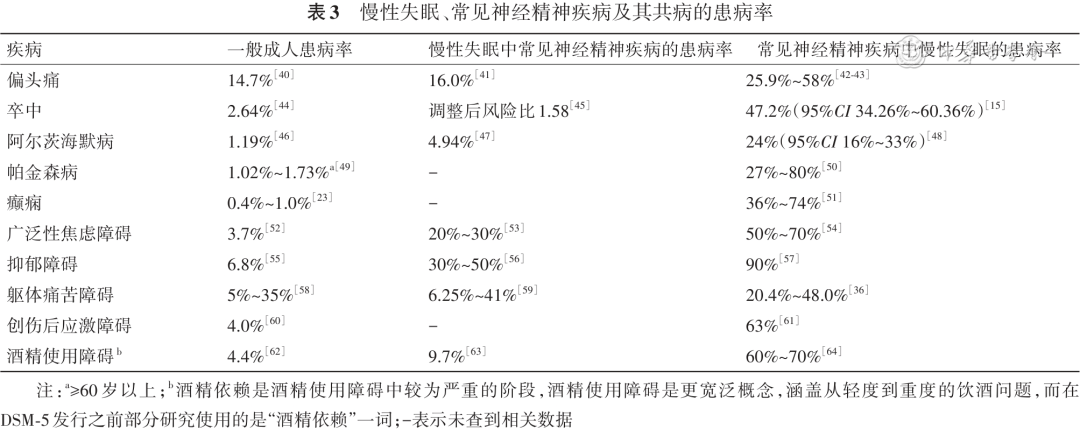
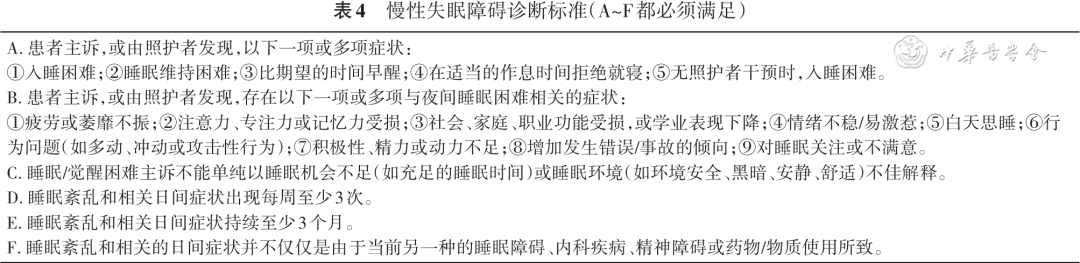
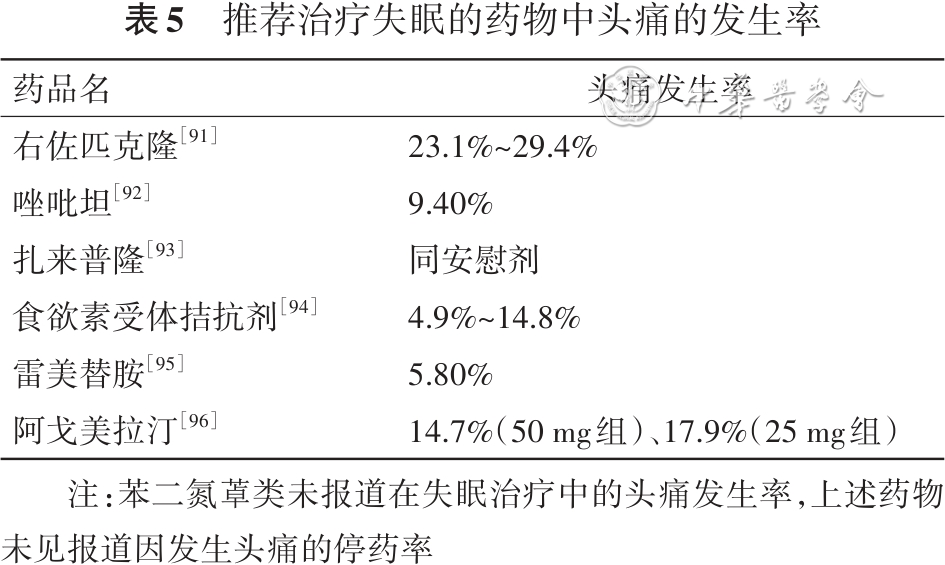

相关指南
- 2020 中国成人失眠伴抑郁焦虑诊治专家共识 · 康复与精神 2020
- 中国成人失眠诊断与治疗指南(2023版) · 康复与精神 2023
- 2023 老年慢性失眠慢病管理指南 · 康复与精神 2023
- 2024 特定人群失眠诊断与治疗专家共识 · 康复与精神 2024
- 2024 基层医疗机构失眠症诊断和治疗中国专家共识 · 康复与精神 2024
- 中国成人失眠诊断与治疗指南(2023版) · 康复与精神 2023
- 标准与规范 | 基层医疗机构失眠症诊断和治疗中国专家共识 · 康复与精神
- 中国成人失眠伴抑郁焦虑诊治专家共识 · 康复与精神
引用 / 出处
中华医学会神经病学分会睡眠障碍学组 中国医师协会神经内科医师分会. 成人慢性失眠共病常见神经精神疾病治疗指南(2025版)[J]. 中华内科杂志, 2025.