抗血小板药物消化道黏膜损伤防治多学科专家共识
一、共识制定方法
本共识的制定方法如下:(1)由共识意见起草小组通过系统性文献检索,制定共识意见草案。首先,对国内外有关抗血小板药物消化道黏膜损伤的指南、专家共识及高质量系统评价进行文献复习,总结临床关注重点。在Web of Science、PubMed、万方数据、中国知网(CNKI)等数据库,以“抗血小板
药物”“消化道”“溃疡”“出血”等为关键词,初步获取相关文献,检索时限为建库至2025年11月。对筛选后的文献进行证据质量分级,结合临床关切重点与检索结果起草推荐意见,并对推荐意见所依据的证据进行综述,最终形成共识初稿。(2)本共识的推荐意见采用两轮德尔菲投票法形成。各专家组成员收到以电子邮件形式发送的共识草案后进行审阅,并进行首轮投票及提出修改意见。表决意见分为:①完全赞同;②基本赞同,保留意见较小;③倾向赞同,保留意见较大;④倾向反对,反对意见较小;⑤部分反对,反对意见较大;⑥完全反对。事先设定的共识达成规则为:表决意见①+②占比>80.0%的陈述条目即视为达成共识。对于首轮投票未达成共识的条款,收集专家意见后进行修改。2025年12月19日,在共识讨论会上,参会专家对陈述条款逐条进行认真讨论,经必要修改后进行第二轮投票。若第二轮投票中表决意见①+②占比>80.0%,则视为达成共识;否则将该条目从推荐意见中删除。全部推荐意见达成共识后,起草小组对共识初稿进行修订与完善,交由共识专家组对共识条款及全文进行审核。
本共识基于“推荐意见分级的评估、制定与评价”方法对证据质量和推荐强度进行分级[16]。证据质量分高、中、低、极低4个等级,推荐强度分强推荐、弱推荐2个级别(表1)。推荐强度最终由证据质量与专家共识决定,充分考虑患者偏好和价值观、资源使用和利弊平衡等因素,低质量证据有可能获得强推荐。无证据来源的陈述不需要进行分级评价。共识水平以表决意见中的①+②比例表示。本共识涵盖常见抗血小板药物消化道黏膜损伤的发生机制、临床表现、危险因素、诊断、预防与治疗6个部分,共提出22条推荐意见,并对每条意见附以相应的证据阐述(表2)。
二、常见抗血小板药物的分类及其导致消化道黏膜损伤的机制
抗血小板药物主要包括:(1)环氧合酶抑制剂,主要为阿司匹林和吲哚布芬;(2)$P_2Y_{12}$受体抑制剂,主要为噻吩吡啶类药物氯吡格雷和非噻吩吡啶类药物替格瑞洛等;(3)血小板糖蛋白Ⅱb/Ⅲa受体拮抗剂,如替罗非班等;(4)磷酸二酯酶抑制剂,如西洛他唑、双嘧达莫等[6]。下文将对常见的抗血小板药物进行介绍,并对其引起消化道黏膜损伤的发生机制进行概述(表3)。
(一)环氧合酶抑制剂
1. 阿司匹林:为非选择性环氧合酶抑制剂,主要通过与环氧合酶-1的529号位点的丝氨酸残基发生不可逆的乙酰化反应,导致环氧合酶-1失活,使之不能与花生四烯酸结合,从而阻断后续前列腺素及血栓素A2的合成,发挥抗血小板的作用[17-18]。长期服用阿司匹林可显著降低心肌梗死、卒中的发生率,是缺血性心脑血管疾病治疗和长期二级预防的基石[17]。
阿司匹林损伤胃肠道黏膜的机制包括局部直
接作用和全身间接作用[19]。(1)局部作用:在胃黏膜损伤方面,阿司匹林直接与胃黏膜表面接触破坏黏膜屏障,其崩解后亦会增加白三烯等细胞毒性物质的释放,刺激并损伤胃黏膜[5]。在肠道黏膜损伤方面,阿司匹林可通过反复刺激小肠黏膜细胞增加肠道通透性,使得肠腔内容物如胆汁酸、细菌等物质进入循环,从而激活自身免疫系统,并招募炎症细胞聚集至损伤部位,引发新的炎性病灶[20]。(2)全身作用:作为非选择性环氧合酶抑制剂,阿司匹林可同时抑制环氧合酶-1和环氧合酶-2通路;环氧合酶-1抑制时,前列腺素生成减少,导致胃肠黏膜血流循环障碍、黏液及碳酸氢盐分泌减少,影响黏膜上皮的再生与更新,从而造成胃肠黏膜的损伤[19];在一定范围内,消化道黏膜损伤的风险随环氧合酶抑制剂服用剂量与时长的增加而增加[21]。
2. 吲哚布芬:为异吲哚啉基苯基丁酸衍生物,主要通过可逆性抑制环氧合酶-1发挥抗血小板作用,同时还可抑制二磷酸腺苷、肾上腺素及血小板激活因子诱导的血小板聚集,并显著降低凝血因子Ⅱ和X的血浆含量[22-23];其他药理作用包括减少血
(二) $P2Y_{12}$ 受体抑制剂
1. 氯吡格雷:属噻吩吡啶类衍生物,为前体药物,本身不具有抗血小板活性,需经肝脏酶系统细胞色素P450氧化,其活性代谢产物与血小板表面二磷酸腺苷受体P2Y₁₂不可逆结合,阻断二磷酸腺苷对腺苷环化酶的抑制作用,进而影响和阻碍二磷酸腺苷介导的糖蛋白IIb/IIIa复合物的活化,产生较强的抗血小板聚集作用[24]。氯吡格雷用以预防急性冠状动脉综合征(acute coronary syndrome, ACS)、经皮冠状动脉介入治疗(percutaneous coronary intervention,PCI)术后患者的血栓(含支架内血栓)事件。但由于氯吡格雷的疗效受CYP2C19基因多态性的影响,其抗血小板作用个体差异大;部分患者存在氯吡格雷抵抗,服用常规剂量氯吡格雷无法达到预期的血小板抑制效果[2,25]。
2. 替格瑞洛:属环戊烷三唑嘧啶类药物,为非前体类药物,无需代谢活化,其原型及主要代谢产物均具抗血小板活性[26]。替格瑞洛与P2Y₁₂受体可逆性结合,具有作用强、起效快、个体差异小等优点,且其疗效不受 CYP2C19 基因多态性影响。在降低 ACS患者血栓事件风险方面,替格瑞洛优于氯吡格雷,但其出血风险亦不低于氯吡格雷[27-29]。目前替格瑞洛主要用于血栓风险较高而出血风险较低的 ACS患者,其低剂型可用于心肌梗死后1~3年且合并缺血高危因素的患者[1]。
$P2Y_{12}$受体拮抗剂对胃肠道黏膜损伤的具体机制尚不明确。目前认为,与直接损伤黏膜的环氧合酶抑制剂不同,其主要通过干扰损伤愈合过程发挥作用。血小板聚集通过释放促血管生成因子在胃肠黏膜愈合中发挥关键作用。$P2Y_{12}$受体拮抗剂通过抑制二磷酸腺苷介导的糖蛋白Ⅱb/Ⅲa复合物活化,抑制血小板衍生的生长因子和血小板释放的血管内皮生长因子,进而阻碍新生血管生成并影响黏膜损伤愈合[30]。该抗血管生成作用可能加重已存在的胃肠黏膜损伤,并延缓由其他原因(如药物、幽门螺杆菌感染等)导致的胃肠黏膜损伤愈合[30]。然而,上述机制仍需进一步验证,目前尚缺乏动物实验和大样本临床研究阐明其损伤胃肠道黏膜作用
的具体路径。
(三)糖蛋白Ⅱb/Ⅲa受体拮抗剂
常用的有替罗非班,属于小分子非肽类酪氨酸衍生物,其对糖蛋白Ⅱb/Ⅲa受体进行可逆性、选择性竞争抑制,呈剂量依赖性[31]。糖蛋白Ⅱb/Ⅲa受体通路是血栓形成的最后通路,因此糖蛋白Ⅱb/Ⅲa受体拮抗剂是最强的抗血小板药物[32]。替罗非班静脉应用,起效较快,给药后5 min内即可抑制血小板聚集,达峰时间不超过30 min,1 h内即可达到稳态血浆浓度;但半衰期较短,需持续给药。现有证据表明,替罗非班会增加总体出血风险,但未显著增加大出血风险[33-34]。关于其消化道出血风险,目前尚无明确证据报道,其可能损伤胃肠道黏膜的具体作用机制亦尚未明确。
(四)磷酸二酯酶抑制剂
常用的为西洛他唑,为喹啉类衍生物,通过选择性抑制磷酸二酯酶Ⅲ活性、阻碍环磷酸腺苷降解和转化,使血小板和平滑肌细胞内的环磷酸腺苷浓度增加,发挥抗血小板和舒张血管的作用[35]。因此,西洛他唑常用于非心原性缺血性卒中二级预防、减轻下肢间歇性跛行症状、降低PCI术后6个月再狭窄率等。虽然西洛他唑会增加消化道出血的风险,但其是否是胃肠道黏膜损伤的独立危险因素仍需进一步探讨与证实。
三、抗血小板药物消化道黏膜损伤的临床表现
陈述1:抗血小板药物所致消化道黏膜损伤的临床症状无特异性,可以表现为反酸、腹痛、腹胀、恶心、呕吐、腹泻、呕血、黑便、贫血等,但仍有相当一部分患者无明显临床症状。证据等级:A,推荐等级:I,共识水平:100.0%。
抗血小板药物所致消化道黏膜损伤的临床表现因损伤部位和病灶类型而异。多数患者仅表现为非特异性症状,如反酸、腹胀、腹痛、腹泻、恶心、呕吐等,严重者可出现消化道出血甚至穿孔[36-38]。此外,多项研究表明,有相当一部分规律服用抗血小板药物引起消化道黏膜损伤的患者并无明显消化道症状[37-41]。然而,一旦出现呕血、黑便等明显消化道出血表现,则可能危及生命。
长期服用低剂量阿司匹林可引发多种消化道症状,在规律用药者中的症状发生率为15%~20%[39,42-43]。常见症状包括胃食管反流、腹胀、腹痛、嗳气等消化不良症状以及消化道出血,这些症状可能影响患者的用药依从性[40,44-45]。此外,阿司匹林也会增加下消化道黏膜损伤的风险,主要表现
中华心血管病杂志2026年7月第54卷第7期 Chin J Cardiol, July 2026, Vol. 54, No. 7
· 763 ·
为小肠出血及蛋白质丢失所致的缺铁性贫血和低蛋白血症[46-47]。吲哚布芬的药效持续时间较短,其胃肠道反应(如恶心、呕吐、消化不良和腹痛等)发生率及上消化道出血风险均低于阿司匹林[48-51]。然而,目前关于吲哚布芬在临床应用中引起的胃肠道不良事件报道仍较少,有待后续大规模临床研究进一步确认[52]。
长期服用氯吡格雷引起的消化道黏膜损伤,其临床表现与阿司匹林相似,常见症状包括腹泻、腹痛、消化道出血及消化不良等[53]。多项大型随机对照研究显示,长期服用氯吡格雷的消化道事件及相关并发症风险低于阿司匹林[54-55]。此外,替格瑞洛也可能引起胃肠道症状,包括呕血、黑便、粪便潜血阳性及恶心呕吐等[56]。
替罗非班在有效抗血栓的同时,会增加轻微出血的风险[57-58]。由于该药主要用于短期静脉给药,目前尚未有研究报告其直接相关的胃肠道症状。双嘧达莫作为磷酸二酯酶抑制剂,常与阿司匹林联用以增强抗血小板疗效。一项针对缺血性卒中或短暂性脑缺血发作的研究显示,与晚期联合组(阿司匹林单药治疗7d后联合双嘧达莫治疗)相比,早期联合组(24h内即给予阿司匹林联合双嘧达莫治疗)的恶心、呕吐等消化道症状发生率显著较高[59]。作用机制与双嘧达莫相似的西洛他唑,在与阿司匹林或氯吡格雷联用时,最常见的胃肠道症状为腹泻[60]。荟萃分析显示,在置入药物洗脱支架(drug-eluting stents,DES)的患者中,应用双联抗血小板治疗(dual-anti platelet-therapy,DAPT)联合西洛他唑的三联抗栓方案,其胃肠道症状发生率高于DAPT方案[61]。
陈述2:抗血小板药物所致消化道黏膜损伤内镜下常表现为黏膜充血水肿、糜烂、溃疡、出血,严重者可伴发消化道穿孔、幽门梗阻或消化道狭窄。证据等级:A,推荐等级:I,共识水平:100.0%。
研究显示,在规律服用低剂量阿司匹林超过3个月的人群中,消化道溃疡或糜烂的发生率高达47.83%,而多数患者并无特异性消化道症状[36]。抗血小板药物所致黏膜损伤与临床症状之间的不对应关系,给长期服药患者的临床用药管理带来挑战,而消化道内镜检查观察到的消化道黏膜损伤情况更为直观,更易于诊断。
上消化道内镜检查显示,阿司匹林相关黏膜损伤好发于胃体、胃窦及幽门前区,镜下可见胃与十二指肠的炎症、糜烂、溃疡,并可伴发出血或幽门梗
阻[36,62]。严重溃疡可进展为消化道穿孔,消化道穿孔的年发病率约为32.7/10万,其中超过1/3的病例与服用阿司匹林有关[63-64]。下消化道内镜下表现与上消化道相似,可见糜烂、溃疡、小肠血管扩张及憩室出血和肠道狭窄等[65-66],病灶多见于回肠和结肠[67-68]。在接受氯吡格雷连续治疗并伴有消化不良症状的患者中,上消化道内镜检查显示,出血点、糜烂和消化性溃疡的发生率分别为25%、39%和39%;溃疡分布在胃、十二指肠和两者均有的比例分别为78%、5%和17%[69]。对于接受DAPT的患者,研究显示,连续治疗3个月后,约90%的患者存在至少一种胃肠道黏膜病变,其中胃糜烂最为常见(70%)[70];而在接受12个月DAPT的患者中,几乎所有患者(99.2%)均出现胃肠道黏膜损伤,其中小肠损伤发生率为45.4%[15]。在抗血小板药物相关的小肠黏膜损伤中,黏膜水肿和糜烂性病变散在分布于整个小肠(空肠和回肠),而溃疡性病变主要位于回肠[71-72]。
关于另一种环氧合酶抑制剂吲哚布芬所致黏膜损伤的内镜下表现,目前相关研究较为有限。一项小样本研究提示,在健康志愿者中,使用吲哚布芬所致内镜下糜烂程度轻于阿司匹林[73]。目前关于糖蛋白Ⅱb/Ⅲa受体拮抗剂和磷酸二酯酶抑制剂所致消化道黏膜损伤的内镜下下表现,研究尚不充分,有待后续研究进一步明确其特点。
陈述3:服用抗血小板药物会增加消化道出血风险,且DAPT的消化道出血风险高于单药抗血小板治疗。证据等级:A,推荐等级:I,共识水平:100.0%。
低剂量阿司匹林治疗可导致上、下消化道黏膜损伤,增加消化道出血的风险[74-75],尤其增加轻微出血的发生率[76]。一项随机对照研究(ASPREE 研究)纳入19 114例70岁以上的健康老年人,随机分配至阿司匹林组(100 mg/d)或安慰剂组,中位随访时间为4.7年[77]。结果显示,阿司匹林组消化道出血风险较安慰剂组增加60%,其中上消化道出血风险增加87%,下消化道增加36%。一项荟萃分析纳入了22项服药时间在2个月以上的随机对照试验,结果显示,在心血管疾病的一级或二级预防中,阿司匹林(75~325 mg/d)相较安慰剂可显著增加消化道出血风险($RR=2.07,95%CI$;1.61~2.66)[74]。多数研究认为,低剂量阿司匹林引起的上消化道出血风险高于下消化道[78-79],占主要出血事件的40%以上[80]。近年来,由于质子泵抑制剂的广泛使用对上
764 ·
中华心血管病杂志 2026年7月第54卷第7期 Chin J Cardiol, July 2026, Vol. 54, No. 7
消化道黏膜起到了保护作用,上消化道出血风险并未明显高于下消化道[81];部分研究显示,下消化道出血的发生率已高于上消化道[82-83],且呈上升趋势[84]。
在 P2Y₁₂ 受体抑制剂的使用中,一项为期 10 年的随访研究显示,与未使用氯吡格雷的人群相比,使用氯吡格雷可使上消化道出血风险增加 3.66 倍,下消化道出血风险增加 3.52 倍[85]。氯吡格雷 (75 mg/d) 导致消化道出血的风险显著低于大剂量阿司匹林 (325 mg/d)[86];而与服用低剂量阿司匹林 (100 mg/d) 相比,长期服用氯吡格雷致消化道出血发生率低于阿司匹林[87-88]或与阿司匹林相似[55]。一项基于确诊冠心病患者个体数据的荟萃分析显示,与阿司匹林单药治疗 (75~325 mg/d) 相比,P2Y₁₂ 受体抑制剂单药治疗 (替格瑞洛 90 mg、2 次/d,或氯吡格雷 75 mg/d) 的消化道出血风险及缺血事件风险均较低[89],其中出血风险的降低主要归因于氯吡格雷的使用[27]。长期服用替格瑞洛治疗的 ACS 患者或外周动脉疾病患者消化道出血风险不低于氯吡格雷[27, 29, 90],但致命性出血事件并未增加。一项随机对照试验亚组分析显示,与氯吡格雷相比,普拉格雷 (RR=1.40, 95% CI: 1.10~1.77) 导致消化道出血的风险高于替格瑞洛 (RR=1.15, 95% CI: 0.94~1.39)[91]。
DAPT或三药联用抗血小板方案在降低心肌梗死发生率、辅助再灌注治疗方面较单药治疗具有明显优势,但同时也增加了胃肠道出血风险[92-93]。荟萃分析显示,与单药治疗相比,DAPT可导致胃肠道大出血风险增加47%,轻微出血风险增加56%[94]。当阿司匹林与氯吡格雷或替格瑞洛联合使用时,消化道出血发生率较单药治疗显著增加2~3倍[95-99],绝对风险增加0.6%~2.0%。在有心肌梗死病史的老年患者中,消化道出血率从1.5%上升到4.6%[85]。日本的一项前瞻性研究也显示,阿司匹林与氯吡格雷联用可使下消化道憩室出血风险增加4.1倍[100]。
目前关于糖蛋白Ⅱb/Ⅲa受体拮抗剂与磷酸二酯酶抑制剂相关消化道出血的临床研究仍较有限。现有证据显示,替罗非班作为联用抗血小板药物之一,其消化道出血风险与剂量无显著相关性[10]。在卒中的二级预防中,西洛他唑与阿司匹林相比呈现出较低的胃肠道出血风险趋势[102],其与阿司匹林或氯吡格雷联用时亦未显著增加消化道出血风险[6]。此外,对于股-腘静脉旁路移植术后患者,双嘧达莫联合阿司匹林治疗的胃肠道出血率并未明
显高于单用阿司匹林[103]。
四、抗血小板药物消化道黏膜损伤的危险因素
陈述4:抗血小板药物所致消化道黏膜损伤的危险因素包括:年龄≥65岁;既往消化性溃疡或消化道出血病史;幽门螺杆菌感染;长期使用糖皮质激素、非甾体抗炎药或联合使用其他抗血栓药物;慢性肾脏病;贫血;应激状态;长期吸烟或饮酒等。证据等级:A,推荐等级:I,共识水平:100.0%。
在抗血小板治疗背景下,多个胃肠道损伤和出血的危险因素已被一致报道。年龄是明确的风险因素,研究显示年龄每增长1岁,消化道出血发生率增加2.3%[104]。在服用低剂量阿司匹林的患者中,年龄>65岁人群的消化道溃疡穿孔发生率显著高于年龄≤65岁人群(10.7/10万比1.1/10万)[63]。此外,既往消化道溃疡或出血病史是抗血小板药物致消化道出血的重要危险因素[39, 85, 105]。幽门螺杆菌感染可加重黏膜损伤[106-107],是阿司匹林相关上消化道出血的独立危险因素(OR=4.7,95%CI:2.0~10.9)[108]。
在合并用药方面,抗血小板药物与糖皮质激素联用显著增加内镜下黏膜损伤风险,其发生率是安慰剂组的31.5倍[109];联合使用非甾体抗炎药可显著增加上消化道出血风险($RR=5.3$)[110]。DAPT导致的消化系统不良反应发生率高于任何一种单药治疗。单用阿司匹林、单用氯吡格雷以及两者联用导致上消化道出血的$RR$分别为3.7、2.8和$16.4$[110]。中国多中心双盲随机对照研究(OPT-PEACE研究)纳入505例PCI术后患者,在接受DAPT 6个月后,随机分配到阿司匹林、氯吡格雷或DAPT组继续治疗6个月,所有人组患者在0、6和12个月时分别接受1次磁控胶囊内镜胃和小肠联合检查。结果显示,与DAPT 12个月相比,DAPT 6个月联合单药抗血小板治疗6个月的胃肠道黏膜损伤累计发生率较低(94.3%比99.2%,$P=0.02$),单药抗血小板治疗组6~12个月的消化道出血发生率较DAPT组明显较低(0.6%比5.4%,$P=0.001$)[15]。此外,若联用抗凝药物(如华法林),出血风险进一步增加,其中DAPT联合抗凝药物的风险最高[111]。
同时,合并慢性肾脏病、贫血、应激状态等,以及长期吸烟、饮酒等不良生活习惯也可能增加长期抗血小板治疗患者的出血风险[3,85,112-113]。ASPREE研究的多变量分析显示,在健康老年人中,年龄、吸烟、高血压、慢性肾脏病和肥胖是服用阿司匹林致消化道出血的危险因素[3]。一项大样本队列研究
中华心血管病杂志2026年7月第54卷第7期 Chin J Cardiol, July 2026, Vol. 54, No. 7
· 765 ·
显示,在氯吡格雷相关消化道出血中,年龄、慢性肾脏病、既往消化性溃疡出血史及联用阿司匹林均为上、下消化道出血的独立危险因素[85]。此外,多项抗血小板药物相关消化道出血危险因素分析的研究提示,贫血与消化道出血风险增加显著相关[81, 114]。应激状态是抗栓治疗患者发生消化道黏膜损伤的重要危险因素。在严重创伤、大手术、危重疾病或严重心理应激下,机体处于应激状态,易发生应激性溃疡。若患者同时接受抗栓药物治疗,其消化道损伤及出血的风险会进一步显著增加[115-116]。另有研究报道,酒精摄入与阿司匹林联用存在显著的协同效应,会大幅增加出血风险[117]
五、抗血小板药物消化道黏膜损伤的诊断
陈述5:对于接受抗血小板治疗的患者,推荐通过病史、临床症状,以及粪隐血、血常规等实验室检查结果对消化道损伤情况进行初步诊断评估。证据等级:C,推荐等级:I,共识水平:100.0%。
不同抗血小板药物因其作用机制不同,导致消化道黏膜损伤的情况也存在差异[10,118]。此外,患者的年龄、既往消化道病史、合并用药等因素,也与损伤的严重程度密切相关[10]。因此,在采集病史时,应全面了解抗血小板药物的种类、用药时长与剂量、合并用药情况,以及是否合并基础疾病等信息。恶心、呕吐、上腹不适或疼痛是抗血小板药物相关上消化道损伤最常见的症状,而缺铁性贫血常见于小肠损伤[119],并有相当一部分合并溃疡、糜烂等消化道损伤的患者无明显消化系统症状[120],诊断时应结合其他检查指标综合判断。当患者合并消化道出血时,可见呕血、黑便、便血等表现,需进一步结合粪隐血、血常规(尤其是动态监测血红蛋白及红细胞计数)等实验室检查进行评估。当出现明确出血表现或实验室检查异常时,应结合风险与症状评估出血严重程度及损伤可能,对初步评估阳性或高危患者建议进一步内镜检查以明确诊断[121]。
陈述6:根据上述评估,推荐通过消化内镜检查明确消化道黏膜损伤的具体部位及严重程度,使用上消化道电子内镜或磁控胶囊胃镜明确上消化道黏膜损伤情况,使用胶囊内镜或小肠镜明确小肠黏膜损伤情况,使用结肠镜明确结肠黏膜损伤情况。证据等级:A,推荐等级:II,共识水平:96.7%。
对于临床已确诊消化道出血的患者,应参照相关诊疗指南[122-123],依据疑似出血部位选择相应的内镜检查。若患者仅存在消化道相关症状,则应严
格把握适应证,遵循个体化原则,可优先考虑药物治疗,再根据病情需要决定是否行内镜检查。
上消化道黏膜损伤的评估中,传统电子胃镜是广泛应用的方法,可明确抗血小板药物引起的食管糜烂、胃糜烂、胃溃疡及十二指肠溃疡等病灶[69, 124]。磁控胶囊胃镜作为一种安全、有效的舒适化胃部检查方式,可清晰观察胃黏膜损伤情况[15, 125-126];其优势在于检查前无需停用抗血小板药物,并能同时评估胃与小肠黏膜损伤[127-129]。小肠黏膜损伤可通过小肠镜或小肠胶囊内镜进行诊断。小肠镜通常需联合经口与经肛途径才能完成全小肠观察,过程有一定创伤且耗时较长;而小肠胶囊内镜则具有无创、便捷的特点,更适用于临床筛查与评估[68, 130]。对于结肠病变,如抗血小板药物相关的结肠憩室出血和结肠炎等,结肠镜是明确的诊断手段[67, 100, 131]。
六、抗血小板药物消化道黏膜损伤的预防
(一)风险评估与监测
陈述7:对于需服用抗血小板药物的患者,应仔细评估并充分告知药物可能导致的消化道黏膜损伤出血风险,并告知患者主动监测因用药可能出现的消化道症状(如腹痛、黑便等)与检验异常(如粪隐血阳性、贫血等)。证据等级:C,推荐等级:I,共识水平:100.0%。
临床医师应对需长期服用抗血小板药物的患者进行消化道出血风险评估与健康宣教。在初步拟定抗血小板药物的治疗方案后(含种类、剂量与疗程等),应评估患者的消化道损伤出血风险[6,10-11,132],并向患者充分说明潜在风险及自我监测要点,对出血高风险患者尤应重点告知。
需特别强调的是,抗血小板药物所致消化道损伤的初期症状易被忽视,而一旦发生出血则危险性高,严重者可危及生命。因此,患者不应忽视任何可能与消化道损伤相关的症状、体征与实验室检查异常情况,应做到主动监测。其中消化道症状包括黑便、呕血、便血、腹痛、反酸、消化不良等[36],实验室检查异常主要有粪隐血阳性、贫血、低白蛋白血症等[10,36]。若出现上述任何异常,应及时就医,通过进一步的实验室检查和内镜检查以明确诊断。
陈述8:对于消化道出血高风险患者,如条件允许,可考虑在服药前进行1次上消化道内镜评估。证据等级:C,推荐等级:II,共识水平:90.0%。
胃肠道是抗血小板药物治疗相关损伤与出血最常见的部位[15, 124, 133],其中相当一部分胃溃疡、小
766
中华心血管病杂志2026年7月第54卷第7期 Chin J Cardiol, July 2026, Vol. 54, No. 7
肠溃疡患者无明显临床症状,往往在引起消化道出血等严重并发症的情况下才察觉[39, 134-135],应予以更多重视。多项研究揭示了损伤发生的时间规律,证据显示,风险在用药第1个月最高,1~3个月内仍处高峰,此后逐步下降,约6个月后趋于平稳,1年后损伤率降低[110, 136-140]。上述证据与既往指南共识观点相符[6, 10],共同指出长期抗血小板治疗的前3个月是消化道损伤的高峰期,而整个12个月内均为损伤多发阶段。基于此时间规律,考虑到用药早期是消化道损伤高峰期,对于消化道出血高风险患者(图1),如条件允许,可考虑在启动治疗前进行1次内镜检查,并根据结果采取相应的预防和治疗措施。
(二)药物预防
陈述9:对拟服用抗血小板药物的患者,建议常规检测幽门螺杆菌,阳性者应进行根除治疗并评估根除治疗结果。证据等级:B,推荐等级:II,共识水平:100.0%。
流行病学研究显示,接受抗血小板药物治疗的冠心病患者幽门螺杆菌感染率为36%~79%[141-143]。幽门螺杆菌感染是抗血小板药物相关消化道黏膜损伤的独立危险因素。一项前瞻性队列研究纳入3组长期服用低剂量阿司匹林的患者,第一组为幽门螺杆菌根除队列,纳入并发溃疡出血且幽门螺杆菌阳性的患者,在溃疡愈合且根除幽门螺杆菌后继续服用低剂量阿司匹林,第二组为幽门螺杆菌阴性队列,纳入并发溃疡出血且幽门螺杆菌阴性的患者,在溃疡愈合后服用肠溶

七、抗血小板药物消化道黏膜损伤的治疗
(一)抗血小板药物的停用
陈述12:对于二级预防的患者,如果仅表现为消化不良和/或消化道黏膜糜烂、溃疡等胃肠道黏膜损伤,可在严密监测下给予抑酸剂、消化道黏膜
· 768 ·
中华心血管病杂志 2026年7月第54卷第7期 Chin J Cardiol, July 2026, Vol. 54, No. 7
保护剂等治疗,不推荐常规停用抗血小板药物。证据等级:A,推荐等级:I,共识水平:100.0%。
抗血小板药物能有效降低冠心病患者的血栓风险[18]。一项荟萃分析纳入了50 279例服用阿司匹林作为二级预防的患者,结果显示停用或不依从治疗方案患者的心脏严重不良事件发生率增加近3倍[18]。然而,阿司匹林导致的致命性消化道损伤比例相对较低,平均每5 000例接受阿司匹林治疗的患者中约有1例发生呕血[18]。此外,质子泵抑制剂、钾离子竞争性酸阻滞剂、H₂受体拮抗剂和黏膜保护剂等药物能为长期服用抗血小板药物的患者提供有效的消化道保护,促进胃部糜烂或溃疡的愈合,并显著降低上消化道出血或复发性消化不良的发生率[12, 156, 184-186]。米索前列醇、瑞巴派特等药物能在患者持续服用抗血小板药物的同时,促进其引发的小肠黏膜损伤的愈合[13, 179]。因此,对于二级预防的患者,若其仅表现为消化不良和/或消化道黏膜糜烂、溃疡等胃肠道黏膜损伤,临床管理重在控制症状与修复黏膜,而非停用抗血小板药物。本共识建议使用抑酸剂或黏膜保护剂等药物进行干预,或调整抗血小板治疗方案,以预防病情加重。
陈述13:一旦明确诊断消化道出血,建议联合心血管、脑血管、消化等学科,在综合评估血栓风险和出血风险的基础上,决定是否停用抗血小板药物。证据等级:C,推荐等级:I,共识水平:100.0%。
陈述14:如病情允许,建议及时进行内镜检查,查找出血原因和病灶,并实施有效治疗,在此基础上进一步评估是否调整抗血小板治疗方案。证据等级:C,推荐等级:I,共识水平:100.0%。
服用抗血小板药物会显著增加消化道出血风险,而停用此类药物会增加血栓形成的风险[74, 187]。此外,消化道出血本身所导致的血流动力学不稳定、失血性休克等情况,也可能加重血栓风险[188-189]。因此,当患者发生消化道出血时,是否停用抗血小板药物,需联合心血管、脑血管、消化等学科,综合评估其血栓风险、出血风险和出血严重程度,进行个体化决策。然而,目前仍缺乏高质量临床研究来明确消化道出血情况下应如何调整抗血小板药物,尤其是关于临床上新型抗血小板药物的相关证据更为有限。本共识基于现有的临床证据,围绕血栓风险、出血风险及出血严重程度的综合评估,提出针对此情况下的抗血小板药物管理方案(图2)。
(1) 血栓风险评估。冠心病患者血栓风险与ACS发作时间、PCI时间、放置支架类型等因素相关。根据欧洲心脏病学会血栓工作组冠心病和/或心房颤动患者出血后抗栓治疗管理专家共识,冠心病患者PCI术后血栓风险分为极高危、高危、中危、低到中危、低危5个等级[19]。极高危患者为ACS或新一代DES置入术后<8 d,生物可吸收支架置入术后<30 d;高危患者为ACS或新一代DES置入术后8~30 d,生物可吸收支架置入术后1~12个月;中危患者为ACS或新一代DES置入术后1~12个月;低到中危患者为稳定型心绞痛(ACS或新一代DES置入术后>12个月),但为复杂病例(左主干病变,双支病变及再发ACS);低危患者为稳定型心绞痛(ACS或新一代DES置入术后>12个月),无其他危险因素。
(2) 出血严重程度评估。国内外冠心病 DAPT 指南指出应根据出血的严重程度调整抗血小板药物治疗方案[2, 191]。结合出血学术研究联合会出血分级标准[192],将消化道出血严重程度分为轻度、中度、重度和危及生命的出血4个等级。轻度出血:无明显失血的上/下消化道出血,需要药物治疗但无需住院治疗;中度出血:明显失血的上/下消化道出血,血红蛋白降低>30 g/L和/或需要住院治疗,但血流动力学稳定且进展缓慢;重度出血:严重的上/下消化道出血,血红蛋白降低>50 g/L且需要住院治疗,但血流动力学稳定且进展缓慢;危及生命的出血:大量明显的上/下消化道出血,迅速危及生命的严重活动性出血。
(3)再出血风险评估。血流动力学稳定的患者,应及时进行消化内镜检查,以明确出血原因和病灶情况,并排除消化道肿瘤、血管畸形等非抗血小板药物相关性出血。溃疡出血是抗血小板药物引起消化道出血的主要原因。出血性溃疡病灶的内镜下 Forrest 分级与再出血风险显著相关,具体分级与风险如下:Ia,喷射样出血,再出血率为 55%;Ib,活动性渗血,再出血率为 55%;IIa,血管显露,再出血率为 43%;IIb,附着血凝块,再出血率为 22%;IIc,黑色基底,再出血率为 10%;III,基底清洁,再出血率为 5%[123, 190, 193]。其中 Forrest 分级为 Ia、Ib、IIa 和 IIb 的病灶为高出血风险病灶,而 IIc 和 III 级病灶为低出血风险病灶[194]。对于长期服用抗血小板药物所致下消化道黏膜(如糜烂、溃疡)的再出血风险,目前尚缺乏规范化的分级标准,有待后续研究深入探讨。尽管如此,消化内镜检查
中华心血管病杂志 2026年7月第54卷第7期 Chin J Cardiol, July 2026, Vol. 54, No. 7
· 769 ·
 注:ICU为重症监护病房,DAPT为双联抗血小板治疗,SAPT为单药抗血小板治疗
(二)长期抗血小板治疗方案的调整
陈述18:对于DAPT期间发生消化道出血的患者,推荐在综合评估其血栓风险与再出血风险后,考虑实施降阶治疗,包括缩短DAPT疗程、使用单药抗血小板治疗或将强效$P2Y_{12}$受体抑制剂改为氯吡格雷。证据等级:A,推荐等级:I,共识水平:96.7%。
对于抗血小板治疗期间发生消化道出血的患者,待出血稳定后,应综合权衡其血栓与再出血风险,并重新评估抗血小板药物的类型、剂量和持续时间,以决策是否需要调整长期治疗方案。
DAPT所致胃肠道出血风险显著高于单药治疗。对于消化道出血高风险患者,缩短DAPT疗程是一项可行的管理策略。在慢性冠脉综合征患者中,多项随机对照研究探讨了将DAPT疗程缩短至
中华心血管病杂志2026年7月第54卷第7期 Chin J Cardiol, July 2026, Vol. 54, No. 7
· 771 ·
1~3个月以降低出血风险的策略[21-214]。综合证据显示,缩短DAPT疗程可减少出血事件,且不增加缺血事件发生率。这表明,对于非高缺血风险或存在高出血风险的慢性冠脉综合征患者,PCI术后接受1~3个月的短期DAPT可能获益。对于ACS患者,除默认的12个月DAPT方案外,替代策略包括将疗程缩短至1个月或3~6个月,具体时长应依据患者的出血与缺血风险权衡决定。对于接受3~6个月DAPT后未发生不良事件且非高缺血风险的患者,可考虑采用缩短DAPT疗程的策略,并在ACS后12个月内优先转为P2Y₁₂受体抑制剂单药治疗[212-213,215];对于高出血风险患者,可考虑在1个月DAPT后转为阿司匹林或P2Y₁₂受体抑制剂单药治疗[211,214,216]。此外,与氯吡格雷相比,第三代P2Y₁₂受体抑制剂(替格瑞洛与普拉格雷)显示出更高的上消化道出血风险[27]。多项随机对照研究和荟萃分析表明,将基于普拉格雷或替格瑞洛的DAPT方案降级为基于氯吡格雷的DAPT方案,可减少出血事件,且未观察到主要不良心血管事件的明显增加[217-220]。
因此,对于DAPT期间发生消化道出血的患者,在综合评估血栓风险和再出血风险的基础上,可考虑采取以下策略调整长期用药方案:缩短DAPT疗程、转换为单药抗血小板治疗,或将强效$P2Y_{12}$受体抑制剂更换为氯吡格雷[221-223]。
陈述19:对于阿司匹林单药抗血小板治疗期间发生消化道出血的患者,可考虑在继续阿司匹林治疗的基础上联用质子泵抑制剂或钾离子竞争性酸阻滞剂等抑制剂,也可考虑换用其他抗血小板药物。证据等级:A,推荐等级:I,共识水平:100.0%。
近年来,多项大规模随机对照研究和荟萃分析对比了阿司匹林和氯吡格雷在冠心病患者二级预防中的疗效和安全性,结果显示,长期服用氯吡格雷降低冠心病患者主要不良心血管事件的疗效优于服用阿司匹林,且未增加大出血风险[55,87,89,224-225]。因此,多项指南均推荐将氯吡格雷作为阿司匹林不耐受患者的替代药物[221-222]。在消化道出血风险方面,上述研究相关数据尚未有确定性结论,部分研究显示长期服用氯吡格雷的消化道出血风险低于阿司匹林[87,89,也有研究认为两者风险相当[55,224]。
2005年发表的一项随机、双盲、对照研究纳入了320例因服用阿司匹林致溃疡出血的患者,在溃
疡愈合并根除幽门螺杆菌(如存在感染)后,患者被随机分配接受氯吡格雷单药治疗或阿司匹林联合艾司奥美拉唑治疗。结果显示,氯吡格雷组复发性溃疡出血的发生率显著高于阿司匹林联合艾司奥美拉唑治疗组(8.6%比0.7%,P=0.001)226]。后续采用类似设计的随机对照试验也显示了相同结果[227]。近年来,钾离子竞争性酸阻滞剂的应用也被证明能有效预防低剂量阿司匹林所致的溃疡复发并降低消化道出血率[12]。这些数据均支持将阿司匹林联合质子泵抑制剂、钾离子竞争性酸阻滞剂等抑酸剂,作为消化道再出血风险较高患者的替代治疗方案。
此外,对于缺血性心脑血管疾病患者,吲哚布芬在降低心血管死亡、心肌梗死和卒中发生率方面的作用与阿司匹林相当,但其总体出血及胃肠道反应等的发生率低于阿司匹林。一项开放标签、随机对照、多中心研究(OPTION研究)共入组4 551例肌钙蛋白阴性并接受DES置入的中国冠心病患者。吲哚布芬组联合氯吡格雷组在12个月心血管性死亡、非致死性心肌梗死、缺血性卒中、肯定/极可能的支架血栓或出血学术研究联合会2、3、5型出血复合终点方面非劣效于阿司匹林联合氯吡格雷组[228]。其他研究也提示,吲哚布芬相比阿司匹林胃肠反应更少且出血发生率更低[50,229]。因此,可考虑将吲哚布芬作为消化道再出血高危患者的替代治疗[2]。
综上,对于服用阿司匹林治疗期间发生消化道出血的患者,其长期用药调整策略包括:在继续服用阿司匹林治疗的基础上联用抑酸剂,或换用其他抗血小板药物。
(三)药物治疗
陈述20:推荐使用抑酸剂和黏膜保护剂治疗抗血小板药物所致的上消化道黏膜损伤。证据等级:A,推荐等级:I,共识水平:96.7%。
对于非溃疡性上消化道黏膜损伤,质子泵抑制剂与$H_2$受体拮抗剂在缓解消化不良症状方面疗效相当;而对于上消化道溃疡,质子泵抑制剂的抑酸与愈合作用强于$H_2$受体拮抗剂,与钾离子竞争性酸阻滞剂相当[163,230]。此外,在急性上消化道出血的治疗中,质子泵抑制剂、钾离子竞争性酸阻滞剂能够改善出血病灶的内镜下表现,减少内镜下止血干预的需要,并降低高危患者的再出血发生率[209,231-232]。除抑酸剂外,黏膜保护剂可以有效缓解腹胀、嗳气等消化不良症状,治疗糜烂性胃炎、消
772 ·
中华心血管病杂志 2026年7月第54卷第7期 Chin J Cardiol, July 2026, Vol. 54, No. 7
化性溃疡等黏膜损伤[180]。
在抗血小板药物所致上消化道黏膜损伤的针对性治疗方面,相关研究较为有限。一项随机对照研究纳入60例长期服用低剂量阿司匹林且内镜确诊为胃或十二指肠溃疡的患者,在继续阿司匹林治疗的同时,随机接受质子泵抑制剂或$H_2$受体拮抗剂治疗。8周后复查胃镜显示,两组溃疡愈合率均超过80%(质子泵抑制剂组88.5%比$H_2$受体拮抗剂组84.6%),差异无统计学意义[185],此结果与另一项小样本随机对照研究的结论一致[233]。此外,一些小样本研究也报道了黏膜保护剂,如瑞巴派特[159, 174]、米索前列醇[161-162]等,在预防低剂量阿司匹林相关上消化道损伤以及溃疡复发方面显示出积极作用。
综上,对于抗血小板药物所致上消化道黏膜损伤,本共识建议根据损伤性质、症状严重程度及出血风险,选用抑酸剂或联合黏膜保护剂治疗。
陈述 21:对于抗血小板药物引起的小肠黏膜损伤和出血,可考虑使用内源性黏膜保护剂进行治疗。证据等级:B,推荐等级:II,共识水平:100.0%。
目前尚无明确治疗抗血小板药物相关小肠黏膜损伤和出血的药物,质子泵抑制剂不能预防或减轻相关的下消化道损伤[82, 234]。多项研究提示内源性黏膜保护剂在小肠黏膜损伤的治疗中具有一定潜力。2018年发表的一项随机对照研究纳入84例因服用低剂量阿司匹林导致不明原因消化道出血、并经胶囊内镜确诊为小肠溃疡或多发糜烂的患者[179]。所有患者继续服用阿司匹林,并随机接受米索前列醇或安慰剂治疗,8周后行胶囊内镜复查。结果显示米索前列醇组小肠黏膜完全愈合比例(28.6%比9.6%),血红蛋白升高幅度以及糜烂/溃疡的减少程度均显著优于安慰剂组。另一项随机对照研究(n=102)也证实了米索前列醇促进小肠溃疡愈合的作用[13]。但两项研究均显示米索前列醇单独用药对小肠溃疡的治疗作用有限,且增加腹泻等不良反应的发生率。此外,一些小样本随机对照研究显示瑞巴派特[235-236]、聚普瑞锌[178]等黏膜保护剂可减轻低剂量阿司匹林导致的小肠黏膜损伤。因此,基于现有证据,对于抗血小板药物致小肠黏膜损伤和出血的患者,在实施必要的止血措施后,可考虑使用内源性黏膜保护剂辅助治疗,但应注意不良反应的发生。
(四)内镜治疗
陈述 22:对于抗血小板药物引起的急性消化道黏膜出血,建议必要时行内镜下止血治疗。证据等级:B,推荐等级:II,共识水平:93.3%。
抗血小板药物引起的急性消化道黏膜出血,其治疗应遵循上消化道出血与下消化道出血的相关指南[122-123]。总体原则包括:抗休克,积极补充血容量;药物止血;内镜下治疗;必要时行血管栓塞治疗或外科治疗。同时应多学科协作共同商讨,尤其重视抗血小板药物停药和重启的时机。
对于急性上消化道出血患者,早期内镜检查(≤24 h)与较低的住院死亡率、住院费用及较短的住院时间有关[237-238],并可进行再出血风险评估。因此对血流动力学稳定的上消化道出血患者,应在 24 h 内行内镜检查明确出血部位、性质,推荐对 Forrest 分级 Ia~IIb 的出血病变实施内镜下止血治疗[199]。对于急性下消化道出血患者,内镜下发现的下消化道活动性出血(喷射性出血或渗血)、血管显露或附着血凝块病灶,内镜下止血起效迅速、疗效精确,建议在保证安全的前提下应予以实施[122]。
内镜治疗抗血小板药物相关消化道出血的临床研究目前仍较为有限。一项小样本随机对照研究评估了ACS合并急性上消化道出血患者进行早期内镜治疗的疗效与安全性。结果显示,与保守治疗组相比,早期内镜组在控制出血、降低3 d再出血率和减少输血需求方面均显著更优,且未增加死亡率和主要并发症[29]。一项多中心前瞻性研究纳入了619例需内镜干预的高危上消化道出血患者,其中253例正在服用抗血栓药物,旨在评估此类药物对患者预后的影响。结果显示,尽管服药患者的基础状况更差,但其出血相关死亡率和全因死亡率反而显著低于未服用抗栓药物患者,而再出血率和手术率无差异[24]。一项系统回顾研究评估了近期心肌梗死患者发生消化道出血后行内镜检查的安全性,共纳入7项研究(1081例患者),检查类型包括上消化道内镜(5项),乙状结肠镜(1项)和结肠镜(1项)[24]。结果显示,近期心肌梗死患者行内镜检查的并发症发生率为1%~8%,并且主要是轻微并发症。综上,对于服用抗血小板药物的急性消化道出血患者,在血流动力学稳定的情况下,积极的内镜治疗和综合管理有助于改善预后。对于血流动力学不稳定或大量呕血的高危患者,则应在复苏、病情稳定后再考虑内镜检查和治疗。
中华心血管病杂志 2026 年 7 月第 54 卷第 7 期 Chin J Cardiol, July 2026, Vol. 54, No. 7
· 773 ·
八、小结与展望
本共识立足于当前最新循证医学证据及专家临床经验,由消化科及心内科专科合作,围绕抗血小板药物所致消化道黏膜损伤的发生机制、临床表现、危险因素、诊断、预防与治疗6大核心内容,系统提出22条推荐意见,旨在提高临床对该类损伤的识别与重视程度,构建从筛查、诊断到防治的全程管理策略,从而降低抗血小板治疗患者消化道损伤及相关并发症的发生风险。然而,目前该领域仍存在诸多未知与挑战,例如:是否常规筛查并根除幽门螺杆菌、消化道出血高风险患者预防性抑酸的用药时长、消化道出血时如何停用与重启抗血小板药物、小肠损伤的预防与治疗策略等。未来,期待更多高质量的前瞻性、多中心研究提供更充足的证据,为本共识的持续更新奠定基础,以更好地服务于广大患者。
共识专家组成员(按姓氏汉语拼音排序):陈红(北京大学人民医院心血管内科)、陈旻湖(中山大学附属第一医院消化内科)、陈平(内蒙古医科大学附属医院消化内科)、陈卫昌(苏州大学第一附属医院消化内科)、陈耀龙(兰州大学基础医学院循证医学中心)、陈烨(南方医科大学深圳医院消化内科)、戴菲(西安交通大学第二附属医院消化内科)、邓捷(西安交通大学第二附属医院心血管内科)、董卫国(武汉大学人民医院消化内科)、杜奕奇(海军军医大学第一附属医院消化内科)、房静远(上海交通大学医学院附属仁济医院消化内科)、戈之铮(上海交通大学医学院附属仁济医院消化内科)、公威(北京医院心血管内科)、郭晓钟(北部战区总医院消化内科)、韩雅玲(北部战区总医院心血管内科)、和水祥(西安交通大学第一附属医院消化内科)、侯晓华(华中科技大学同济医学院附属武汉中心医院、华中科技大学同济医学院附属协和医院消化内科)、胡兵(四川大学华西医院消化内科)、黄永辉(清华大学附属北京清华长庚医院消化内科)、冀明(首都医科大学附属北京友谊医院消化内科)、金震东(海军军医大学第一附属医院消化内科)、李春坚(江苏省人民医院心血管内科)、李景南(中国医学科学院北京协和医院消化内科)、李鹏(首都医科大学附属北京友谊医院消化内科)、李文(天津市人民医院内镜诊疗中心)、李延青(山东大学齐鲁医院消化内科)、李毅(北部战区总医院心血管内科)、李兆申(海军军医大学第一附属医院消化内科)、廖专(海军军医大学第一附属医院消化内科)、令狐恩强(中国人民解放军总医院消化内科)、刘俊(华中科技大学同济医学院附属协和医院消化内科)、刘小伟(中南大学湘雅医院消化内科)、刘玉兰(北京大学人民医院消化内科)、刘震宇(中国医学科学院北京协和医院心血管内科)、吕宾(浙江中医药大学附属第一医院消化内科)、吕农华(南昌大学第一附属医院消化内科)、缪应雷(昆明医
科大学第一附属医院消化内科)、聂绍平(首都医科大学附属北京安贞医院心血管内科)、彭贵勇(陆军军医大学第一附属医院消化内科)、祁兴顺(北部战区总医院消化内科)、曲鹏(大连理工大学医学部)、任建林(厦门大学附属中山医院消化内科)、汝磊生(中国人民解放军联勤保障部队第980医院心血管内科)、沈锡中(复旦大学附属中山医院消化内科)、盛剑秋(中国人民解放军总医院第七医学中心消化内科)、时永全(空军军医大学第一附属医院消化内科)、王邦茂(天津医科大学总医院消化内科)、王贵齐(中国医学科学院肿瘤医院内镜科)、王效增(北部战区总医院心血管内科)、吴开春(空军军医大学第一附属医院消化内科)、谢渭芬(海军军医大学第二附属医院消化内科)、许国强(浙江大学医学院附属第一医院消化内科)、徐红(吉林大学白求恩第一医院消化内科)、徐美东(同济大学附属东方医院消化内科)、许洪伟(山东第一医科大学附属省立医院消化内科)、杨仕明(陆军军医大学第二附属医院消化内科)、杨云生(中国人民解放军总医院消化内科)、袁耀宗(上海交通大学医学院附属瑞金医院消化内科)、张波(大连医科大学附属第一医院心血管内科)、张军(沧州市中心医院心血管内科)、张俊杰(南京市第一医院心血管内科)、张萍(清华大学附属北京清华长庚医院心血管内科)、张澍田(首都医科大学附属北京友谊医院消化内科)、张晓岚(河北医科大学第二医院消化内科)、赵贵君(内蒙古自治区人民医院内镜中心)、赵仙先(海军军医大学第一附属医院心血管内科)、赵雪燕(中国医学科学院阜外医院心血管内科)、智发朝(南方医科大学南方医院消化内科)、钟良(复旦大学附属华山医院消化内科)、周丽雅(北京大学第三医院消化内科)、祝荫(南昌大学第一附属医院消化内科)、邹多武(上海交通大学医学院附属瑞金医院消化内科)、左秀丽(山东大学齐鲁医院消化内科)
主要起草执笔者:陈逸致(海军军医大学第一附属医院消化内科)、蒋熙(海军军医大学第一附属医院消化内科)、蒋斌(南部战区海军第一医院消化内科)、何晨(海军军医大学第一附属医院消化内科)、邱晓鸥(海军军医大学第一附属医院特需诊疗科)、王元辰(海军军医大学第一附属医院消化内科)、朱佳慧(海军军医大学第三附属医院消化内科)
利益冲突 所有作者声明无利益冲突
参考文献
[1] 中国老年学学会心脑血管病专业委员会, 中国康复医学会心脑血管病专业委员会. 稳定性冠心病口服抗血小板药物治疗. 中国专家共识[J]. 中华心血管病杂志, 2016, 44(2): 104-111. DOI: 10.3760/cma.j.issn.0253-3758.2016.02.006.
[2] 中华医学会心血管病学分会动脉粥样硬化与冠心病学组, 中华医学会心血管病学分会介入心脏病学组, 中国医师协会心血管内科医师分会血栓防治专业委员会, 等. 冠心病双联抗血小板治疗中国专家共识[J]. 中华心血管病杂志, 2021, 49(5): 432-454. DOI: 10.3760/cma.j.cn112148-20210125-00088.
[3] Mahady SE, Margolis KL, Chan A, et al. Major GI bleeding
774
中华心血管病杂志2026年7月第54卷第7期 Chin J Cardiol, July 2026, Vol. 54, No. 7
in older persons using aspirin: incidence and risk factors in the ASPREE randomised controlled trial[]]. Gut, 2021, 70(4):717-724. DOI: 10.1136/gutjnl-2020-321585.
[4] Pipilis A, Makrygiannis S, Chrisanthopoulou E, et al. Gastrointestinal bleeding in patients receiving antiplatelet and anticoagulant therapy: practical guidance for restarting therapy and avoiding recurrences[J]. Hellenic J Cardiol, 2014, 55(6):499-509.
[5] 抗血小板药物消化道损伤的预防和治疗中国专家共识组. 抗血小板药物消化道损伤的预防和治疗中国专家共识[J].中华内科杂志,2009,48(7):607-611.DOI:10.3760/cma.j.issn.0578-1426.2009.07.031.
[6] 抗血小板药物消化道损伤的预防和治疗中国专家共识组. 抗血小板药物消化道损伤的预防和治疗中国专家共识(2012更新版)[J].中华内科杂志,2013,52(3):264-270. DOI:10.3760/cma.j.issn.0578-1426.2013.03.027.
[7] 抗栓治疗消化道损伤防治专家组.抗栓治疗消化道损伤防治中国专家建议(2016·北京)[].中华内科杂志,2016,55(7):564-567.DOI:10.3760/cma.j.issn.0578-1426.2016.07.020.
[8] Abraham NS, Hlatky MA, Antman EM, et al. ACCF/ACG/ AHA 2010 expert consensus document on the concomitant use of proton pump inhibitors and thenopyridines: a focused update of the ACCF/ACG/AHA 2008 expert consensus document on reducing the gastrointestinal risks of antiplatelet therapy and NSAID use[J]. Am J Gastroenterol, 2010, 105(12): 2533-2549. DOI: 10.1038/ajg.2010.445.
[9] Tan HJ, Mahadeva S, Menon J, et al. Statements of the Malaysian Society of Gastroenterology & Hepatology and the National Heart Association of Malaysia task force 2012 working party on the use of antiplatelet therapy and proton pump inhibitors in the prevention of gastrointestinal bleeding[J]. J Dig Dis, 2013, 14(1): 1-10. DOI: 10.1111/1751-2980.12000.
[10] Lanas A, Gargallo CJ. Management of low-dose aspirin and clopidogrel in clinical practice: a gastrointestinal perspective[J]. J Gastroenterol, 2015, 50(6):626-637. DOI: 10.1007/s00535-015-1038-3.
[11] Abrignani MG, Gatta L, Gabrielli D, et al. Gastroprotection in patients on antiplatelet and/or anticoagulant therapy: a position paper of National Association of Hospital Cardiologists (ANMCO) and the Italian Association of Hospital Gastroenterologists and Endoscopists (AIGO) [J]. Eur J Intern Med, 2021, 85: 1-13. DOI: 10.1016/j. ejim.2020.11.014.
[12] Kawai T, Oda K, Funao N, et al. Vonoprazan prevents low-dose aspirin-associated ulcer recurrence: randomised phase 3 study[J]. Gut, 2018, 67(6): 1033-1041. DOI: 10.1136/gutjnl-2017-314852.
[13] Taha AS, McCloskey C, McSkimming P, et al. Misoprostol for small bowel ulcers in patients with obscure bleeding taking aspirin and non-steroidal anti-inflammatory drugs (MASTERS): a randomised, double-blind, placebo-controlled, phase 3 trial[J]. Lancet Gastroenterol Hepatol, 2018, 3(7): 469-476. DOI: 10.1016/ S2468-1253(18)30119-5.
[14] Hofmann R, James S, Sundqvist MO, et al. Helicobacter pylori screening after acute myocardial infarction: the cluster randomized crossover HELP-MI SWEDEHEART trial[J]. JAMA, 2025, 334(13): 1160-1169. DOI: 10.1001/jama.2025.15047.
[15] Han Y, Liao Z, Li Y, et al. Magnetically controlled capsule endoscopy for assessment of antiplatelet therapy-induced gastrointestinal injury[J]. J Am Coll Cardiol, 2022, 79(2): 116-128. DOI: 10.1016/j.jacc.2021.10.028.
[16] Guyatt GH, Oxman AD, Vist GE, et al. GRADE: an emerging consensus on rating quality of evidence and strength of recommendations[J]. BMJ, 2008, 336(7650): 924-926. DOI: 10.1136/bmj.39489.470347.AD.
[17] Patrono C. Low-dose aspirin for the prevention of atherosclerosisotic cardiovascular disease[J]. Eur Heart J, 2024, 45(27): 2362-2376. DOI: 10.1093/eurheartj/ ehae324.
[18] Warner TD, Nylander S, Whatling C. Anti-platelet therapy: cyclo-oxygenase inhibition and the use of aspirin with particular regard to dual anti-platelet therapy[J]. Br J Clin Pharmacol, 2011, 72(4): 619-633. DOI: 10.1111/j.1365-2125.2011.03943.x.
[19] Bjarnason I, Scarpignato C, Holmgren E, et al. Mechanisms of damage to the gastrointestinal tract from nonsteroidal anti-inflammatory drugs[J]. Gastroenterology, 2018, 154(3):500-514. DOI: 10.1053/j.gastro.2017.10.049.
[20] Watanabe T, Fujiwara Y, Chan F. Current knowledge on non-steroidal anti-inflammatory drug-induced small-bowel damage: a comprehensive review[J]. J. Gastroenterol, 2020, 55(5): 481-495. DOI: 10.1007/s00535-019-01657-8.
[21] Serebruany VL, Steinhubl SR, Berger PB, et al. Analysis of risk of bleeding complications after different doses of aspirin in 192, 036 patients enrolled in 31 randomized controlled trials[J]. Am J Cardiol, 2005, 95(10): 1218-1222. DOI: 10.1016/j.amjcard.2005.01.049.
[22] Jin NZ, Gopinath S. Potential blood clotting factors and anticoagulants[J]. Biomed Pharmacother, 2016, 84: 356-365. DOI: 10.1016/j.biopa.2016.09.057.
[23] Vinazzer H, Fuccella LM. Clinical pharmacology studies with indobufen (K 3920): inhibitor of platelet aggregation [J]. J Clin Pharmacol, 1980, 20(5-6 Pt 1): 316-325. DOI: 10.1177/009127008002000502.
[24] Gachet C. P2 receptors, platelet function and pharmacological implications[J]. Thromb Haemost, 2008, 99(3):466-472. DOI: 10.1160/TH07-11-0673.
[25] Fitzgerald DJ, Maree A. Aspirin and clopidogrel resistance [J]. Hematology Am Soc Hematol Educ Program, 2007: 114-120. DOI: 10.1182/asheducation-2007.1.114.
[26] Cattaneo M. New P2Y12 blockers[J]. J Thromb Haemost, 2009, 7 Suppl 1: 262-265. DOI: 10.1111/j.1538-7836.2009.03382.x.
[27] Wallentin L, Becker RC, Budaj A, et al. Ticagrelor versus clopidogrel in patients with acute coronary syndromes[J]. N Engl J Med, 2009, 361(11): 1045-1057. DOI: 10.1056/ NEJMoa0904327.
[28] Xi Z, Zhou Y, Zhao Y, et al. Ticagrelor versus clopidogrel in patients with two CYP2C19 loss-of-function alleles undergoing percutaneous coronary intervention[J]. Cardiovasc Drugs Ther, 2020, 34(2): 179-188. DOI: 10.1007/s10557-020-06956-4.
[29] Hiatt WR, Fowkes FG, Heizer G, et al. Ticagrelor versus clopidogrel in symptomatic peripheral artery disease[]]. N Engl J Med, 2017, 376(1): 32-40. DOI: 10.1056/ NEJMoa1611688.
[30] Handa Y, Fukushima S, Osawa M, et al. P2Y12 inhibitors
中华心血管病杂志 2026 年 7 月第 54 卷第 7 期 Chin J Cardiol, July 2026, Vol. 54, No. 7
· 775 ·
exacerbate low-dose aspirin-induced small bowel injury in dual antiplatelet therapy[J]. Intern Med, 2021, 60(22): 3517-3523. DOI: 10.2169/internalmedicine.7292-21.
[31] Coller BS. Anti-GP II b/III a drugs: current strategies and future directions[J]. Thromb Haemost, 2001, 86(1): 427-443.
[32] Schwarz M, Meade G, Stoll P, et al. Conformation-specific blockade of the integrin GPIIb/IIIa: a novel antiplatelet strategy that selectively targets activated platelets[J]. Circ Res, 2006, 99(1): 25-33. DOI: 10.1161/01. RES. 0000232317.84122.0c.
[33] Eitel I, Saraei R, Jurczyk D, et al. Glycoprotein II b/III a inhibitors in acute myocardial infarction and angiographic microvascular obstruction: the REVERSE-FLOW trial[J]. Eur Heart J, 2024, 45(47): 5058-5067. DOI: 10.1093/eurheartj/ehae587.
[34] Platelet Receptor Inhibition in ischemic syndrome management in patients limited by unstable signs and symptoms (PRISM-PLUS) study investigators. inhibition of the platelet glycoprotein II b/III a receptor with tirofiban in unstable angina and non-Q-wave myocardial infarction[J]. N Engl J Med, 1998, 338(21): 1488-1497. DOI: 10.1056/NEJM199805213382102.
[35] Sorkin EM, Markham A. Cilostazol[J]. Drugs Aging, 1999, 14(1): 63-71; discussion 72-73. DOI: 10.2165/00002512-199914010-00005.
[36] Niv Y, Battler A, Abuksis G, et al. Endoscopy in asymptomatic minidose aspirin consumers[J]. Dig Dis Sci, 2005, 50(1):78-80. DOI: 10.1007/s10620-005-1281-1.
[37] Sostres C, Gargallo CJ, Lanas A. Nonsteroidal anti-inflammatory drugs and upper and lower gastrointestinal mucosal damage[J]. Arthritis Res Ther, 2013, 15 Suppl 3:S3. DOI: 10.1186/ar4175.
[38] 朱佩, 袁晋青. 抗血小板药物与消化道损伤的研究进展[J]. 中国循环杂志, 2015, (12): 1237-1239. DOI: 10.3969/j.issn.1000-3614.2015.12.025.
[39] Yeomans ND, Lanas AI, Talley NJ, et al. Prevalence and incidence of gastrouodenal ulcers during treatment with vascular protective doses of aspirin[J]. Aliment Pharmacol Ther, 2005, 22(9): 795-801. DOI: 10.1111/j.1365-2036.2005.02649.x.
[40] Moberg C, Naesdal J, Svedberg LE, et al. Impact of gastrointestinal problems on adherence to low-dose acetylsalicylic Acid: a quantitative study in patients with cardiovascular risk[J]. Patient, 2011, 4(2):103-113. DOI: 10.2165/11589200-000000000-00000.
[41] Barkun A, Leontiadis G. Systematic review of the symptom burden, quality of life impairment and costs associated with peptic ulcer disease[J]. Am J Med, 2010, 123(4):358-366.e2. DOI: 10.1016/j.amjmed.2009.09.031.
[42] Sostres C, Gargallo CJ. Gastrointestinal lesions and complications of low-dose aspirin in the gastrointestinal tract[J]. Best Pract Res Clin Gastroenterol, 2012, 26(2): 141-151. DOI: 10.1016/j.bpg.2012.01.016.
[43] Cayla G, Collet JP, Silvain J, et al. Prevalence and clinical impact of upper gastrointestinal symptoms in subjects treated with low dose aspirin: the UGLA survey [J]. Int J Cardiol, 2012, 156(1):69-75. DOI: 10.1016/j.ijcard.2010.10.027.
[44] Rodríguez LA, Cea-Soriano L, Martín-Merino E, et al. Discontinuation of low dose aspirin and risk of myocardial infarction: case-control study in UK primary
care[J]. BMJ, 2011, 343:d4094. DOI: 10.1136/bmj.d4094.
[45] Pratt S, Thompson VJ, Elkin EP, et al. The impact of upper gastrointestinal symptoms on nonadherence to, and discontinuation of, low-dose acetylsalicylic acid in patients with cardiovascular risk [J]. AmJ Cardiovasc Drugs, 2010, 10(5): 281-288. DOI: 10.2165/11584410-000000000-00000.
[46] Fortun PJ, Hawkey CJ. Nonsteroidal antiinflammatory drugs and the small intestine[J]. Curr Opin Gastroenterol, 2007, 23(2): 134-141. DOI: 10.1097/MOG.0b013e 328020045a.
[47] Moore RA, Derry S, McQuay HJ. Faecal blood loss with aspirin, nonsteroidal anti-inflammatory drugs and cyclo-oxygenase-2 selective inhibitors: systematic review of randomized trials using autologous chromium-labelled erythrocytes[J]. Arthritis Res Ther, 2008, 10(1): R7. DOI: 10.1186/ar2355.
[48] Ibáñez L, Vidal X, Vendrell L, et al. Upper gastrointestinal bleeding associated with antiplatelet drugs[J]. Aliment Pharmacol Ther, 2006, 23(2): 235-242. DOI: 10.1111/j.1365-2036.2006.02759.x.
[49] Lee JY, Sung KC, Choi HI. Comparison of aspirin and indobufen in healthy volunteers[J]. Platelets, 2016, 27(2): 105-109. DOI: 10.3109/09537104.2015.1042853.
[50] 杨霞, 刘维, 陈恳, 等. 吲哚布芬片预防和治疗缺血性心脑血管病变有效性和安全性的 Meta 分析[J]. 中国临床药理学杂志, 2017, 33(4): 359-362. DOI: 10.13699/j.cnki.1001-6821.2017.04.019.
[51] 白辰,李京侔,于洋,等.吲哚布芬与阿司匹林预防冠状动脉旁路移植术后桥血管再狭窄的随机对照试验[J].中华心血管病杂志,2022,50(5):466-470. DOI: 10.3760/cma.j.cn112148-20210701-00560.
[52] Pan Y, Meng X, Chen W, et al. Indobufen versus aspirin in acute ischaemic stroke (INSURE): rationale and design of a multicentre randomised trial[J]. Stroke Vasc Neurol, 2022, 7(5):457-461. DOI: 10.1136/svn-2021-001480.
[53] 牛浩.抗血小板聚集药物致上消化道出血的影响因素研究[J]. 中国实用医药, 2016, 11(20): 10-11. DOI: 10.14163/j.cnki.11-5547/r.2016.20.005.
[54] Koo BK, Kang J, Park KW, et al. Aspirin versus clopidogrel for chronic maintenance monotherapy after percutaneous coronary intervention (HOST-EXAM): an investigator-initiated, prospective, randomised, open-label, multicentre trial[J]. Lancet, 2021, 397(10293): 2487-2496. DOI: 10.1016/S0140-6736(21)01063-1.
[55] Choi KH, Park YH, Lee JY, et al. Efficacy and safety of clopidogrel versus aspirin monotherapy in patients at high risk of subsequent cardiovascular event after percutaneous coronary intervention (SMART-CHOICE 3): a randomised, open-label, multicentre trial[J]. Lancet, 2025, 405(10486): 1252-1263. DOI: 10.1016/S0140-6736(25)00449-0.
[56] 王文. 替格瑞洛药物不良反应的分析[J]. 临床医药文献电子杂志, 2019, 6(A2): 145+151. DOI: 10.16281/j.cnki.jocml.2019.a2.115.
[57] 霍晓川, 缪中荣. 《替罗非班在动脉粥样硬化性脑血管疾病中的临床应用专家共识》解读[J]. 中国现代神经疾病杂志, 2020, 20(5): 381-385. DOI: 10.3969/j.issn.1672-6731. 2020.05.003.
[58] Winchester DE, Brearley WD, Wen X, et al. Efficacy and safety of unfractionated heparin plus glycoprotein II b/ III a inhibitors during revascularization for an acute
· 776 ·
中华心血管病杂志2026年7月第54卷第7期 Chin J Cardiol, July 2026, Vol. 54, No. 7
coronary syndrome: a meta-analysis of randomized trials performed with stents and thienopyridines[J]. Clin Cardiol, 2012, 35(2):93-100. DOI: 10.1002/clc.20974.
[59] Dengler R, Diener HC, Schwartz A, et al. Early treatment with aspirin plus extended-release dipyridamole for transient ischaemic attack or ischaemic stroke within 24 h of symptom onset (EARLY trial): a randomised, open-label, blinded-endpoint trial[J]. Lancet Nerol, 2010, 9(2):159-166. DOI: 10.1016/S1474-4422(9)70361-8.
[60] Toyoda K, Uchiyama S, Yamaguchi T, et al. Dual antiplatelet therapy using cilostazol for secondary prevention in patients with high-risk ischaemic stroke in Japan: a multicentre, open-label, randomised controlled trial[J]. Lancet Nerol, 2019, 18(6): 539-548. DOI: 10.1016/S1474-4422(19)30148-6.
[61] Sakurai R, Koo BK, Kaneda H, et al. Cilostazol added to aspirin and clopidogrel reduces revascularization without increases in major adverse events in patients with drug-eluting stents: a meta-analysis of randomized controlled trials[J]. Int J Cardiol, 2013, 167(5):2250-2258. DOI: 10.1016/j.ijcard.2012.06.010.
[62] Serrano P, Lanas A, Arroyo MT, et al. Risk of upper gastrointestinal bleeding in patients taking low-dose aspirin for the prevention of cardiovascular diseases[]]. Aliment Pharmacol Ther, 2002, 16(11): 1945-1953. DOI: 10.1046/j.1365-2036.2002.01355.x.
[63] Taha AS, Angerson WJ, Prasad R, et al. Clinical trial: the incidence and early mortality after peptic ulcer perforation, and the use of low-dose aspirin and nonsteroidal anti-inflammatory drugs[J]. Aliment Pharmacol Ther, 2008, 28(7): 878-885. DOI: 10.1111/j.1365-2036.2008.03808.x.
[64] Thomsen RW, Riis A, Munk EM, et al. 30-day mortality after peptic ulcer perforation among users of newer selective COX-2 inhibitors and traditional NSAIDs: a population-based study[J]. Am J Gastroenterol, 2006, 101(12): 2704-2710. DOI: 10.1111/j. 1572-0241. 2006.00825.x.
[65] Sostres C, Lanas A. Epidemiology of low dose aspirin damage in the lower gastrointestinal tract[J]. Curr Pharm Des, 2015, 21(35): 5094-5100. DOI: 10.2174/1381612821666150915110204.
[66] Bollinger E, Raines D, Saitta P. Distribution of bleeding gastrointestinal angioectasias in a Western population[J]. World J Gastroenterol, 2012, 18(43): 6235-6239. DOI: 10.3748/wjg.v18.i43.6235.
[67] Yuhara H, Corley DA, Nakahara F, et al. Aspirin and non-aspirin NSAIDs increase risk of colonic diverticular bleeding: a systematic review and meta-analysis[J]. J. Gastroenterol, 2014, 49(6): 992-1000. DOI: 10.1007/s00535-013-0905-z.
[68] Leung WK, Bjarnason I, Wong VW, et al. Small bowel enteropathy associated with chronic low-dose aspirin therapy[J]. Lancet, 2007, 369(9561): 614. DOI: 10.1016/ S0140-6736(7)60282-7.
[69] Tsai TJ, Lai KH, Hsu PI, et al. Upper gastrointestinal lesions in patients receiving clopidogrel anti-platelet therapy[J]. J Formos Med Assoc, 2012, 111(12): 705-710. DOI: 10.1016/j.jfma.2011.11.028.
[70] Seddighzadeh A, Wolf AT, Parasuraman S, et al. Gastrointestinal complications after 3 months of dual
antiplatelet therapy for drug-eluting stents as assessed by wireless capsule endoscopy[]]. Clin Appl Thromb Hemost, 2009, 15(2):171-176. DOI: 10.1177/1076029608325545.
[71] Iwamoto J, Mizokami Y, Saito Y, et al. Small-bowel mucosal injuries in low-dose aspirin users with obscure gastrointestinal bleeding[J]. World J Gastroenterol, 2014, 20(36):13133-13138. DOI: 10.3748/wjg.v20.i36.13133.
[72] Shiotani A, Honda K, Murao T, et al. Combination of low-dose aspirin and thienopyridine exacerbates small bowel injury[J]. Scand J Gastroenterol, 2011, 46(3): 281-286. DOI: 10.3109/00365521.2010.533381.
[73] Marzo A, Crestani S, Fumagalli I, et al. Endoscopic evaluation of the effects of indobufen and aspirin in healthy volunteers[J]. Am J Ther, 2004, 11(2): 98-102. DOI: 10.1097/00045391-200403000-00004.
[74] McQuaid KR, Laine L. Systematic review and meta-analysis of adverse events of low-dose aspirin and clopidogrel in randomized controlled trials[J]. Am J Med, 2006, 119(8): 624-638. DOI: 10.1016/j.amjmed.2005.10.039.
[75] Abdelaziz HK, Saad M, Pothineni N, et al. Aspirin for primary prevention of cardiovascular events[]]. J Am Coll Cardiol, 2019, 73(23): 2915-2929. DOI: 10.1016/j. jacc.2019.03.501.
[76] Kang DY, Lee SH, Lee SW, et al. Aspirin monotherapy vs no antiplatelet therapy in stable patients with coronary stents undergoing low-to-intermediate risk noncardiac surgery[J]. J Am Coll Cardiol, 2024, 84(24): 2380-2389. DOI: 10.1016/j.jacc.2024.08.024.
[77] McNeil JJ, Wolfe R, Woods RL, et al. Effect of aspirin on cardiovascular events and bleeding in the healthy elderly []. N Engl J Med, 2018, 379(16): 1509-1518. DOI: 10.1056/NEJMoa1805819.
[78] Shiotani A, Kamada T, Haruma K. Low-dose aspirin-induced gastrointestinal diseases: past, present, and future[J]. J Gastroenterol, 2008, 43(8):581-588. DOI: 10.1007/s00535-008-2206-5.
[79] García Rodríguez LA, Martín-Pérez M, Hennekens CH, et al. Bleeding risk with long-term low-dose aspirin: a systematic review of observational studies[J]. PLoS One, 2016, 11(8): e0160046. DOI: 10.1371/journal.pone.0160046.
[80] Patrono C, Baigent C. Role of aspirin in primary prevention of cardiovascular disease[J]. Nat Rev Cardiol, 2019, 16(11):675-686. DOI: 10.1038/s41569-019-0225-y.
[81] Ueda I, Kohsaka S, Numasawa Y, et al. Comparative incidence and risk factors for gastrointestinal bleeding following percutaneous coronary intervention for coronary artery disease: insights from the Keio Cardiovascular Registry in Japan[J]. Thromb Res, 2024, 243:109150. DOI: 10.1016/j.thromres.2024.109150.
[82] Lanas Á, Carrera-Lasfuentes P, Arguedas Y, et al. Risk of upper and lower gastrointestinal bleeding in patients taking nonsteroidal anti-inflammatory drugs, antiplatelet agents, or anticoagulants[J]. Clin Gastroenterol Hepatol, 2015, 13(5): 906-912.e2. DOI: 10.1016/j.cgh.2014.11.007.
[83] Cea Soriano L, Lanas A, Soriano-Gabarró M, et al. Incidence of upper and lower gastrointestinal bleeding in new users of low-dose aspirin[J]. Clin Gastroenterol Hepatol, 2019, 17(5): 887-895. e6. DOI: 10.1016/j. cgh.2018.05.061.
[84] Guo CG, Zhang F, Wu JT, et al. Divergent trends of hospitalizations for upper and lower gastrointestinal
中华心血管病杂志 2026 年 7 月第 54 卷第 7 期 Chin J Cardiol, July 2026, Vol. 54, No. 7
· 777 ·
bleeding based on population prescriptions of aspirin, proton pump inhibitors and Helicobacter pylori eradication therapy: Trends of upper and lower gastrointestinal bleeding[J]. United European Gastroenterol J, 2021, 9(5): 543-551. DOI: 10.1002/ueg2.12067.
[85] Lin CC, Hu HY, Luo JC, et al. Risk factors of gastrointestinal bleeding in clopidogrel users: a nationwide population-based study[J]. Aliment Pharmacol Ther, 2013, 38(9):1119-1128. DOI: 10.1111/apt.12483.
[86] Bhatt DL, Hirsch AT, Ringleb PA, et al. Reduction in the need for hospitalization for recurrent ischemic events and bleeding with clopidogrel instead of aspirin. CAPRIE investigators[J]. Am Heart J, 2000, 140(1): 67-73. DOI: 10.1067/mhj.2000.108239.
[87] Kang J, Park KW, Lee H, et al. Aspirin versus clopidogrel for long-term maintenance monotherapy after percutaneous coronary intervention: the HOST-EXAM extended study[J]. Circulation, 2023, 147(2): 108-117. DOI: 10.1161/CIRCULATIONAHA.122.062770.
[88] Kang J, Park S, Yang HM, et al. Aspirin versus clopidogrel for chronic maintenance monotherapy after percutaneous coronary intervention: 10-year follow-up of the HOST-EXAM trial[J]. Lancet, 2026, 407(10537): 1439-1447. DOI: 10.1016/S0140-6736(26)00422-8.
[89] Gragnano F, Cao D, Pirondini L, et al. P2Y12 inhibitor or aspirin monotherapy for secondary prevention of coronary events[J]. J Am Coll Cardiol, 2023, 82(2):89-105. DOI: 10.1016/j.jacc.2023.04.051.
[90] DiNicolantonio JJ, D'Ascenzo F, Tomek A, et al. Clopidogrel is safer than ticagrelor in regard to bleeds: a closer look at the PLATO trial[J]. Int J Cardiol, 2013, 168(3):1739-1744. DOI: 10.1016/j.ijcard.2013.06.135.
[91] Guo CG, Chen L, Chan EW, et al. Systematic review with meta-analysis: the risk of gastrointestinal bleeding in patients taking third-generation P2Y12 inhibitors compared with clopidogrel[J]. Aliment Pharmacol Ther, 2019, 49(1):7-19. DOI: 10.1111/apt.15059.
[92] Shimada Y, Hojo M, Kita Y, et al. Comparison of the degree of gastric mucosal injury between patients who are receiving dual antiplatelet therapy or single antiplatelet therapy[J]. Diagnostics (Basel), 2022, 12(10): 2364. DOI: 10.3390/diagnostics12102364.
[93] He C, Li Y, Jiang X, et al. Progression of gastrointestinal injury during antiplatelet therapy after percutaneous coronary intervention: a secondary analysis of the OPT-PEACE randomized clinical trial[J]. JAMA Netw Open, 2023, 6(11): e2343219. DOI: 10.1001/jamanetworkopen.2023.43219.
[94] Serebruany VL, Malinin AI, Ferguson JJ, et al. Bleeding risks of combination vs. single antiplatelet therapy: a meta-analysis of 18 randomized trials comprising 129, 314 patients[J]. Fundam Clin Pharmacol, 2008, 22(3): 315-321. DOI: 10.1111/j.1472-8206.2008.00582.x.
[95] Sabatine MS, Cannon CP, Gibson CM, et al. Addition of clopidogrel to aspirin and fibrinolytic therapy for myocardial infarction with ST-segment elevation[J]. N Engl J Med, 2005, 352(12): 1179-1189. DOI: 10.1056/NEJMoa050522.
[96] Chen ZM, Jiang LX, Chen YP, et al. Addition of clopidogrel to aspirin in 45, 852 patients with acute myocardial infarction: randomised placebo-controlled trial[J]. Lancet, 2005,
366(9497): 1607-1621. DOI: 10.1016/S0140-6736(5) 67660-X.
[97] Yusuf S, Zhao F, Mehta SR, et al. Effects of clopidogrel in addition to aspirin in patients with acute coronary syndromes without ST-segment elevation[J]. N Engl J Med, 2001, 345(7):494-502. DOI: 10.1056/NEJMoa010746.
[98] Diener HC, Bogousslavsky J, Brass LM, et al. Aspirin and clopidogrel compared with clopidogrel alone after recent ischaemic stroke or transient ischaemic attack in high-risk patients (MATCH): randomised, double-blind, placebo-controlled trial[J]. Lancet, 2004, 364(9431): 331-337. DOI: 10.1016/S0140-6736(4)16721-4.
[99] Takahashi Y, Nishida Y, Nakayama T, et al. Comparative effect of clopidogrel and aspirin versus aspirin alone on laboratory parameters: a retrospective, observational, cohort study[J]. Cardiovasc Diabetol, 2013, 12: 87. DOI: 10.1186/1475-2840-12-87.
[100] Nagata N, Niikura R, Aoki T, et al. Colonic diverticular hemorrhage associated with the use of nonsteroidal anti-inflammatory drugs, low-dose aspirin, antiplatelet drugs, and dual therapy[J]. J Gastroenterol Hepatol, 2014, 29(10):1786-1793. DOI: 10.1111/jgh.12595.
[101] Guo YZ, Zhao ZW, Li SM, et al. Clinical efficacy and safety of tirofiban combined with conventional dual antiplatelet therapy in ACS patients undergoing PCI[J]. Sci Rep, 2021, 11(1):17144. DOI: 10.1038/s41598-021-96606-y.
[102] Dinicolantonio JJ, Lavie CJ, Fares H, et al. Meta-analysis of cilostazol versus aspirin for the secondary prevention of stroke[J]. Am J Cardiol, 2013, 112(8): 1230-1234. DOI: 10.1016/j.amjcard.2013.05.067.
[103] McCollum C, Alexander C, Kenchington G, et al. Antiplatelet drugs in femoropopliteal vein bypasses: a multicenter trial[J]. J Vasc Surg, 1991, 13(1): 150-161; discussion 161-162.
[104] Valkhoff VE, Sturkenboom MC, Kuipers EJ. Risk factors for gastrointestinal bleeding associated with low-dose aspirin [J]. Best Pract Res Clin Gastroenterol, 2012, 26(2): 125-140. DOI: 10.1016/j.bpg.2012.01.011.
[105] Ng W, Wong WM, Chen WH, et al. Incidence and predictors of upper gastrointestinal bleeding in patients receiving low-dose aspirin for secondary prevention of cardiovascular events in patients with coronary artery disease[J]. World J Gastroenterol, 2006, 12(18): 2923-2927. DOI: 10.3748/wjg.v12.i18.2923.
[106] Huang JQ, Sridhar S, Hunt RH. Role of Helicobacter pylori infection and non-steroidal anti-inflammatory drugs in peptic-ulcer disease: a meta-analysis[J]. Lancet, 2002, 359(9300):14-22. DOI: 10.1016/S0140-6736(2)07273-2.
[107] Papatheodoridis GV, Sougioultzis S, Archimandritis AJ. Effects of Helicobacter pylori and nonsteroidal anti-inflammatory drugs on peptic ulcer disease: a systematic review[J]. Clin Gastroenterol Hepatol, 2006, 4(2):130-142. DOI: 10.1016/j.cgh.2005.10.006.
[108] Lanas A, Fuentes J, Benito R, et al. Helicobacter pylori increases the risk of upper gastrointestinal bleeding in patients taking low-dose aspirin[J]. Aliment Pharmacol Ther, 2002, 16(4): 779-786. DOI: 10.1046/j.1365-2036.2002.01230.x.
[109] Whittemore JC, Mooney AP, Price JM, et al. Clinical, clinicopathologic, and gastrointestinal changes from aspirin, prednisone, or combination treatment in healthy
· 778 ·
中华心血管病杂志 2026 年 7 月第 54 卷第 7 期 Chin J Cardiol, July 2026, Vol. 54, No. 7
research dogs: a double-blind randomized trial[J]. J Vet Intern Med, 2019, 33(5): 1977-1987. DOI: 10.1111/jvim.15577.
[110] Lanas A, García-Rodríguez LA, Arroyo MT, et al. Risk of upper gastrointestinal ulcer bleeding associated with selective cyclo-oxygenase-2 inhibitors, traditional non-aspirin non-steroidal anti-inflammatory drugs, aspirin and combinations[J]. Gut, 2006, 55(12): 1731-1738. DOI: 10.1136/gut.2005.080754.
[111] Hansen ML, Sørensen R, Clausen MT, et al. Risk of bleeding with single, dual, or triple therapy with warfarin, aspirin, and clopidogrel in patients with atrial fibrillation [J]. Arch Intern Med, 2010, 170(16): 1433-1441. DOI: 10.1001/archinternmed.2010.271.
[112] Luo PJ, Lin XH, Lin CC, et al. Risk factors for upper gastrointestinal bleeding among aspirin users: an old issue with new findings from a population-based cohort study[J]. J Formos Med Assoc, 2019, 118(5):939-944. DOI: 10.1016/j.jfma.2018.10.007.
[113] Shih CT, Huang TH, Liang CM, et al. Risk factors for upper gastrointestinal bleeding in patients undergoing percutaneous coronary intervention on dual antiplatelet therapy with assessment of anti-ulcer medication effects [J]. Acta Cardiol Sin, 2025, 41(2): 183-191. DOI: 10.6515/ACS.202503_41(2).20240722A.
[114] Lv M, Zheng X, Wu T, et al. a new score for predicting acute gastrointestinal bleeding in patients administered oral antiplatelet drugs[J]. Front Pharmacol, 2020, 11: 571605. DOI: 10.3389/fphar.2020.571605.
[115] Cook D, Guyatt G. Prophylaxis against upper gastrointestinal bleeding in hospitalized patients[J]. N Engl J Med, 2018, 378(26): 2506-2516. DOI: 10.1056/NEJMra1605507.
[116] 柏愚, 李延青, 任旭, 等. 应激性溃疡防治专家建议 (2018 版) [J]. 中华医学杂志, 2018, 98(42): 3392-3395. DOI: 10.3760/cma.j.issn.0376-2491.2018.42.003.
[117] Needham CD, Kyle J, Jones PF, et al. Aspirin and alcohol in gastrointestinal haemorrhage[J]. Gut, 1971, 12(10): 819-821. DOI: 10.1136/gut.12.10.819.
[118] 中华医学会心血管病学分会, 中华心血管病杂志编辑委员会. 抗血小板治疗中国专家共识[J]. 中华心血管病杂志, 2013, 41(3): 183-194. DOI: 10.3760/cma.j.issn.0253-3758.2013.03.004.
[119] Park SC, Chun HJ, Kang CD, et al. Prevention and management of non-steroidal anti-inflammatory drugs-induced small intestinal injury[J]. World J Gastroenterol, 2011, 17(42): 4647-4653. DOI: 10.3748/wjg.v17.i42.4647.
[120] Sogabe M, Okahisa T, Nakasono M, et al. Investigation of gastroduodenal mucosal injury in Japanese asymptomatic antiplatelet drug users[J]. Medicine (Baltimore), 2015, 94(26):e1047. DOI: 10.1097/MD.0000000000001047.
[121] 中华消化杂志编辑委员会, 中华消化外科杂志编辑委员会. 急性非静脉曲张性上消化道出血多学科防治共识[J]. 中华消化杂志, 2019, 39(12): 793-799. DOI: 10.3760/cma.j.issn.0254-1432.2019.12.001.
[122] 中华医学会消化内镜学分会结直肠学组, 中国医师协会消化医师分会结直肠学组, 国家消化系统疾病临床医学研究中心. 下消化道出血诊治指南(2020)[J]. 中华消化内镜杂志, 2020, 37(10): 685-695. DOI: 10.3760/cma.j.cn321463-20200618-00544.
[123] 《中华内科杂志》编辑委员会,《中华医学杂志》编辑委员会,《中华消化杂志》编辑委员会,等。急性非静脉曲张性上消化道出血诊治指南[2018年,杭州][J]. 中华内科杂志,2019,58(3): 173-180. DOI: 10.3760/cma. j. issn. 0578-1426. 2019.03.005.
[124] Koskinas KC, Räber L, Zanchin T, et al. Clinical impact of gastrointestinal bleeding in patients undergoing percutaneous coronary interventions[J]. Circ Cardiovasc Interv, 2015, 8(5): e002053. DOI: 10.1161/CIRCINTERVENTIONS.114.002053.
[125] Chen X, Gao F, Zhang J. Screening for gastric and small intestinal mucosal injury with magnetically controlled capsule endoscopy in asymptomatic patients taking enteric-coated aspirin[J]. Gastroenterol Res Pract, 2018, 2018:2524698. DOI: 10.1155/2018/2524698.
[126] 国家消化系统疾病临床医学研究中心(上海), 国家消化内镜质控中心, 中华医学会消化内镜学分会胶囊内镜协作组, 等. 中国磁控胶囊胃镜临床应用指南(精简版, 2021年, 上海) [J]. 中华消化杂志, 2021, 41(9): 582-587. DOI: 10.3760/cma.j.cn311367-20210522-00296.
[127] 柳海宁, 张杰, 高峰, 等. 双联抗血小板治疗对胃和小肠黏膜损伤的影响[J]. 中国医药, 2021, 16(3): 393-396. DOI: 10.3760/j.issn.1673-4777.2021.03.018.
[128]高峰,张杰,陈雪.胃康胶囊对肠溶阿司匹林相关胃黏膜损伤的治疗效果研究[J].中国临床医生杂志,2020,48(7):794-796.DOI:10.3969/j.issn.2095-8552.2020.07.011.
[129] Du L, Gao F, Zhang J. Effect of weikang capsule () on aspirin-related gastric and small intestinal mucosal injury[J]. Chin J Integr Med, 2021, 27(8): 621-625. DOI: 10.1007/s11655-021-3300-2.
[130] Fujimori S, Seo T, Gudis K, et al. Prevention of nonsteroidal anti-inflammatory drug-induced small-intestinal injury by prostaglandin: a pilot randomized controlled trial evaluated by capsule endoscopy[J]. Gastrointest Endosc, 2009, 69(7): 1339-1346. DOI: 10.1016/j.gie.2008.08.017.
[131] Strate LL, Liu YL, Huang ES, et al. Use of aspirin or nonsteroidal anti-inflammatory drugs increases risk for diverticulitis and diverticular bleeding[J]. Gastroenterology, 2011, 140(5): 1427-1433. DOI: 10.1053/j.gastro.2011.02.004.
[132] Bhatt DL, Scheiman J, Abraham NS, et al. ACCF/ACG/AHA 2008 expert consensus document on reducing the gastrointestinal risks of antiplatelet therapy and NSAID use: a report of the American College of Cardiology Foundation Task Force on Clinical Expert Consensus Documents[J]. Circulation, 2008, 118(18): 1894-1909. DOI: 10.1161/CIRCULATIONAHA.108.191087.
[133] Hamon M, Lemesle G, Tricot O, et al. Incidence, source, determinants, and prognostic impact of major bleeding in outpatients with stable coronary artery disease[J]. J Am Coll Cardiol, 2014, 64(14): 1430-1436. DOI: 10.1016/j.jacc.2014.07.957.
[134] Smecuol E, Pinto Sanchez MI, Suarez A, et al. Low-dose aspirin affects the small bowel mucosa: results of a pilot study with a multidimensional assessment[J]. Clin Gastroenterol Hepatol, 2009, 7(5): 524-529. DOI: 10.1016/j.cgh.2008.12.019.
[135] 吴文晶. 抗血小板聚集药物致消化道出血的临床特点及危险因素[J]. 吉林医学, 2025, 46(5): 1115-1118. DOI: 10.3969/j.issn.1004-0412.2025.05.028.
中华心血管病杂志 2026年7月第54卷第7期 Chin J Cardiol, July 2026, Vol. 54, No. 7
· 779 ·
[136] Hilkens NA, Algra A, Kappelle LJ, et al. Early time course of major bleeding on antiplatelet therapy after TIA or ischemic stroke[J]. Neurology, 2018, 90(8): e683-e689. DOI: 10.1212/WNL.00000000000004997.
[137] Antithrombotic Trialists' (ATT) Collaboration, Baigent C, Blackwell L, et al. Aspirin in the primary and secondary prevention of vascular disease: collaborative meta-analysis of individual participant data from randomised trials[J]. Lancet, 2009, 373(9678): 1849-1860. DOI: 10.1016/S0140-6736(9)60503-1.
[138] Weil J, Colin-Jones D, Langman M, et al. Prophylactic aspirin and risk of peptic ulcer bleeding[J]. BMJ, 1995, 310(6983):827-830. DOI: 10.1136/bmj.310.6983.827.
[139] Lanas A, Bajador E, Serrano P, et al. Nitrovasodilators, low-dose aspirin, other nonsteroidal antiinflammatory drugs, and the risk of upper gastrointestinal bleeding[J]. N Engl J Med, 2000, 343(12): 834-839. DOI: 10.1056/NEJM200009213431202.
[140] Galusko V, Protty M, Haboubi HN, et al. Endoscopy findings in patients on dual antiplatelet therapy following percutaneous coronary intervention[J]. Postgrad Med J, 2022, 98(1162): 591-597. DOI: 10.1136/postgradmedj-2021-139928.
[141] Huard K, Haddad K, Saada Y, et al. Prevalence of H. pylori among patients undergoing coronary angiography (The HP-DAPT prevalence study) [J]. Sci Rep, 2022, 12(1): 16591. DOI: 10.1038/s41598-022-17034-0.
[142] Whincup P, Danesh J, Walker M, et al. Prospective study of potentially virulent strains of Helicobacter pylori and coronary heart disease in middle-aged men[J]. Circulation, 2000, 101(14):1647-1652. DOI: 10.1161/01.cir:101.14.1647.
[143] Zhu J, Nieto FJ, Horne BD, et al. Prospective study of pathogen burden and risk of myocardial infarction or death[J]. Circulation, 2001, 103(1): 45-51. DOI: 10.1161/01.cir.103.1.45.
[144] Chan FK, Ching JY, Suen BY, et al. Effects of Helicobacter pylori infection on long-term risk of peptic ulcer bleeding in low-dose aspirin users[J]. Gastroenterology, 2013, 144(3):528-535. DOI: 10.1053/j.gastro.2012.12.038.
[145] Chan FK, Chung SC, Suen BY, et al. Preventing recurrent upper gastrointestinal bleeding in patients with Helicobacter pylori infection who are taking low-dose aspirin or naproxen[J]. N Engl J Med, 2001, 344(13): 967-973. DOI: 10.1056/NEJM200103293441304.
[146] Hawkey C, Avery A, Coupland C, et al. Helicobacter pylori eradication for primary prevention of peptic ulcer bleeding in older patients prescribed aspirin in primary care (HEAT): a randomised, double-blind, placebo-controlled trial[J]. Lancet, 2022, 400(10363): 1597-1606. DOI: 10.1016/S0140-6736(22)01843-8.
[147] Chey WD, Howden CW, Moss SF, et al. ACG Clinical Guideline: Treatment of Helicobacter pylori Infection[J]. Am J Gastroenterol, 2024, 119(9): 1730-1753. DOI: 10.14309/ajg.0000000000002968.
[148] Barkun AN, Almadi M, Kuipers EJ, et al. Management of nonvariceal upper gastrointestinal bleeding: guideline recommendations from the international consensus group[J]. Ann Intern Med, 2019, 171(11):805-822. DOI: 10.7326/M19-1795.
[149] Lin KJ, Hernández-Díaz S, García Rodríguez LA. Acid
suppressants reduce risk of gastrointestinal bleeding in patients on antithrombotic or anti-inflammatory therapy [J]. Gastroenterology, 2011, 141(1):71-79. DOI: 10.1053/j.gastro.2011.03.049.
[150] Almufleh A, Ramirez FD, So D, et al. H₂ receptor antagonists versus proton pump inhibitors in patients on dual antiplatelet therapy for coronary artery disease: a systematic review[J]. Cardiology, 2018, 140(2): 115-123. DOI: 10.1159/000489165.
[151] Lee YJ, Je NK. Evolving trends in acid suppression therapy among patients undergoing dual antiplatelet therapy: a nationwide study in South Korea from 2018 to 2022[J]. Br J Clin Pharmacol, 2025, 91(5):1491-1499. DOI: 10.1111/bcp.16398.
[152] Lai KC, Lam SK, Chu KM, et al. Lansoprazole for the prevention of recurrences of ulcer complications from long-term low-dose aspirin use[J]. N Engl J Med, 2002, 346(26):2033-2038. DOI: 10.1056/NEJMoa012877.
[153] Moayyedi P, Eikelboom JW, Bosch J, et al. Safety of proton pump inhibitors based on a large, multi-year, randomized trial of patients receiving rivaroxaban or aspirin[J]. Gastroenterology, 2019, 157(3): 682-691. e2. DOI: 10.1053/j.gastro.2019.05.056.
[154] Bhatt DL, Cryer BL, Contant CF, et al. Clopidogrel with or without omeprazole in coronary artery disease[J]. N Engl, J Med, 2010, 363(20): 1909-1917. DOI: 10.1056/NEJMoa1007964.
[155] Ng FH, Tunggal P, Chu WM, et al. Esomeprazole compared with famotidine in the prevention of upper gastrointestinal bleeding in patients with acute coronary syndrome or myocardial infarction[J]. Am J Gastroenterol, 2012, 107(3):389-396. DOI: 10.1038/ajg.2011.385.
[156] Ng FH, Wong SY, Lam KF, et al. Famotidine is inferior to pantoprazole in preventing recurrence of aspirin-related peptic ulcers or erosions[J]. Gastroenterology, 2010, 138(1):82-88. DOI: 10.1053/j.gastro.2009.09.063.
[157] Chan FK, Kyaw M, Tanigawa T, et al. Similar efficacy of proton-pump inhibitors vs H₂-receptor antagonists in reducing risk of upper gastrointestinal bleeding or ulcers in high-risk users of low-dose aspirin[J]. Gastroenterology, 2017, 152(1): 105-110. e1. DOI: 10.1053/j.gastro.2016.09.006.
[158] Lee O-H, Choi SH, Heo S-J, et al. Safety and efficacy of tegoprazan in patients treated with dual antiplatelet therapy after drug-eluting stent implantation for acute myocardial infarction[C]//ESC Congress 2025, Madrid: 2025. https://esc365.escardio.org/presentation/307319.
[159] Yamamoto T, Isono A, Mishina Y, et al. Gastroduodenal mucosal injury in patients taking low-dose aspirin and the role of gastric mucoprotective drugs: possible effect of rebamipide[J]. J Clin Biochem Nutr, 2010, 47(1): 27-31. DOI: 10.3164/jcbn.09-103.
[160] Shim KN, Kim JI, Kim N, et al. The efficacy and safety of irsogladine maleate in nonsteroidal anti-inflammatory drug or aspirin-induced peptic ulcer and gastritis[J]. Korean J Intern Med, 2019, 34(5): 1008-1021. DOI: 10.3904/kjim.2017.370.
[161] Donnelly MT, Goddard AF, Filipowicz B, et al. Low-dose misoprostol for the prevention of low-dose aspirin-induced gastroudodenal injury[J]. Aliment Pharmacol Ther, 2000, 14(5): 529-534. DOI: 10.1046/
· 780 ·
中华心血管病杂志 2026 年 7 月第 54 卷第 7 期 Chin J Cardiol, July 2026, Vol. 54, No. 7
j.1365-2036.2000.00739.x.
[162] Goldstein JL, Huang B, Amer F, et al. Ulcer recurrence in high-risk patients receiving nonsteroidal anti-inflammatory drugs plus low-dose aspirin: results of a post HOC subanalysis[J]. Clin Ther, 2004, 26(10): 1637-1643. DOI: 10.1016/j.clinthera.2004.10.002.
[163] 中华消化杂志编辑委员会. 消化性溃疡诊断与治疗共识意见(2022年,上海)[J]. 中华消化杂志, 2023, 43(3): 176-192. DOI: 10.3760/cma.j.cn311367-20230115-00022.
[164] Wang ZY, Chen M, Zhu LL, et al. Pharmacokinetic drug interactions with clopidogrel: updated review and risk management in combination therapy[J]. Ther Clin Risk Manag, 2015, 11:449-467. DOI: 10.2147/TCRM.S80437.
[165] Choi YJ, Kim N, Jang IJ, et al. Pantoprazole does not reduce the antiplatelet effect of clopidogrel: a randomized controlled trial in Korea[J]. Gut Liver, 2017, 11(4): 504-511. DOI: 10.5009/gnl16352.
[166] Frelinger AL, Lee RD, Mulford DJ, et al. A randomized, 2-period, crossover design study to assess the effects of dexlansoprazole, lansoprazole, esomeprazole, and omeprazole on the steady-state pharmacokinetics and pharmacodynamics of clopidogrel in healthy volunteers[J]. J Am Coll Cardiol, 2012, 59(14):1304-1311. DOI: 10.1016/j.jacc.2011.12.024.
[167] Fontes-Carvalho R, Albuquerque A, Araújo C, et al. Omeprazole, but not pantoprazole, reduces the antiplatelet effect of clopidogrel: a randomized clinical crossover trial in patients after myocardial infarction evaluating the clopidogrel-PPIs drug interaction[J]. Eur J Gastroenterol Hepatol, 2011, 23(5): 396-404. DOI: 10.1097/MEG.0b013e3283460110.
[168] Kagami T, Yamade M, Suzuki T, et al. Comparative study of effects of vonoprazan and esomeprazole on antiplatelet function of clopidogrel or prasugrel in relation to CYP2C19 genotype[J]. Clin Pharmacol Ther, 2018, 103(5): 906-913. DOI: 10.1002/cpt.863.
[169] O'Donoghue ML, Braunwald E, Antman EM, et al. Pharmacodynamic effect and clinical efficacy of clopidogrel and prasugrel with or without a proton-pump inhibitor: an analysis of two randomised trials[J]. Lancet, 2009, 374(9694):989-997. DOI: 10.1016/S0140-6736(9):61525-7.
[170] Gargiulo G, Costa F, Ariotti S, et al. Impact of proton pump inhibitors on clinical outcomes in patients treated with a 6-or 24-month dual-antiplatelet therapy duration: Insights from the PROlonging dual-antiplatelet treatment after grading stent-induced intimal hyperplasia study trial[J]. Am Heart J, 2016, 174: 95-102. DOI: 10.1016/j.ahj.2016.01.015.
[171] Ide Y, Morikawa G, Yoshida K, et al. The risk of upper gastrointestinal bleeding associated with concomitant proton pump inhibitor administration during dual antiplatelet therapy with aspirin and prasugrel: a retrospective single-center study[J]. J Pharm Health Care Sci, 2024, 10(1):76. DOI: 10.1186/s40780-024-00398-y.
[172] Jourdi G, Hulot JS, Gaussem P. An update on oral antiplatelet drug interactions with proton pump inhibitors: what are the risks? [J]. Expert Opin Drug Metab Toxicol, 2024, 20(8): 749-764. DOI: 10.1080/17425255.2024.2378888.
[173] Mizukami K, Murakami K, Abe T, et al. Aspirin-induced small bowel injuries and the preventive effect of
rebamipide[J]. World J Gastroenterol, 2011, 17(46): 5117-5122. DOI: 10.3748/wjg.v17.i46.5117.
[174] Ota K, Takeuchi T, Nouda S, et al. Determination of the adequate dosage of rebampide, a gastric mucoprotective drug, to prevent low-dose aspirin-induced gastrointestinal mucosal injury[J]. J Clin Biochem Nutr, 2016, 59(3): 231-237. DOI: 10.3164/jcbn.16-49.
[175] Suzuki T, Masui A, Nakamura J, et al. Yogurt containing lactobacillus gasseri mitigates aspirin-induced small bowel injuries: a prospective, randomized, double-blind, placebo-controlled trial[J]. Digestion, 2017, 95(1):49-54. DOI: 10.1159/000452361.
[176] Mortensen B, Murphy C, O'Grady J, et al. Bifidobacteriumbreve Bif195 protects against small-intestinal damage caused by acetylsalicylic acid in healthy volunteers[J]. Gastroenterology, 2019, 157(3): 637-646.e4. DOI: 10.1053/j.gastro.2019.05.008.
[177] Watanabe T, Sugimori S, Kameda N, et al. Small bowel injury by low-dose enteric-coated aspirin and treatment with misoprostol: a pilot study[J]. Clin Gastroenterol Hepatol, 2008, 6(11): 1279-1282. DOI: 10.1016/j.cgh.2008.06.021.
[178] Watari I, Oka S, Tanaka S, et al. Effectiveness of polaprezinc for low-dose aspirin-induced small-bowel mucosal injuries as evaluated by capsule endoscopy: a pilot randomized controlled study[J]. BMC Gastroenterol, 2013, 13:108. DOI: 10.1186/1471-230X-13-108.
[179] Kyaw MH, Otani K, Ching J, et al. Misoprostol heals small bowel ulcers in aspirin users with small bowel bleeding[J]. Gastroenterology, 2018, 155(4): 1090-1097. e1. DOI: 10.1053/j.gastro.2018.06.056.
[180] 中华医学会消化病学分会胃肠激素与黏膜屏障学组. 胃肠道黏膜保护临床专家共识(2021年,福州)[J]. 中华消化杂志, 2021, 41(12): 798-811. DOI: 10.3760/cma.j.cn311367-20210930-00524.
[181] Piepoli MF, Hoes AW, Agewall S, et al. 2016 European Guidelines on cardiovascular disease prevention in clinical practice: the Sixth Joint Task Force of the European Society of Cardiology and other societies on Cardiovascular Disease Prevention in Clinical Practice (constituted by representatives of 10 societies and by invited experts) developed with the special contribution of the European Association for Cardiovascular Prevention & Rehabilitation (EACPR) [J]. Eur Heart J, 2016, 37(29):2315-2381. DOI: 10.1093/eurhearti/ehw106.
[182] Biondi-Zoccai GG, Lotrionte M, Agostoni P, et al. A systematic review and meta-analysis on the hazards of discontinuing or not adhering to aspirin among 50, 279 patients at risk for coronary artery disease[J]. Eur Heart J, 2006, 27(22):2667-2674. DOI: 10.1093/eurheartj/ehl334.
[183] Patrono C, Bachmann F, Baigent C, et al. Expert consensus document on the use of antiplatelet agents. The task force on the use of antiplatelet agents in patients with atherosclerotic cardiovascular disease of the European society of cardiology[J]. Eur Heart J, 2004, 25(2):166-181. DOI: 10.1016/j.ehj.2003.10.013.
[184] Lanas A, García-Rodríguez LA, Arroyo MT, et al. Effect of antisecretory drugs and nitrates on the risk of ulcer bleeding associated with nonsteroidal anti-inflammatory drugs, antiplatelet agents, and anticoagulants[J]. Am J Gastroenterol, 2007, 102(3): 507-515. DOI: 10.1111/
中华心血管病杂志 2026 年 7 月第 54 卷第 7 期 Chin J Cardiol, July 2026, Vol. 54, No. 7
· 781 ·
j.1572-0241.2006.01062.x.
[185] Nema H, Kato M. Comparative study of therapeutic effects of PPI and H₂RA on ulcers during continuous aspirin therapy[J]. World J Gastroenterol, 2010, 16(42): 5342-5346. DOI: 10.3748/wjg.v16.i42.5342.
[186] Lee YJ, Je NK. Comparative effectiveness of potassium-competitive acid blockers and proton pump inhibitors in dual antiplatelet therapy patients: a nationwide cohort study[J]. Int J Clin Pharm, 2025, 47(5): 1204-1214. DOI: 10.1007/s11096-025-01895-2.
[187] Mehran R, Baber U, Steg PG, et al. Cessation of dual antiplatelet treatment and cardiac events after percutaneous coronary intervention (PARIS): 2 year results from a prospective observational study[J]. Lancet, 2013, 382(9906): 1714-1722. DOI: 10.1016/S0140-6736(13)61720-1.
[188] Campbell CL, Steinhubl SR, Hooper WC, et al. Bleeding events are associated with an increase in markers of inflammation in acute coronary syndromes: an ACUITY trial substudy[J]. J Thromb Thrombolysis, 2011, 31(2): 139-145. DOI: 10.1007/s11239-010-0513-1.
[189] Andreotti F, Rocca B, Husted S, et al. Antithrombotic therapy in the elderly: expert position paper of the European Society of Cardiology Working Group on Thrombosis[J]. Eur Heart J, 2015, 36(46): 3238-3249. DOI: 10.1093/eurheartj/ehv304.
[190] Halvorsen S, Storey RF, Rocca B, et al. Management of antithrombotic therapy after bleeding in patients with coronary artery disease and/or atrial fibrillation: expert consensus paper of the European Society of Cardiology Working Group on Thrombosis[J]. Eur Heart J, 2017, 38(19):1455-1462. DOI: 10.1093/eurheartj/ehw454.
[191] Valgimigli M, Bueno H, Byrne RA, et al. 2017 ESC focused update on dual antiplatelet therapy in coronary artery disease developed in collaboration with EACTS: the Task Force for dual antiplatelet therapy in coronary artery disease of the European Society of Cardiology (ESC) and of the European Association for Cardio-Thoracic Surgery (EACTS) [J]. Eur Heart J, 2018, 39(3): 213-260. DOI: 10.1093/eurheartj/ehx419.
[192] Mehran R, Rao SV, Bhatt DL, et al. Standardized bleeding definitions for cardiovascular clinical trials: a consensus report from the Bleeding Academic Research Consortium[J]. Circulation, 2011, 123(23): 2736-2747. DOI: 10.1161/CIRCULATIONAHA.110.009449.
[193] Gralnek IM, Stanley AJ, Morris AJ, et al. Endoscopic diagnosis and management of nonvariceal upper gastrointestinal hemorrhage (NVUGIH): European Society of Gastrointestinal Endoscopy (ESGE) guideline-update 2021[J]. Endoscopy, 2021, 53(3):300-332. DOI: 10.1055/a-1369-5274.
[194] Gralnek IM, Dumonceau JM, Kuipers EJ, et al. Diagnosis and management of nonvariceal upper gastrointestinal hemorrhage: European Society of Gastrointestinal Endoscopy (ESGE) Guideline[J]. Endoscopy, 2015, 47(10): a1-a46. DOI: 10.1055/s-0034-1393172.
[195] Visseren F, Mach F, Smulders YM, et al. 2021 ESC Guidelines on cardiovascular disease prevention in clinical practice[J]. Eur Heart J, 2021, 42(34):3227-3337. DOI: 10.1093/eurheartj/ehab484.
[196] US Preventive Services Task Force, Davidson KW, Barry
MJ, et al. Aspirin use to prevent cardiovascular disease: US Preventive Services Task Force recommendation statement[J]. JAMA, 2022, 327(16): 1577-1584. DOI: 10.1001/jama.2022.4983.
[197] 中华医学会心血管病学分会, 中国康复医学会心脏预防与康复专业委员会, 中国老年学和老年医学会心脏专业委员会, 等. 中国心血管病一级预防指南[J]. 中华心血管病杂志, 2020, 48(12): 1000-1038. DOI: 10.3760/cma.j.cn112148-20201009-00796.
[198] Guirguis-Blake JM, Evans CV, Perdue LA, et al. Aspirin use to prevent cardiovascular disease and colorectal cancer: updated evidence report and systematic review for the US Preventive Services Task Force[J]. JAMA, 2022, 327(16): 1585-1597. DOI: 10.1001/jama.2022.3337.
[199] Veitch AM, Radaelli F, Alikhan R, et al. Endoscopy in patients on antiplatelet or anticoagulant therapy: British Society of Gastroenterology (BSG) and European Society of Gastrointestinal Endoscopy (ESGE) guideline update[J]. Gut, 2021, 70(9): 1611-1628. DOI: 10.1136/gutjnl-2021-325184.
[200] Patrono C, Morais J, Baigent C, et al. Antiplatelet agents for the treatment and prevention of coronary atherothrombosis[J]. J Am Coll Cardiol, 2017, 70(14): 1760-1776. DOI: 10.1016/j.jacc.2017.08.037.
[201] Sung JJ, Lau JY, Ching JY, et al. Continuation of low-dose aspirin therapy in peptic ulcer bleeding: a randomized trial[J]. Ann Intern Med, 2010, 152(1): 1-9. DOI: 10.7326/0003-4819-152-1-201001050-00179.
[202] Derogar M, Sandblom G, Lundell L, et al. Discontinuation of low-dose aspirin therapy after peptic ulcer bleeding increases risk of death and acute cardiovascular events[J]. Clin Gastroenterol Hepatol, 2013, 11(1): 38-42. DOI: 10.1016/j.cgh.2012.08.034.
[203] Chan FK, Leung Ki EL, Wong GL, et al. Risks of bleeding recurrence and cardiovascular events with continued aspirin use after lower gastrointestinal hemorrhage[J]. Gastroenterology, 2016, 151(2):271-277. DOI: 10.1053/j. gastro.2016.04.013.
[204] ASGE Standards of Practice Committee, Acosta RD, Abraham NS, et al. The management of antithrombotic agents for patients undergoing GI endoscopy[J]. Gastrointest Endosc, 2016, 83(1): 3-16. DOI: 10.1016/j.gie.2015.09.035.
[205] Eisenberg MJ, Richard PR, Libersan D, et al. Safety of short-term discontinuation of antiplatelet therapy in patients with drug-eluting stents[J]. Circulation, 2009, 119(12): 1634-1642. DOI: 10.1161/CIRCULATIONAHA.108.813667.
[206] Chan F, Goh KL, Reddy N, et al. Management of patients on antithrombotic agents undergoing emergency and elective endoscopy: joint Asian Pacific Association of Gastroenterology (APAGE) and Asian Pacific Society for Digestive Endoscopy (APSDE) practice guidelines[J]. Gut, 2018, 67(3):405-417. DOI: 10.1136/gutjnl-2017-315131.
[207] Santilli F, Rocca B, De Cristofaro R, et al. Platelet cyclooxygenase inhibition by low-dose aspirin is not reflected consistently by platelet function assays: implications for aspirin “resistance” [J]. J Am Coll Cardiol, 2009, 53(8):667-677. DOI: 10.1016/j.jacc.2008.10.047.
[208] Li C, Hirsh J, Xie C, et al. Reversal of the anti-platelet effects of aspirin and clopidogrel[J]. J Thromb Haemost, 2012, 10(4): 521-528. DOI: 10.1111/j. 1538-7836.
· 782 ·
中华心血管病杂志 2026 年 7 月第 54 卷第 7 期 Chin J Cardiol, July 2026, Vol. 54, No. 7
2012.04641.x.
[209] Savides TJ, Pratha V. Effect of intravenous omeprazole on recurrent bleeding after endoscopic treatment of bleeding peptic ulcers[J]. Gastrointest Endosc, 2001, 54(1):130-132.
[210] Sung JJ, Chiu PW, Chan F, et al. Asia-Pacific working group consensus on non-variceal upper gastrointestinal bleeding: an update 2018[J]. Gut, 2018, 67(10): 1757-1768. DOI: 10.1136/gutjnl-2018-316276.
[211] Vranckx P, Valgimigli M, Jüni P, et al. Ticagrelor plus aspirin for 1 month, followed by ticagrelor monotherapy for 23 months vs aspirin plus clopidogrel or ticagrelor for 12 months, followed by aspirin monotherapy for 12 months after implantation of a drug-eluting stent: a multicentre, open-label, randomised superiority trial[J]. Lancet, 2018, 392(10151): 940-949. DOI: 10.1016/S0140-6736(18)31858-0.
[212] Mehran R, Baber U, Sharma SK, et al. Ticagrelor with or without aspirin in high-risk patients after PCI[J]. N Engl J Med, 2019, 381(21): 2032-2042. DOI: 10.1056/NEJMoa1908419.
[213] Hahn JY, Song YB, Oh JH, et al. Effect of P2Y12 inhibitor monotherapy vs dual antiplatelet therapy on cardiovascular events in patients undergoing percutaneous coronary intervention: the SMART-CHOICE randomized clinical trial[J]. JAMA, 2019, 321(24): 2428-2437. DOI: 10.1001/jama.2019.8146.
[214] Valgimigli M, Frigoli E, Heg D, et al. Dual antiplatelet therapy after pci in patients at high bleeding risk[J]. N Engl J Med, 2021, 385(18): 1643-1655. DOI: 10.1056/NEJMoa2108749.
[215] Palmerini T, Della Riva D, Benedetto U, et al. Three, six, or twelve months of dual antiplatelet therapy after DES implantation in patients with or without acute coronary syndromes: an individual patient data pairwise and network meta-analysis of six randomized trials and 11 473 patients[J]. Eur Heart J, 2017, 38(14): 1034-1043. DOI: 10.1093/eurheartj/ehw627.
[216] Ge Z, Kan J, Gao X, et al. Ticagrelor alone versus ticagrelor plus aspirin from month 1 to month 12 after percutaneous coronary intervention in patients with acute coronary syndromes (ULTIMATE-DAPT): a randomised, placebo-controlled, double-blind clinical trial [J]. Lancet, 2024, 403(10439): 1866-1878. DOI: 10.1016/S0140-6736(24)00473-2.
[217] Claassens D, Vos G, Bergmeijer TO, et al. A genotype-guided strategy for oral P2Y12 inhibitors in primary PCI[J]. N Engl J Med, 2019, 381(17):1621-1631. DOI: 10.1056/NEJMoa1907096.
[218] Kim CJ, Park MW, Kim MC, et al. Unguided de-escalation from ticagrelor to clopidogrel in stabilised patients with acute myocardial infarction undergoing percutaneous coronary intervention (TALOS-AMI): an investigator-initiated, open-label, multicentre, non-inferiority, randomised trial[J]. Lancet, 2021, 398(10308): 1305-1316. DOI: 10.1016/S0140-6736(21) 01445-8.
[219] Cuisset T, Deharo P, Quilici J, et al. Benefit of switching dual antiplatelet therapy after acute coronary syndrome: the TOPIC (timing of platelet inhibition after acute coronary syndrome) randomized study[J]. Eur Heart J, 2017, 38(41):
3070-3078. DOI: 10.1093/eurheartj/ehx175.
[220] Shoji S, Kuno T, Fujisaki T, et al. De-escalation of dual antiplatelet therapy in patients with acute coronary syndromes[J]. J Am Coll Cardiol, 2021, 78(8): 763-777. DOI: 10.1016/j.jacc.2021.06.012.
[221] Byrne RA, Rossello X, Coughlan JJ, et al. 2023 ESC Guidelines for the management of acute coronary syndromes[J]. Eur Heart J, 2023, 44(38):3720-3826. DOI: 10.1093/eurheartj/ehad191.
[222] Vrints C, Andreotti F, Koskinas KC, et al. 2024 ESC Guidelines for the management of chronic coronary syndromes[J]. Eur Heart J, 2024, 45(36):3415-3537. DOI: 10.1093/eurheartj/ehae177.
[223] Rao SV, O'Donoghue ML, Ruel M, et al. 2025 ACC/AHA/ACEP/NAEMSP/SCAI Guideline for the management of patients with acute coronary syndromes: a report of the American College of Cardiology/American Heart Association Joint Committee on Clinical Practice Guidelines[J]. J Am Coll Cardiol, 2025, 85(22):2135-2237. DOI: 10.1016/j.jacc.2024.11.009.
[224] Valgimigli M, Choi KH, Giacoppo D, et al. Clopidogrel versus aspirin for secondary prevention of coronary artery disease: a systematic review and individual patient data meta-analysis[J]. Lancet, 2025, 406(10508): 1091-1102. DOI: 10.1016/S0140-6736(25)01562-4.
[225] Giacoppo D, Gragnano F, Watanabe H, et al. P2Y12 inhibitor or aspirin after percutaneous coronary intervention: individual patient data meta-analysis of randomised clinical trials[J]. BMJ, 2025, 389: e082561. DOI: 10.1136/bmj-2024-082561.
[226] Chan FK, Ching JY, Hung LC, et al. Clopidogrel versus aspirin and esomeprazole to prevent recurrent ulcer bleeding[J]. N Engl J Med, 2005, 352(3): 238-244. DOI: 10.1056/NEJMoa042087.
[227] Lai KC, Chu KM, Hui WM, et al. Esomeprazole with aspirin versus clopidogrel for prevention of recurrent gastrointestinal ulcer complications[J]. Clin Gastroenterol Hepatol, 2006, 4(7): 860-865. DOI: 10.1016/j.cgh.2006.04.019.
[228] Wu H, Xu L, Zhao X, et al. Indobufen or aspirin on top of clopidogrel after coronary drug-eluting stent implantation (OPTION): a randomized, open-label, end point-blinded, noninferiority trial[J]. Circulation, 2023, 147(3): 212-222. DOI: 10.1161/CIRCULATIONAHA.122.062762.
[229] Belcaro G, De Simone P. Long-term evaluation of indobufen in peripheral vascular disease[J]. Angiology, 1991, 42(1):8-14. DOI: 10.1177/000331979104200102.
[230] 中华医学会消化病学分会. 中国慢性胃炎共识意见 (2017年, 上海)[J]. 中华消化杂志, 2017, 37(11): 721-738. DOI: 10.3760/cma.j.issn.0254-1432.2017.11.001.
[231] Sung JJ, Barkun A, Kuipers EJ, et al. Intravenous esomeprazole for prevention of recurrent peptic ulcer bleeding: a randomized trial[J]. Ann Intern Med, 2009, 150(7): 455-464. DOI: 10.7326/0003-4819-150-7-200904070-00105.
[232] Lau JY, Leung WK, Wu JC, et al. Omeprazole before endoscopy in patients with gastrointestinal bleeding[J]. N Engl J Med, 2007, 356(16): 1631-1640. DOI: 10.1056/NEJMoa065703.
[233] Nakashima S, Ota S, Arai S, et al. Usefulness of anti-ulcer drugs for the prevention and treatment of peptic ulcers induced by low doses of aspirin[J]. World J Gastroenterol,
中华心血管病杂志2026年7月第54卷第7期 Chin J Cardiol, July 2026, Vol. 54, No. 7
· 783 ·
2009, 15(6):727-731. DOI: 10.3748/wjg.15.727.
[234] Goldstein JL, Eisen GM, Lewis B, et al. Video capsule endoscopy to prospectively assess small bowel injury with celecoxib, naproxen plus omeprazole, and placebo[J]. Clin Gastroenterol Hepatol, 2005, 3(2): 133-141. DOI: 10.1016/s1542-3565(4)00619-6.
[235] Kurokawa S, Katsuki S, Fujita T, et al. A randomized, double-blinded, placebo-controlled, multicenter trial, healing effect of rebamipide in patients with low-dose aspirin and/or non-steroidal anti-inflammatory drug induced small bowel injury[J]. J Gastroenterol, 2014, 49(2):239-244. DOI: 10.1007/s00535-013-0805-2.
[236] Watanabe T, Takeuchi T, Handa O, et al. A multicenter, randomized, double-blind, placebo-controlled trial of high-dose rebamipide treatment for low-dose aspirin-induced moderate-to-severe small intestinal damage[J]. PLoS One, 2015, 10(4): e0122330. DOI: 10.1371/journal.pone.0122330.
[237] Garg SK, Anugwom C, Campbell J, et al. Early esophagogastrouodenoscopy is associated with better
outcomes in upper gastrointestinal bleeding: a nationwide study[J]. Endosc Int Open, 2017, 5(5): E376-E386. DOI: 10.1055/s-0042-121665.
[238] Jeong N, Kim KS, Jung YS, et al. Delayed endoscopy is associated with increased mortality in upper gastrointestinal hemorrhage[J]. Am J Emerg Med, 2019, 37(2):277-280. DOI: 10.1016/j.ajem.2018.05.049.
[239] Chung CS, Chen CC, Chen KC, et al. Randomized controlled trial of early endoscopy for upper gastrointestinal bleeding in acute coronary syndrome patients[J]. Sci Rep, 2022, 12(1):5798. DOI: 10.1038/s41598-022-09911-5.
[240] Dunne P, Laursen SB, Laine L, et al. Previous use of antithrombotic agents reduces mortality and length of hospital stay in patients with high-risk upper gastrointestinal bleeding[J]. Clin Gastroenterol Hepatol, 2019, 17(3):440-447.e2. DOI: 10.1016/j.cgh.2018.04.046.
[241] Cena M, Gomez J, Alyousef T, et al. Safety of endoscopic procedures after acute myocardial infarction: a systematic review[J]. Cardiol J, 2012, 19(5):447-452. DOI: 10.5603/cj.2012.0083.
| 分级 | 具体描述 |
|---|---|
| 证据质量分级 | |
| 高(A) | 对估计的效应值接近真实效应值,确信度高,进一步研究也不可能改变其可信度 |
| 中(B) | 对估计的效应值确信度中等,有可能接近真实效应值,进一步研究有可能改变其可信度 |
| 低(C) | 对估计的效应值确信度有限,与真实效应值可能大不相同,进一步研究极有可能改变其可信度 |
| 极低(D) | 对估计的效应值几乎没有信心,与真实效应值很可能完全不同,对其任何估计都很不确定 |
| 推荐强度分级 | |
| 强(I) | 明确显示干预措施利大于弊或弊大于利 |
| 弱(II) | 利弊不确定或无论质量高低的证据均显示利弊相当 |
| 推荐意见 | 证据等级 | 推荐强度 | 共识水平 |
|---|---|---|---|
| 抗血小板药物消化道黏膜损伤的临床表现 | |||
| 陈述1:抗血小板药物所致消化道黏膜损伤的临床症状无特异性,可以表现为反酸、腹痛、腹胀、恶心、呕吐、腹泻、呕血、黑便、贫血等,但仍有相当一部分患者无明显临床症状。 | A | I | 100.0% |
| 陈述2:抗血小板药物所致消化道黏膜损伤内镜下常表现为黏膜充血水肿、糜烂、溃疡、出血,严重者可伴发消化道穿孔、幽门梗阻或消化道狭窄。 | A | I | 100.0% |
| 陈述3:服用抗血小板药物会增加消化道出血风险,且双联抗血小板治疗的消化道出血风险高于单药抗血小板治疗。 | A | I | 100.0% |
| 抗血小板药物消化道黏膜损伤的危险因素 | |||
| 陈述4:抗血小板药物所致消化道黏膜损伤的危险因素包括:年龄≥65岁;既往消化性溃疡或消化道出血病史;幽门螺杆菌感染;长期使用糖皮质激素、非甾体抗炎药或联合使用其他抗血栓药物;慢性肾脏病;贫血;应激状态;长期吸烟或饮酒等。 | A | I | 100.0% |
| 抗血小板药物消化道黏膜损伤的评估与诊断 | |||
| 陈述5:对于接受抗血小板治疗的患者,推荐通过病史、临床症状,以及粪隐血、血常规等实验室检查结果对消化道损伤情况进行初步诊断评估。 | C | I | 100.0% |
| 陈述6:根据上述评估,推荐通过消化内镜检查明确消化道黏膜损伤的具体部位及严重程度,使用上消化道电子内镜或磁控胶囊胃镜明确上消化道黏膜损伤情况,使用胶囊内镜或小肠镜明确小肠黏膜损伤情况,使用结肠镜明确结肠黏膜损伤情况。 | A | II | 96.7% |
| 抗血小板药物消化道黏膜损伤的预防 | |||
| 风险评估与监测 | |||
| 陈述7:对于需服用抗血小板药物的患者,应仔细评估并充分告知药物可能导致的消化道黏膜损伤出血风险,并告知患者主动监测因用药可能出现的消化道症状(如腹痛、黑便等)与检验异常(如粪隐血阳性、贫血等)。 | C | I | 100.0% |
| 陈述8:对于消化道出血高风险患者,如条件允许,可考虑在服药前进行1次上消化道内镜评估。 | C | II | 90.0% |
| 药物预防 | |||
| 陈述9:对拟服用抗血小板药物的患者,建议常规检测幽门螺杆菌,阳性者应进行根除治疗并评估根除治疗结果。 | B | II | 100.0% |
| 陈述10:对于服用抗血小板药物的消化道出血高风险患者,推荐使用抑酸剂和黏膜保护剂预防上消化道黏膜损伤。 | A | I | 100.0% |
| 陈述11:对于抗血小板药物所致小肠黏膜或结肠黏膜损伤、出血,目前尚无确切有效的药物预防,内源性黏膜保护剂与益生菌制剂等可能有一定保护作用。 | B | II | 96.7% |
| 抗血小板药物消化道黏膜损伤的治疗 | |||
| 抗血小板药物的停用 | |||
| 陈述12:对于二级预防的患者,如果仅表现为消化不良和/或消化道黏膜糜烂、溃疡等胃肠道黏膜损伤,可在严密监测下给予抑酸剂、消化道黏膜保护剂等治疗,不推荐常规停用抗血小板药物。 | A | I | 100.0% |
| 陈述13:于且明确诊断消化道出血,建议联合心血管、脑血管、消化等学科,在综合评估血栓风险和出血风险的基础上,决定是否停用抗血小板药物。 | C | I | 100.0% |
| 陈述14:如病情允许,建议及时进行内镜检查,查找出血原因和病灶,并实施有效治疗,在此基础上进一步评估是否调整抗血小板治疗方案。 | C | I | 100.0% |
| 陈述15:对于接受抗血小板治疗作为一级预防的患者,在消化道出血的情况下,建议暂时中断抗血小板治疗,待出血停止后重新评估血小板治疗的获益与风险。 | C | I | 100.0% |
| 陈述16:对于接受单药抗血小板治疗作为二级预防的患者,在轻度消化道出血的情况下不建议常规停用抗血小板药物,但应警惕再出血风险。如果中断,建议在出血情况稳定后尽早恢复。 | A | I | 100.0% |
| 陈述17:对于接受双联抗血小板治疗伴高危血栓风险的患者,在轻度消化道出血的情况下不建议完全中断抗血小板治疗。 | B | II | 93.3% |
| 长期抗血小板治疗方案的调整 | |||
| 陈述18:对于双联抗血小板治疗期间发生消化道出血的患者,推荐在综合评估其血栓风险与再出血风险后,考虑实施降阶治疗,包括缩短双联抗血小板治疗疗程、使用单药抗血小板治疗或将强效$P2Y_{12}$受体抑制剂改为氯吡格雷。 | A | I | 96.7% |
| 陈述19:对于阿司匹林单药抗血小板治疗期间发生消化道出血的患者,可考虑在继续阿司匹林治疗的基础上联用质子泵抑制剂或钾离子竞争性酸阻滞剂等抑酸剂,也可考虑换用其他抗血小板药物。 | A | I | 100.0% |
| 药物治疗 | |||
| 陈述20:推荐使用抑酸剂和黏膜保护剂治疗抗血小板药物所致的上消化道黏膜损伤。 | A | I | 96.7% |
| 陈述21:对于抗血小板药物引起的小肠黏膜损伤和出血,可考虑使用内源性黏膜保护剂进行治疗。 | B | II | 100.0% |
| 内镜治疗 | |||
| 陈述22:对于抗血小板药物引起的急性消化道黏膜出血,建议必要时内镜下止血治疗。 | B | II | 93.3% |
| 项目 | COX-1 抑制剂 | COX-1 抑制剂 | P2Y12受体抑制剂 | P2Y12受体抑制剂 | 糖蛋白 II b/III a受体拮抗剂 | PDE 抑制剂 |
|---|---|---|---|---|---|---|
| 项目 | 阿司匹林 | 吲哚布芬 | 氯吡格雷 | 替格瑞洛 | 替罗非班 | 西洛他唑 |
| 给药途径 | 口服 | 口服 | 口服 | 口服 | 静脉注射 | 口服 |
| 给药频率 | 1次/d | 2次/d | 1次/d | 2次/d | 维持 | 2次/d |
| 起效时间 | 0.5~4.0 h | 1.0 h | 1.0 h | 0.5 h | 10 min | 3.0 h |
| 作用持续时间 | 7 d | 2 d | 7 d | 5~7 d | 2~4 h | 3~5 d |
| 抗血小板作用机制 | 不可逆性抑制COX-1, 从而阻止血栓素A2生成, 抑制血小板活化和聚集 | 可逆性抑制 COX-1, 从而阻止血栓素A2生成, 抑制血小板活化和聚集 | 代谢后活化, 不可逆性抑制血小板 P2Y12受体, 抑制活化血小板释放 ADP 所诱导的血小板聚集 | 无需代谢活化, 直接、可逆性抑制血小板 P2Y12受体, 抑制活化血小板释放 ADP 所诱导的血小板聚集 | 对糖蛋白 II b/III a受体进行快速性、可逆性、选择性竞争抑制 | 选择性抑制 PDE III活性、阻碍cAMP降解和转化, 增加血小板和平滑肌细胞内的cAMP浓度, 发挥抗血小板和舒张血管的作用 |
| 胃肠道损伤机制 | ①局部损伤: 直接刺激, 破坏消化道黏膜的保护作用, 增加白三烯等细胞毒性物质释放②全身作用: 抑制胃肠道COX-1活性, 减少前列腺素合成, 削弱胃肠黏膜屏障功能 | 同左 | 目前尚无证据表明其具有独立损伤胃肠道黏膜的作用; 可能通过抑制血小板聚集及新生血管形成, 阻碍溃疡愈合 | 同左 | 目前尚无证据表明其具有独立损伤胃肠道黏膜的作用, 其引起胃肠道黏膜损伤的作用机制不明; 可能存在阻止血小板聚集、黏附等活化反应情况, 从而增加胃肠道出血风险 | 目前尚无证据表明其具有独立损伤胃肠道黏膜的作用; 该药胃肠道反应较少, 可能存在阻止血小板聚集、黏附等活化反应情况, 从而增加胃肠道出血风险, 但出血风险低 |

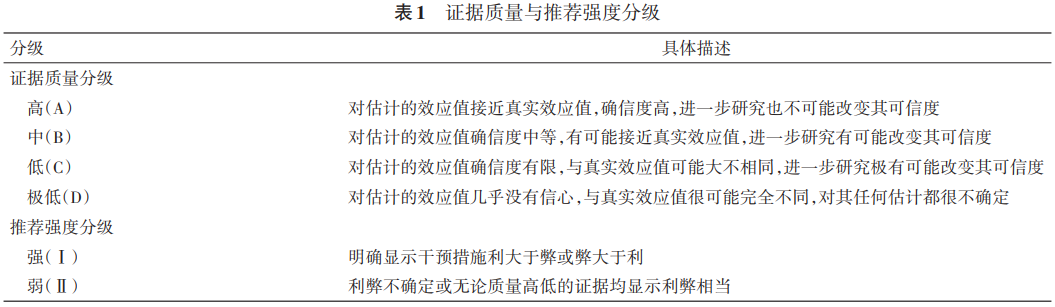
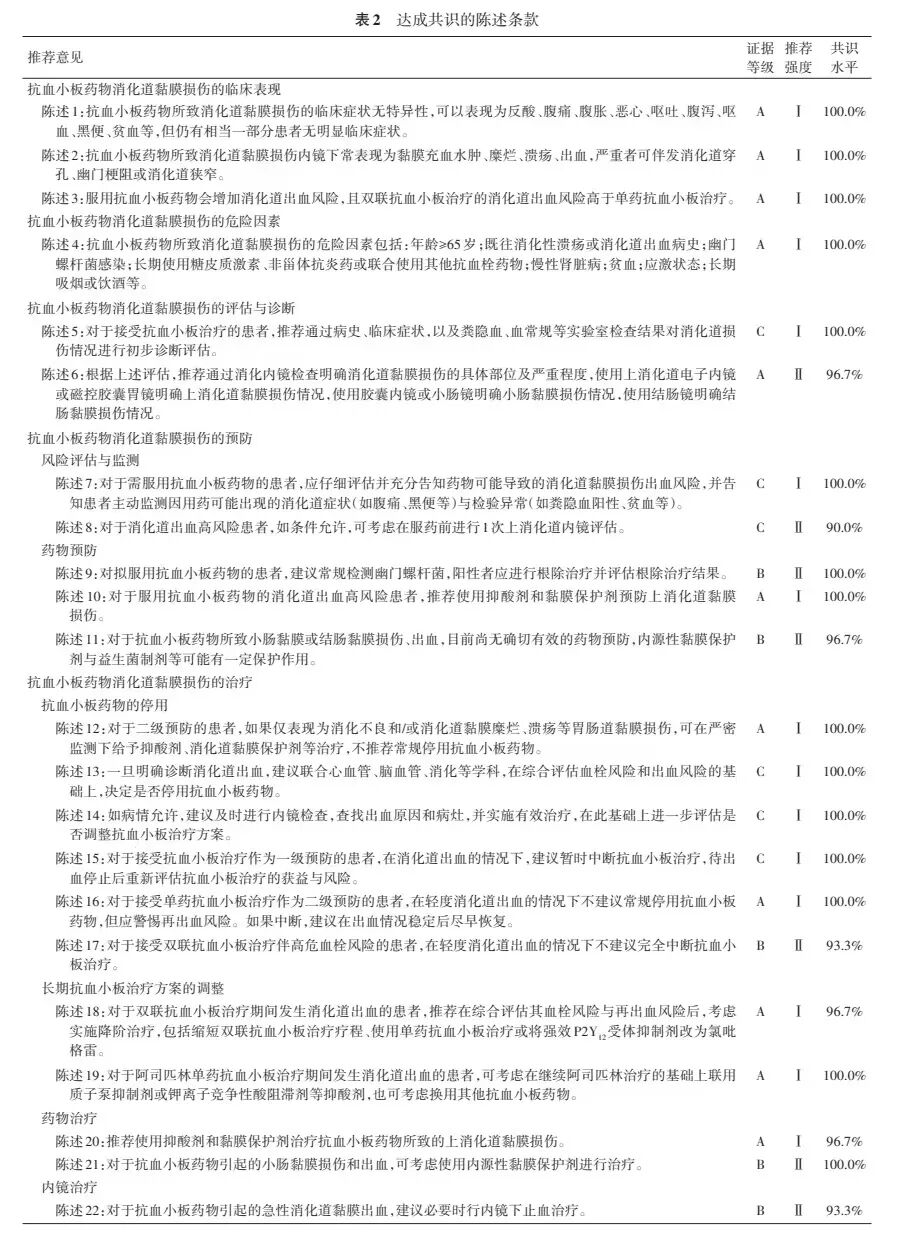
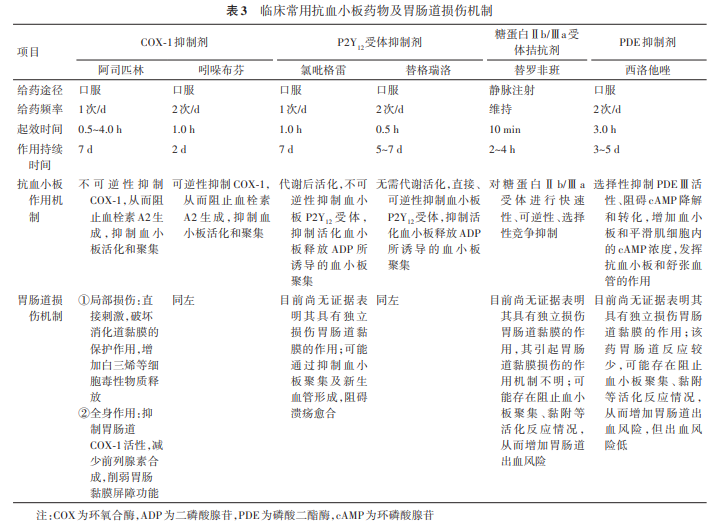
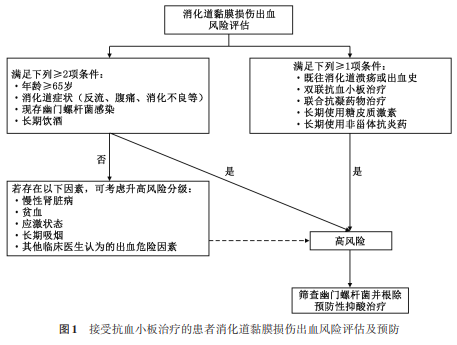
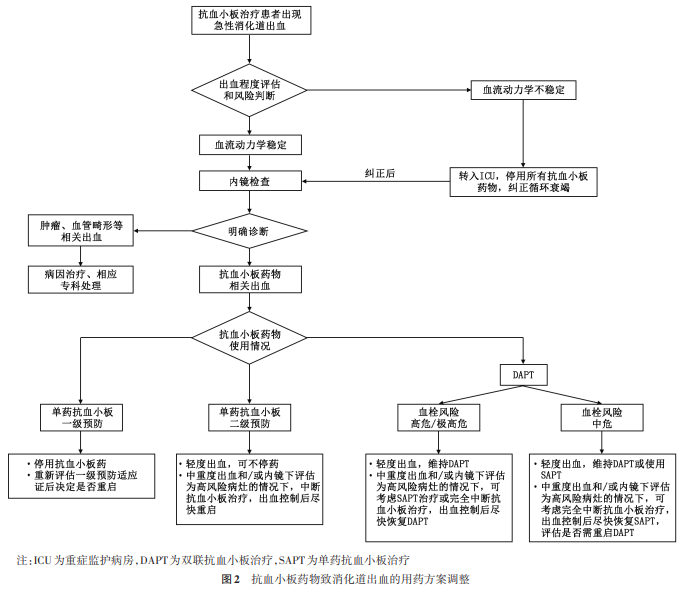







相关指南
- 阿司匹林抗栓治疗临床手册 · 心血管内科 2015
- 冠状动脉粥样硬化性心脏病患者药物治疗管理路径专家共识2023 · 心血管内科 2023
- 常见轻微病症健康管理专家共识(2025版) · 综合与多学科 2025
- 常用口服抗血小板药物不耐受及低反应性人群诊疗专家共识 · 心血管内科
- 早产临床防治指南(2024版) · 妇产科 2024
- 口服抗栓药物相关消化道损伤防治专家共识 · 药学与用药管理 2021
- 中国心血管病一级预防指南 · 心血管内科
引用 / 出处
中华医学会消化内镜学分会中华医学会消化病学分会中华医学会心血管病学分会. 抗血小板药物消化道黏膜损伤防治多学科专家共识[J]. 中华心血管病杂志, 2026.